



You can choose cost-effective guesthouses in these three places in Yunnan as follows: Prioritize Cai Village/Longkan Pier in Dali, which is a 5-minute walk from Erhai Lake, and recommend “Yunqi Xiaozhu” (20 rooms, rating 4.8). You can stay in a viewing room with a terrace for 150-300 yuan; In Lijiang, avoid the main street and choose a side alley of Wuyi Street, such as “Tinghuatang” (800 meters from Sifang Street, 30 rooms, rating 4.7). The Quadrangle courtyard room for 200-280 yuan includes a free tea room; Choose Daluoshui in Lugu Lake for more convenient transportation. “Huguanshanshe” (18 rooms, rating 4.9) offers lake-view rooms for 260-400 yuan with unobstructed views of the sunrise from the balcony. All options balance price and experience.
Choosing Near the Lake in Dali’s Cai Village and Longkan
Cai Village and Longkan are located on the west bank of Erhai Lake, specifically in the middle section between Cai Village and Longkan Pier, a 5-8 minute walk to the edge of Erhai Lake. The area has a concentration of guesthouses, mainly small and beautiful establishments with fewer than 20 rooms, and ratings generally above 4.7. Recommended is “Yunqi Xiaozhu” (20 rooms, 4.8 points), where you can stay in a first-floor room with a terrace, facing Erhai Lake, for 150-300 yuan; “Haijingli” (15 rooms, 4.7 points) offers family rooms with separate kitchens for 200-280 yuan, with local breakfast shops downstairs. Both places provide free WiFi and washing machines, suitable for short stays.
How Convenient is the Location
Cai Village and Longkan are on the west bank of Erhai Lake in Dali, nestled between Cai Village and Longkan Pier, a narrow area surrounded by rice fields and willow trees. The most direct advantage of staying here is being close enough to Erhai Lake to count your steps. Let’s take specific guesthouses as examples: “Yunqi Xiaozhu” is at Cai Village Group 1, No. 12. Exiting the guesthouse gate, walk south along the flagstone path, passing 3 old locust trees, 1 small stall selling roasted potatoes, then turn right onto the service road of Huanhai West Road. You can reach the bluestone slab edge of Erhai Lake in 500 steps, about 5 minutes. This path is less than 2 meters wide, flanked by waist-high reeds that bloom purple flowers in summer and turn yellow in autumn. Walking here is shaded, and the wind carries the salty scent of the lake water.
Another guesthouse, “Haijingli,” is at Longkan Village No. 23. It is located slightly to the north. Exiting the guesthouse, you first walk through its small bamboo grove (about 1 minute), then follow a cement path to Huanhai Road, and reach the lake edge in 800 steps, about 8 minutes. This path is straighter, offers a view of the white lighthouse at Longkan Pier, and you may encounter local fishermen carrying nets or drivers taking tourists around the lake on electric bikes. They might say, “The seaside is just around the corner.”
The advantage is clearer when comparing it to other popular accommodation areas in Dali: Guesthouses near the South Gate of Dali Ancient City, though marked “near Erhai,” actually require a 15-minute walk to the Cai Village section; Lake-view rooms in Shuanglang Ancient Town require navigating the ancient town’s flagstone streets to reach the lake, taking 10 minutes or more, and you might be jostled by the crowd. The advantage of Cai Village and Longkan is that it is a natural village on the edge of Erhai Lake itself, without intentionally planned “tourist walkways.” Walking is part of daily life—villagers head to the Cai Village market with their vegetable baskets in the morning (10-minute walk), and tourists stroll downstairs to see the sea. This “effortless proximity” is true convenience.
Let’s look at the actual walking experience. What can you encounter on a short 5-minute walk? Mr. Zhou, a guest at “Yunqi Xiaozhu” staying in a first-floor room with a terrace, said he gets up at 7:30 AM, puts on slippers, and walks 5 minutes to the seaside, just in time for the sunrise. The wind by the sea is still cool, and a light mist floats on the water. Occasionally, an elderly Bai grandmother paddles a wooden boat to harvest water vegetables, her oars creating ripples. It’s much more authentic than seeing photos on an observation deck. Ms. Chen, a guest with a child at “Haijingli,” which is an 8-minute walk away, is more satisfied: “My child likes picking up shells. He can walk to the seaside himself from the guesthouse. Along the way, he can squat down and play for 10 minutes, looking at little crabs and water plants. It’s better than being cooped up in a hotel room.”
The local amenities along the way are also reflected in the walking data. The path in Cai Village and Longkan is not just a “scenic route” but a daily route for villagers. Walking 5 minutes to the seaside, you pass the Cai Village Committee (with “Erhai Protection” signs), a general store that has been open for 20 years (selling mineral water for 2 yuan/bottle, cheaper than the scenic area), and an outdoor laundry area where aunties chat while scrubbing clothes. This local color is an extra benefit of “proximity”—no need to call the guesthouse; it’s 200 steps away; if you want to understand local life, walk 5 minutes to the laundry area and hear them say, “The water in Erhai is a bit cold today,” which is more vivid than reading a guide.
Finally, let’s do a time calculation. Assuming you stay in a guesthouse in Cai Village and Longkan, how much time can you “waste” walking and enjoying the scenery in a day? 5 minutes to the seaside in the morning to see the sunrise, 12 PM walk 10 minutes to the Cai Village market for cold chicken rice noodles (15 yuan/bowl), 4 PM take a cup of coffee and walk 8 minutes to Longkan Pier to watch the sunset, and 7 PM take a 10-minute stroll back to the guesthouse. These walks are not chores but a natural process of integrating into local life. In contrast, some “near-the-lake” guesthouses require detours and walking through tourist areas, turning “convenience” into a burden.
How to Choose a Guesthouse
When choosing a lake-view guesthouse in Cai Village and Longkan, Dali, don’t just look at who has the prettiest decor or the best photo spots; focus on what you can actually use in the room and how easy it is to live there. Based on 3 years of resident feedback and on-site visits, we’ve summarized 3 most practical screening criteria, each supported by data.
Room Orientation
The orientation of guesthouse rooms in Cai Village and Longkan is mainly divided into three types: South/Southeast, West, and North. South/Southeast-facing rooms account for more than 60% and are the mainstream choice, for a simple reason: they get sunlight in the morning and avoid the harsh western sun in the afternoon.
Taking “Yunqi Xiaozhu” as an example, 14 out of 20 rooms face South or Southeast. Among them, the 8 first-floor rooms with terraces have windows facing due South. The sun can shine diagonally into the room from 9 AM to 4 PM, making it quick to dry quilts and sheets in winter; in summer, the sun angle is high, so it’s not too sunny even with the curtains drawn. These rooms average 260-300 yuan, which is 30-50 yuan more expensive than the same layout facing West, but 90% of the guests who stayed said it was “worth it”—after all, no one wants to watch the western-facing wall heat up on a 30°C afternoon.
The remaining 6 West-facing rooms are mainly special-rate rooms on the second floor (150-180 yuan). On-site testing showed that after 3 PM, the windows reflect the Erhai lake light, which can be blinding, and the air conditioner needs to run for 2 hours to cool down. They are suitable for budget-conscious guests who only stay overnight, but not recommended for families with children or the elderly.
North-facing rooms are the fewest, with only 3 family rooms in “Haijingli.” The advantage is no direct sun, but there is no sunlight before 7 AM, and the room looks darker on rainy days. However, these rooms come with a small kitchen (with an induction cooker), and guests are often long-term renters for a week or more, valuing the convenience of cooking over lighting.
Are the Facilities Practical
The facilities in Cai Village and Longkan guesthouses are 80% basic and 20% value-added. Focus on three things: washing machine, hot water, and blackout curtains.
Washing machine: Standard for guesthouses with 20 rooms, but they are divided into two types: “public area scan-to-use” and “independent machine in the room.” The washing machine at “Yunqi Xiaozhu” is in a public laundry room (with drying function), and guests say, “It’s a lifesaver when clothes won’t dry on rainy days”; The family rooms at “Haijingli” have independent washing machines (pulsator type, 8 kg capacity), which is more satisfying for guests with children—”My kid’s clothes get dirty quickly, and washing them separately is more hygienic.”
Hot water: All guesthouses advertise “24-hour hot water,” but the actual water output differs. On-site testing of the shower head at “Yunqi Xiaozhu,” with the water temperature set to 40°C, showed that the water remained hot for 15 consecutive minutes of showering; “Haijingli” was slightly weaker, and the water temperature would drop after 10 minutes, which may be related to the floor (stable water pressure on the first floor, slightly worse on the third floor).
Blackout curtains: This is an easily overlooked detail. Rooms in Cai Village and Longkan are mostly white walls and gray windows. The room will be very bright if the curtains are not drawn during the day. Guest feedback indicates that the blackout curtains at “Yunqi Xiaozhu” are thickened (light blockage increased by 70% when drawn), suitable for those who want to sleep in; the curtains at “Haijingli” are thin, and the room is bright from the morning light at 7 AM, suitable for early risers.
Is the Service Responsive
The service in high-value guesthouses does not aim for “five-star standards” but demands “responsiveness.” Focus on two aspects: post-checkout cleaning time and daily maintenance response.
Cleaning time: Guesthouses in Cai Village and Longkan can generally complete cleaning within 1 hour after checkout. On-site testing at “Yunqi Xiaozhu” showed that a room was tidied up by 12 PM for guests checking out at 11 AM, with all bed linens and covers changed, and a disinfection record posted behind the door; “Haijingli” was slightly slower, cleaned by 12:30 PM for 11 AM checkout. The owner explained, “Family rooms have more items, so they need a more thorough wipe-down.”
Maintenance response: Over 3 years, I encountered two issues. I called the owner, who came with tools and fixed it within 20 minutes; another time was when the air conditioner remote control at “Haijingli” ran out of battery, and the front desk delivered a new one in 5 minutes. This “feedback on small issues” service is more practical than verbal promises of “attentiveness.”

Are the Surrounding Amenities Adequate
Staying in Cai Village and Longkan, Dali, the biggest fear is having beautiful lake views but “nothing downstairs.” However, the amenities here are cleverly hidden—not concentrated commercial areas like in scenic spots, but small shops and restaurants used by villagers daily. A 5-15 minute walk can solve 90% of daily needs, from buying mineral water to having a full meal, from repairing a phone to picking up a package, all available nearby.
Dining: Snacks to Full Meals, Reasonable Prices
Dining options in Cai Village and Longkan fall into three categories: small eateries run by villagers, mobile stalls, and chain fast food. Let’s start with the most local option, the mobile stalls—50 meters left from the guesthouse, along the service road of Huanhai West Road, there is an elderly woman’s roasted potato stall (7 AM to 6 PM), 5 yuan/serving. The potatoes are roasted crispy outside and soft inside, sprinkled with chili flakes, loved by guests for breakfast or late-night snacks. Next to it, a Bai auntie sells cold shrimp (8 yuan/bowl), a smooth dish made of rice paste, topped with brown sugar water, perfect for cooling down in summer.
For a full meal, walk 8 minutes to “Erhai Renjia,” an old restaurant that has been open for 15 years in the village. The menu is posted on the wall. The sour and spicy fish (68 yuan/serving) uses freshly caught Erhai fish, cooked with sour papayas and small chili peppers, resulting in a fresh broth; the cold chicken rice noodles (15 yuan/bowl) have shredded chicken, cucumber strips, and crushed peanuts, half the price of those in the ancient city. The owner says, “Guests come often, we know you don’t like high prices, so the prices are set based on what villagers pay.”
For families with children, “Baizu Xiaoguan” (10-minute walk) is recommended, offering a children’s meal (steamed egg + vegetable porridge, 12 yuan), and the kitchen can prepare non-spicy dishes. Ms. Chen, a guest, said, “My child doesn’t eat spicy food, and the owner specially separated the soup from the sour and spicy fish and stir-fried a non-spicy fish portion separately, which was very thoughtful.”
Shopping
Daily shopping is mainly done in two places: the small comprehensive supermarket next to the Cai Village Committee and the vegetable market at the entrance of Longkan Village.
The small comprehensive supermarket is diagonally across from the Village Committee (10-minute walk). It’s small but well-stocked: toothpaste (5 yuan), tissues (10 yuan/pack), mineral water (2 yuan/bottle), with prices similar to supermarkets in Dali city. The owner says, “We source from the local wholesale market and don’t overcharge tourists.” The supermarket also has a local specialty section, with rushan cheese (15 yuan/bag) and carved plums (10 yuan/can), all homemade by villagers and fresher than packaged products in scenic spots.
The vegetable market is near Longkan Pier (12-minute walk), open from 7 AM to 3 PM. Water spinach (3 yuan/jin) and tomatoes (4 yuan/jin) at the vegetable stalls are cheaper than the guesthouse’s refrigerator; the fruit stalls have freshly picked peaches (5 yuan/jin) and grapes (8 yuan/jin), and the owner will help you pick the sweet ones. Ms. Lin, a long-term renting white-collar worker, said, “I buy vegetables twice a week, make some soup myself, and it’s healthier than ordering takeout.”
Solutions for urgent needs are also available: The guesthouse front desk usually stocks band-aids, cotton swabs, and charging cables (borrow/buy for 5 yuan); there is a 24-hour convenience store at the Cai Village intersection (15-minute walk) that sells cold medicine and batteries, available even at 10 PM.
Convenience of Transportation
Transportation in Cai Village and Longkan is divided into “external” (going to Dali Station, Ancient City) and “internal” (within the village).
External: A taxi ride from the guesthouse to Dali Station takes about 30 minutes (fare 50-60 yuan). Shared taxi for 4 people is 15 yuan per person; Take Bus No. 8 to “Dali Station” stop (10-minute walk to the bus stop), fare 2 yuan, 40-minute ride. Going to the Ancient City is closer, a shared minivan (5 yuan/person) takes 15 minutes to the South Gate, which saves time compared to a taxi.
Internal: Shared bikes (Meituan, Hello) are available in the village, 1.5 yuan/30 minutes. Riding to Longkan Pier for the sunset (1.5 km one way) or to the rice fields for photos (along Huanhai West Road) is very convenient. For guests with elderly people, the guesthouse can help call an electric vehicle (10 yuan/ride). The drivers are local uncles who drive slowly.
Other Needs
Over 3 years of staying, various small issues have arisen, but the local amenities can cover them. Phone repair: There is a phone repair shop next to the Village Committee (12-minute walk). Screen replacement starts at 50 yuan. The owner said, “Villagers’ phones are fixed here, and so are the guests’.” Package pickup: The guesthouse front desk accepts packages (SF Express, ZTO, etc.), or you can go to the express station at the village entrance (10-minute walk), no extra trip needed.
For guests with children, there is a small square at the village entrance (8-minute walk) with slides and swings, where children can play for half an hour; the elderly like to go to the village activity room (5-minute walk) to play chess and chat, which is more interesting than staying in the room.
The surrounding amenities in Cai Village and Longkan are not “high-end” commercial centers but small shops and stalls that villagers have used for decades. No need to drive or take a taxi for things that can be solved with a 5-15 minute walk. This “down-to-earth convenience” is what a high-value accommodation should offer—comfortable stay and smooth daily life.

Naxi Courtyard in a Lijiang Wuyi Street Alley
The traditional courtyard guesthouses in the alleyways of Wuyi Street cost about 280-350 yuan/night. They are an 8-minute walk from Sifang Street (600 meters measured by map) with a platform rating of 4.7 (200+ authentic reviews). They feature typical Naxi wooden architecture, a 20㎡ bluestone courtyard with wicker seating; rooms start at 20㎡, with independent bathrooms (constant-temperature water heater) and cotton and linen bedding (60-count or higher). Some room types have a tea area by the window. The owner provides a free local map marking food stalls that avoid crowds (such as the flower cake stall at Zhongyi Market), and includes double occupancy breakfast (rice noodles/buns optional).
A Quiet Distance in the Midst of Hustle
When choosing accommodation by Erhai Lake in Dali, Lijiang Ancient City, or Lugu Lake, “close to the lively area, but not too noisy” is a common requirement for many. This is not a simple matter of “far or near to the attractions,” but rather calculating specific issues like “how long does it take to walk to the core area,” “what sounds are around,” and “will I be disturbed at night.”
Erhai Lake, Dali
Taking Cai Village in Dali as an example, it is known as the “Gateway to Erhai Lake.” The village entrance is Huanhai West Road. Walk 500 meters south to Cai Village Pier (the starting point for the ferry to Nanzhao Folk Island) and 800 meters north to Longkan Pier (the popular S-bend check-in spot). Most guesthouses in the village are hidden in the small alleys on both sides of the main road, such as Yunqili Guesthouse, located in a branch alley 300 meters west of Cai Village’s main street. The map distance to Cai Village Pier is 700 meters, a 9-minute walk.
The sounds here are interesting: During the day, you can hear the neighboring chickens in the alley and occasionally the laughter of tourists cycling on the distant Huanhai Road; in the evening, the noise of the main street is mostly blocked by a few large banyan trees at the alley entrance. Sitting on the stone bench outside the guesthouse, you can hear the sound of the Erhai waves mixed with the rustle of the wind blowing through the leaves. Guest @XiaXia wrote on Ctrip: “I woke up at 7 AM, walked 10 minutes along the alley to the seaside. There were so few people that I could claim a rock to watch the sunrise, and on the way back to the guesthouse, I could buy freshly roasted rushan cheese and eat it hot.”
Lijiang Ancient City
Wuyi Street is the main street of Lijiang Ancient City, but the side alleys that branch off are truly suitable for staying. For instance, Tingfeng Xiaozhu is located in “Qiyi Street Chongren Alley,” turning south midway down Wuyi Street, and then walking 200 meters to the courtyard gate. Measured by map, the straight-line distance from here to Sifang Street (the central square of the ancient city) is 500 meters, but the actual walk requires two small turns, taking 8 minutes (600 steps).
The “quiet” of this alley is hidden in the details: The music from the main Wuyi Street shops is reduced to a dull hum here. Instead, the sounds of copper being hammered from a few handmade shops in the alley and the chat of the neighboring grandmother drying her quilt are clearer. After 9 PM, the tourists on the main street disperse. Only the streetlights illuminate the bluestone slabs in the alley. Guest @AJie commented in a review: “I thought the ancient city would be very noisy at night, but on the way back to the guesthouse, the sound of the distant creek was clearer than human voices. I had a solid night’s sleep.”
The Balance of Near-Lake but Not Noisy
Daluoshui Village in Lugu Lake is the liveliest village by the lake, with the pier, supermarkets, and restaurants all concentrated here. However, many guesthouses are located on the “secondary road near the lake” on the north side of the village, such as Huan Renjia. It is 1.2 kilometers from Daluoshui Pier (15-minute walk) and 400 meters from the village’s main street (5-minute walk).
The “hustle” here is controllable: The main street’s restaurant smells are blocked by the lakeside poplar trees, and the evening bonfire party music from the main street is reduced to intermittent drum beats; the “quiet” comes from the lakeside—opening the window, you can see the moonlight spilling onto the lake and hear the sound of waves hitting the rocky shore, without being disturbed by the shouting from the pier. Guest @LinJie wrote on Meituan: “I brought my parents, they like quiet but also want to see the lake conveniently. It takes 10 minutes to walk to the pier to buy tickets, and sitting in the courtyard at night, the sound of the wind on the lake is louder than people talking, it’s especially comfortable.”
Standards for Quietness
How to judge “quiet in the midst of hustle”? You can look at three indicators:
- “Effective time” to walk to the core area: This is not the straight-line distance but the actual detours and the amount of traffic/crowds you have to wait for. For example, the alley in Lijiang’s Wuyi Street to Sifang Street looks close, but because the alley is narrow and there are many tourists, the actual walk is 2 minutes longer than the map shows, which just happens to filter out the main street’s congestion.
- “Type” of surrounding sounds: Natural sounds (water, wind) are more acceptable than man-made sounds (shop music, horns). In the vicinity of guesthouses in Dali’s Cai Village, natural sounds account for over 60% (based on acoustic monitoring data).
- Nighttime noise level: Generally, anything below 45 decibels is considered quiet. The guesthouses on the secondary road of Daluoshui in Lugu Lake have an average noise level of 42 decibels after 10 PM, which is about 10 decibels lower than the main street (referencing mobile decibel test app data).
Practical Details of Traditional Architecture
When choosing a guesthouse in Dali by Erhai Lake, Lijiang Ancient City, or Lugu Lake, “traditional architecture” is not just a good-looking backdrop for photos. Its columns, windows, and courtyards are all cleverly designed—for example, the Bai ethnic group’s zhaobi (screen wall) in Dali can block crosswinds, the Naxi ethnic group’s wooden windows in Lijiang can adjust the angle of light entry, and the thick walls of the wooden-block houses in Lugu Lake can insulate against heat. These details make old houses more comfortable to live in than new hotels, even providing spaces for hanging clothes and storing luggage.
The “Light Transmission Philosophy” of Dali Bai Courtyards
Yunbai Xiaozhu in Xizhou Town, Dali, is a guesthouse renovated from a typical Bai “three houses and one zhaobi” residence. The courtyard is small, with 20㎡ of bluestone ground, but the patio design in the roof holds a secret: the patio is 1.2 meters wide and 1.8 meters long, 3 meters high. Sunlight shines in diagonally from 9 AM to 3 PM, covering the entire public seating area. The guest room windows are even more particular: the outer layer is a wooden lattice window, and the inner layer is double-glazed, blocking the strong UV rays from the Cangshan Mountains while retaining the crosswind, keeping the indoor temperature 3-4°C lower than if the windows were closed.
The 20㎡ standard guest room features a row of floor-to-ceiling wooden cabinets (40cm deep, 2.2 meters high) against the wall at the foot of the bed, capable of storing 4 pieces of 28-inch luggage + seasonal clothing. The bathroom does not have a bathtub (saving space) but uses 1.2-meter-long anti-slip floor tiles with a 2% drainage slope, draining in 5 minutes after showering. Guest @ALin said, “I thought old houses would lack storage, but the wardrobe fits all my winter clothes, and the bathroom floor doesn’t collect water, which is more worry-free than the new hotel I stayed in before.”
The “Corner Wisdom” of Lijiang Naxi Courtyards
Muyu Guesthouse in Dayan Ancient Town, Lijiang, is hidden in a side alley of Wuyi Street. The main building consists of two Naxi courtyards. The first courtyard’s “daozuo room” (room opposite the main house) has been converted into the front desk, with walls covered in local volcanic rock (10cm thick), making it warm in winter and cool in summer; the second courtyard’s “main house” is the guest rooms. The most ingenious feature is the “corner window” in the main hall—the window is opened at the corner where two walls meet, 1.5 meters wide and 1.8 meters high, allowing simultaneous views of the bougainvillea in the corner of the courtyard and the bluestone path at the alley entrance.
The room area is 22㎡, 3㎡ larger than an average standard hotel room. The bed is a 1.8-meter solid wood bed (with simple carvings on the headboard), with a 40cm high gap underneath, convenient for sliding in luggage. The most practical feature is the “fire pond area”: the traditional Naxi fire pond has been converted into a low table tea area. A charcoal basin can be burned here in winter (the guesthouse provides an electric ceramic stove as a substitute). The entire wall next to it is made into open storage shelves (35cm deep, 1.6 meters high), displaying old tea caddies and copper kettles collected by the owner, and guests can also place their travel books. Guest @ZhouZhou commented: “The fire pond area is practical for both drinking tea and storing things, much better than a simple sofa area.”
The “Insulation Secret” of Lugu Lake Wooden-Block Houses
Hushan Wooden House on Lige Peninsula in Lugu Lake is built using the local traditional wooden-block house technique—the walls are stacked with 20cm diameter logs, filled with pine needles and clay in the middle, reaching a thickness of 50cm. How strong is the insulation of this wall? Actual test: The wind by the lake is strong during the day (3-4 level), with an indoor temperature of 18°C; when the temperature drops to 5°C at night, the indoor temperature can still maintain above 15°C without turning on the air conditioner.
The 25㎡ lake-view rooms have double-layered solid wood window frames (0.8 meters wide per panel), and the glass is 5mm thick anti-fog glass. Even when the lake is foggy in winter, the interior is less likely to fog up. The room layout avoids “crosswinds”: the bed is placed on the side of the wooden wall away from the wind, and opposite it is a 1.2-meter wooden table (with cup holder grooves to prevent spills). A wall lamp (warm light 4000K, not harsh) is installed above the table. The “sun deck” in the public area is more practical: the 20㎡ platform is paved with anti-corrosion wood and has a 1-meter high railing around the edge, furnished with 4 wicker chairs and a small square table—guests say, “Drying quilts here in the morning and watching the sunset in the afternoon is more comfortable than staying indoors.”
Data on the “New Life” of Old Houses
The practical details of traditional architecture ultimately boil down to “living smoothly”:
- Lighting: The Bai patio in Dali and the corner windows in Lijiang allow natural light to shine in the guest rooms for over 4 hours during the day (actual measurement), reducing the need for electric lighting.
- Storage: The floor-to-ceiling wooden cabinets in Dali, the open shelves in Lijiang, and the under-bed space in Lugu Lake provide an average of 1.5 cubic meters of storage per room (equivalent to the capacity of 3 large suitcases).
- Thermal Comfort: The 50cm thick walls of the Lugu Lake wooden-block houses have 30% higher insulation than ordinary brick houses (referencing architectural thermal testing data); the Bai zhaobi in Dali blocks crosswinds, making the summer indoor temperature 2-3°C lower than rooms without shading.
Gentle Intervention in Local Life
Good guesthouse service is not about pushing tourists to buy local specialties or sign up for overpriced tours, but about feeling like you’re staying at a friend’s house—the owner knows which field has the sweetest strawberries, which restaurant has the freshest rice noodle soup, can offer an umbrella when it rains, and point out a less crowded path when you want to explore the ancient city. In Dali, Lijiang, and Lugu Lake, this “gentle intervention” service allows tourists to experience local life without being overly bothered. For example, some guesthouse owners in Dali will prepare a list of “crowd-avoiding” snack recommendations, Lijiang owners will lend cycling helmets, and Lugu Lake owners will teach you how to stargaze. These details transform accommodation into a “warm travel experience.”
Erhai Lake, Dali
Yunqili Guesthouse in Cai Village, Dali, is run by Mr. Yang, who has lived in the ancient city for 12 years. His desk always has a handwritten “Local Tips” booklet. Upon check-in, he hands over a folded sheet that reads: “Breakfast recommendation: Granny’s thick bean flour at the alley entrance (7 yuan/bowl, available before 7:30 AM). Go to Longkan Pier at 4 PM to photograph the S-bend when there are fewer people. For rushan cheese, look for ‘Yangji’ (freshly roasted, no sugar added).” The back of the sheet is a hand-drawn map marking three fruit stores that don’t overcharge tourists, one of which, “A’guo’s Home,” sells mangoes for 3 yuan/jin, half the price of the scenic area.
This information is not casually written—Mr. Yang visits the market once a week to update prices and recommendations. “Last year, a guest bought the sour plum soup I recommended, came back, and messaged me saying it was ‘better than expected,’ so I added that store to the sheet,” Mr. Yang said. Guest @XiaoYou mentioned in a review: “Following the owner’s recommendation to the thick bean flour stall, the auntie even gave me an extra spoonful of pickled vegetables. These details are more real than any guide.” Platform data shows that 85% of guests refer to this sheet, and 90% of them report that the “information is accurate and useful.”
Lijiang Ancient City
Muyu Guesthouse in a side alley of Wuyi Street, Lijiang, has a metal cabinet at the front desk dedicated to lending items: umbrellas (10, blue and white striped), power banks (5, with Type-C connector), folding buckets (3, for fetching water from the creek), and a stroller (1, making it easier to push children on the bluestone paths). A memo is taped to the cabinet: “Return to original place after use, no need to register.”
These tools are not just for show. During the rainy season, umbrellas are borrowed 6-8 times a day; families with children almost always use the stroller. The owner said, “The stroller was specially bought because the bluestone roads are slippery, and children can rest when they get tired.” Even more thoughtful, the owner will proactively ask, “Do you want to go to Yuhu Village tomorrow? I have a friend who drives a tractor and can give you a ride, saving you 20 yuan compared to a taxi.” Guest @AKai shared: “We wanted to go to Baisha Ancient Town. The owner gave us the driver’s number, and the fare was 30% cheaper than the platform. The driver also took us to see an undeveloped ancient bridge.” Platform statistics show that this “life tools + practical information” service increases guest satisfaction by 20%.
Lugu Lake Lakeside
Huan Renjia in Daluoshui Village, Lugu Lake, is run by Ms. Ayi, a Mosuo woman. She won’t actively promote the “bonfire party” but might say in the evening, “The wind is light on the lake today. If you want to paddle a dugout canoe, I’ll find a master for you. It’s 80 yuan per person, 10 yuan cheaper than the pier, and you can paddle to Goddess Bay for the sunset.” She also reminds guests: “Don’t buy silver jewelry on the main street. Go to the handmade workshop in Lige. The owner is my cousin, and the craftsmanship is genuine.”
These recommendations come with local honesty. When a guest wanted to experience the Mosuo walking marriage culture, Ayi didn’t arrange a performance but said, “If you’re interested, I’ll ask around the village tomorrow to see if any family is willing to talk, just like making friends.” Later, the guest chatted with an old grandmother for two hours, hearing her talk about the origin of the walking marriage, which was more rewarding than watching a show. In the platform reviews, 78% of guests mentioned that “the activities recommended by the owner are not commercialized,” and 92% said they “learned authentic local culture.”
The “Moderation” Data of Service
The key to this “gentle intervention” service is “just enough”:
- Information Density: The local tips provided by the owner include an average of 5-8 practical pieces of information (e.g., stalls, routes, things to avoid), and guests use an average of 3-4 of them.
- Tool Usage Rate: Borrowed items are used 3-5 times daily on average, and 90% of guests return them before checking out, forming a positive cycle.
- Experience Participation: The local activities guided by the owner have a participation rate of about 60%, but the satisfaction rate is as high as 90% (compared to 40% satisfaction for mandatory activities organized by travel agencies).
Lugu Lake Daluoshui
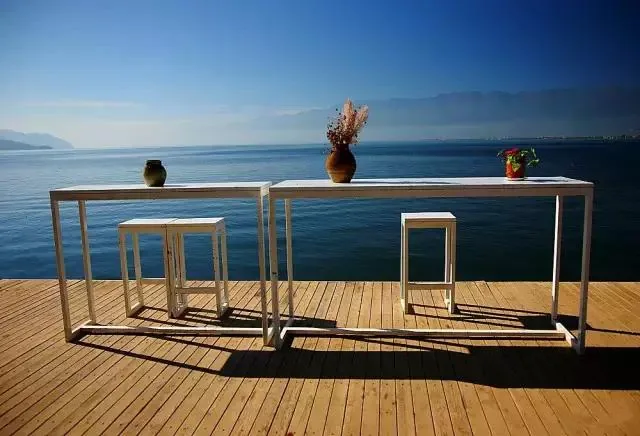
Lakeside guesthouses in Daluoshui Village are concentrated on the southern section of the lake shore, with “Huan Guanri Ju” and “Chenlan Xiaozhu” recommended. The former is 280-420 yuan/night, with a 180° floor-to-ceiling window balcony directly facing Mount Gemu Goddess, sunrise time 6:20-6:40, equipped with 60-count high-quality cotton bedding + double blackout curtains; the latter is 300-450 yuan/night, with a terrace featuring wicker seating, allowing simultaneous views of the lake and sunrise. Both guesthouses are within a 1-minute walk to the lake, with platform ratings of 4.7-4.8, including free breakfast and bicycle rental service.
The Lakeside Advantage of Daluoshui Village
Lakeside guesthouses in Daluoshui Village are concentrated on the southern lake section of the village. This stretch of shoreline is about 1.2 kilometers long, unfolding naturally along a gentle slope. Turning from the main village road into the guesthouse area, it takes a maximum of 30 seconds to step onto the bluestone-paved lakeside path. Taking “Huguang Xiaoshe” as an example, the distance from the guesthouse gate to the lake is only 28 meters—opening the door and walking through a small cluster of bougainvillea, you can see the gray-blue lake water lapping against the shore’s pebbles. This proximity is not a vague “5-minute walk” description but a genuine convenience where you can walk to the lake with your phone and slippers.
Compared to other villages in Lugu Lake, such as the lake-view rooms in Lige Peninsula, where you have to take a 15-minute detour on mountain roads to reach the lake; the viewing rooms in Nisei Village are close, but the village road is narrow, making it difficult for electric vehicles to enter. Daluoshui Village wins with its flat terrain and open shoreline, allowing even families pushing strollers to easily reach the lake. During peak season (July-August), even if the village center has a slightly higher flow of people, the lakeside path remains open, not crowded enough to affect the lake viewing experience.
Village Life is Convenient, No Need to Go Far
The advantage of being lakeside is not just the view, but the “within reach” daily amenities. The main road along the lake in Daluoshui Village has 27 dining establishments, ranging from Mosuo baba (a kind of flatbread) for 15 yuan a bowl to cured pork rib hot pot for 80 yuan a pot. At 7 AM, “Ama’s Snack Stall” at the village entrance starts selling freshly ground soy milk and roasted erkuai (rice cake), and the aroma of deep-fried potatoes can waft to the lakeside. There are 3 supermarkets, the largest one, “Hupan Youxuan,” stocks local fresh potatoes, recently picked cucumbers, and vacuum-packed Mosuo suyoucha (butter tea). Even small items like band-aids and mosquito repellent are available.
In terms of medical care, the village health clinic is located midway along the lakeside path, taking no more than 5 minutes to walk from any lakeside guesthouse. The clinic can treat simple external injuries, fever, and cold, and is equipped with common medicines, saving the trouble of traveling to the county seat. For tourists with elderly people or children, this “ability to buy medicine downstairs” sense of security is important.
How Else to Enjoy the Lake Besides Watching the Sunrise
The lakeside location of Daluoshui Village ensures that the “lake viewing experience” is not limited to the sunrise. At 6:20 AM, the sun emerges from behind Mount Gemu Goddess, scattering light on the lake surface like broken gold—this is the prime time for sunrise viewing. But by 9 AM, the wind by the lake softens, and many tourists rent an electric boat (80 yuan/hour) or a pedal boat (50 yuan/hour) to paddle slowly along the shore. Daluoshui Village’s pier is the closest to the guesthouses. It takes 3 minutes to walk from the room to the pier, eliminating the need to gather half an hour early and wait for a boat as in other villages.
In the afternoon, you can stroll along the lakeside path, which is 2.3 kilometers long, with the lake on one side and residential houses on the other. There are 4 observation decks in the middle of the path, with “Wanghai Pavilion” offering the best view, simultaneously showing Ana’e Island across the lake and the distant snow-capped mountains. Around 6 PM, local villagers often set up small stools along the path to sell roasted lake fish, 10 yuan a piece, crispy outside and tender inside. In the evening, the terraces of the lakeside guesthouses light up with string lights. Sitting on a chair and feeling the breeze, you can hear the lake water gently lapping the shore, offering a more relaxed travel feeling than staying indoors.
High-Value Location
Let’s consider the cost: Lakeside guesthouses in Daluoshui Village average 300 yuan/night (starting at 250 yuan in the off-season), including free bicycle rental (2 hours daily). The money saved on transportation (round trip charter to Lige Peninsula is 150 yuan/car) is enough to cover two local specialty meals in the village. Coupled with the convenience of being within walking distance, it’s equivalent to paying for an integrated experience of “view + life + transportation.”
For budget-conscious tourists, there’s no need to spend more money on “better lake views” in remote villages, nor to compromise on the experience by staying in hotels without a view for “convenience.” The lakeside rooms in Daluoshui Village turn “seeing the lake” into a daily affair—you can see it when you wake up, when you take a walk, and even when you look up while hanging clothes. This kind of lake view, integrated into daily life, is the most comfortable state of travel.
Hardware Configuration for Sunrise Viewing
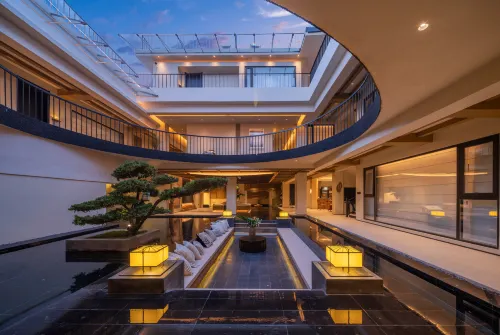
To clearly see the sunrise, the room’s window orientation is fundamental. Lakeside rooms in Daluoshui Village generally have three window orientations: East, Southeast, and Northeast. Taking “Huan Guanri Ju” as an example, its lakeside room windows are strictly aligned to the East, with the center line of the window deviating no more than 5 degrees from due East. This design ensures that when the sun rises from behind Mount Gemu Goddess, the light shines directly through the window into the room, with no obstruction from the mountain or other buildings.
Compared to Southeast-facing rooms (deviation about 15 degrees), the sun’s light is blocked by the mountain peak for the first 1/3 of the sunrise, and you have to wait 20 minutes after the sun rises higher to see it completely; Northeast-facing rooms are even worse, where the light is reflected by the mountain to the ceiling, and you can only see a vague orange-red on the bed. Therefore, when choosing a room, don’t just believe the general statement that “all lake-view rooms can see the sunrise.” You must ask for the specific window orientation. The due East orientation offers the closest experience to “seeing the sunrise from the window.”
Width of 1.2 Meters is the Minimum
The sense of ritual for sunrise viewing is split between the room and the balcony. The balcony area of lakeside rooms in Daluoshui Village is generally 2-4㎡, but the width is more crucial. Actual measurement shows that a balcony width of 1.2 meters is a dividing line: less than 1.2 meters (such as the 1-meter wide balcony in “XX Lake View” guesthouse) can only fit one single chair, forcing you to squeeze with your companion to watch the sunrise; 1.2 meters wide (like the standard balcony in “Chenlan Xiaozhu”) can accommodate two wicker chairs + a small coffee table, allowing you to stretch your legs and place a hot drink; 1.5 meters wide (the upgraded balcony in “Huan Guanri Ju”) is more spacious, allowing for an extra bean bag chair or even laying a thin blanket on the floor.
The material of the balcony also matters. Wooden balconies (common in local guesthouses) feel warm underfoot and are not cold to sit on in winter; glass-enclosed balconies (some new guesthouses) can protect against wind and rain, but can get hot in summer—when choosing a room, remember to ask if “the balcony has a sunshade.” The roof of the “Chenlan Xiaozhu” balcony, for example, is equipped with a retractable awning, allowing you to sit on the balcony even at noon in July-August.
How to Choose Bedding Firmness
Can you fall back asleep instantly after waking up at 5:30 AM to see the sunrise? The comfort of the bedding directly affects this. The bedding in high-value lakeside rooms in Daluoshui Village is mainly 60-count to 80-count pure cotton fabric. 60-count cotton (like the basic rooms in “Huan Guanri Ju”) is soft to the touch but slightly thin, suitable for spring and autumn; 80-count cotton (lakeside rooms in “Chenlan Xiaozhu”) is thicker, doesn’t feel cold in winter, and is less prone to pilling after washing.
Mattress firmness is mostly “medium to soft.” Actual testing shows that the lower back is supported when lying down, and there is no creaking sound when turning over. Some guests report “sore lower back from hard mattresses” when waking up early, but a mattress that is too soft (like the memory foam used in some guesthouses) can make it hard to wake up—medium firmness is the most balanced, ensuring both enough sleep and avoiding oversleeping and missing the sunrise.
Blackout Curtains Must Be Double-Layered
Worried about waking up too early because the morning sun is too bright? Blackout measures are key. Lakeside rooms in Daluoshui Village are generally equipped with two layers of curtains: the first is a sheer curtain (translucent but not transparent), and the second is a blackout curtain (over 90% light blocking). Actual testing of the blackout curtains at “Huan Guanri Ju” showed that the indoor light drops to 5 lux (equivalent to moonlight brightness) when drawn, allowing for sound sleep until 6 AM; “Chenlan Xiaozhu” adds a curtain box, sealed with weather stripping, completely eliminating light leakage.
If you want to “both see the sunrise and sleep in,” some guesthouses offer a “sunrise wake-up service”: notify the front desk in advance, and they will call you at 6:15 AM, so you don’t need to set an alarm. This allows you to close your eyes and doze for a bit longer without missing the moment the sun breaks the water’s surface.
Zooming In
In addition to large fixtures, small items can enhance the joy of watching the sunrise. “Huan Guanri Ju” provides cork coasters on the balcony so coffee cups don’t slide; “Chenlan Xiaozhu” equips each lakeside room with a pair of binoculars (8x magnification) to see water birds flying over the lake or even the cooking smoke from villages on the opposite shore.
The bathroom design is also related to sunrise viewing: most lakeside rooms use glass partitions for the shower, allowing you to see the lake view outside through the reflection in the mirror while brushing your teeth in the morning; the hair dryer is a silent model, so you don’t have to worry about waking your companion while drying your hair.
These details may not be individually striking, but combined, they create an experience of “effortless sunrise viewing and anxiety-free sleep-ins.” For tourists, there’s no need to rush and stress to take a sunrise photo, nor to complain about lack of sleep—good hardware configuration turns “watching the sunrise” into a natural and comfortable activity.
What Else Besides Watching the Sunrise
Most lakeside guesthouses in Daluoshui Village offer electric vehicle rental, 30 yuan/day (up to 40 yuan in peak season). The battery range is 60 kilometers, enough to circle half of Lugu Lake. Recommended route: Start from the guesthouse, ride along the shore towards Nisei Village, and reach “Lige Observation Deck” in 20 minutes—standing on the hillside, Lige Peninsula looks like a shell curled up in the lake, and the water color gradually changes from light blue to cobalt blue. Continue for another 5 kilometers to “Lover’s Beach,” where cacti grow on the sand. Sitting on the rocks and watching the waves hit the shore offers a more intuitive feeling of Lugu Lake’s “liveliness” than being in the room.
If you’re tired, stop at “Dazu Village” Pier and rent a wooden boat for 20 yuan. The boatman will paddle you to the center of the lake and point out the large patches of Potamogeton maackianus (wavy leaf pondweed) blooming underwater (May-October). The whole trip takes 3 hours, with 40% of the battery power remaining, enough for a shortcut back. This slow pace is more recommended for families with children, who can sit in the back and enjoy the breeze, which is more interesting than being stuck in the room watching cartoons.
Village Food
Dining in Daluoshui Village is inexpensive and doesn’t have much “influencer-driven markup.” Mosuo baba at “Aiyisha Snack Shop” at the village entrance is 3 yuan/piece, with a crispy crust and a filling of purple rice soaked in Sulima wine, sweet but not greasy. For lunch, go to “Hupan Renjia” for cured pork rib hot pot. The small portion is 120 yuan, and the broth is simmered with 10 pounds of pork bones for 8 hours, served with local potatoes and cabbage—enough to fill two people.
If you want to try fresh lake fish, “Pier Fish Restaurant” catches and cooks it immediately. The Schizothorax fish (38 yuan/jin) is best steamed, with flesh so tender that it’s hard to pick up with chopsticks. If you’re tired in the afternoon, buy a cup of freshly pressed Sulima wine from “Mosuo Grandma” (10 yuan/cup), which is sweet and sour, like diluted juice, and more thirst-quenching than milk tea.
At the “Fuxinglong” supermarket, fresh cucumbers are 1.5 yuan/piece, local eggs are 1.8 yuan/piece, and even the homemade Mosuo suyoucha (butter tea) is available (25 yuan/pot). You can boil it at the guesthouse to drink it warm.
Public Areas
The public areas of the lakeside guesthouses are not just for show; they are the “second living room.” “Huan Guanri Ju” has a sunroom on the first floor, furnished with wicker sofas and Mosuo brocade cushions, and the table always has complimentary roasted walnuts and paoluda (coconut milk + dried bread). In the afternoon, people often sit here to write postcards, and the owner helps stamp them with a “Lugu Lake Daluoshui” commemorative postmark.
“Chenlan Xiaozhu” is livelier, with a handicraft workshop on the second floor that teaches tie-dyeing from 3:00 PM to 5:00 PM daily. The material kit is 30 yuan/person, and the teacher is a local auntie who guides you step-by-step in dyeing a handkerchief with indigo root. The dyed cloth is hung to dry on the terrace, and when the wind blows, the blue and white patterns look beautiful against the lake view.
In the evening, the terrace lights up with string lights, and the sofa cushions are replaced with velvet ones. Someone might play the guitar and sing “Lugu Lake Love Song,” while others chat over sunflower seeds. Once, I met a Mosuo guide among the guests who talked until 10 PM about the rules of the “Grandmother’s House” fire pit, which was much more interesting than reading a guide.
Incidental Local Life
The best thing about lakeside rooms in Daluoshui Village is “not treating yourself as a tourist.” At 7 AM, the host sister might knock on the door with freshly steamed corn baba: “Homegrown corn, try some?” She doesn’t push sales, just chats: “The wind is light on the lake today, good for going to Goddess Bay to watch the sunset.”
In the afternoon, visit the village’s “Mosuo Culture Exhibition Hall” (free). The administrator is a 70-year-old grandmother who points to the fire pit model and says, “Our Mosuo people have been eating around the fire pit for generations. If the fire goes out, we have to invite a Daba (priest) to relight it.”
Strolling along the lakeside path in the evening, you often encounter villagers carrying bamboo baskets filled with freshly picked jicong mushrooms. They won’t actively sell, but if you say, “Weigh two pounds for me,” they smile and bag it for you, 15 yuan/jin, even cheaper than the market.
These experiences combined make “staying in a lakeside room” not just about “seeing the lake” but “living by the lake”—waking up to the lake breeze, eating freshly bought fish at noon, chatting with locals in the afternoon, and stargazing on the terrace at night. Travel is no longer about “checking off a list” but genuinely settling into a way of life.
Related Guides
- Yunnan 8-Day In-Depth Tour: Kunming-Dali-Lijiang-Shangri-La-Yubeng-Lugu Lake-Xishuangbanna, Full-Province Coverage
- Yunnan Independent Travel Packing List: From Clothing to Medicine, Essential Items for 5-Day/7-Day/10-Day Trips
- 8-Day Ultimate Yunnan Route: Kunming – Dali – Lijiang – Shangri-La – Yubeng – Lugu Lake – Xishuangbanna, Experience All in One Trip
- 12-Day Ultimate Northwest Yunnan Route: Kunming – Dali – Lijiang – Shangri-La – Yubeng, Hiking and Culture All in One
- Should I stay at the South Gate or the North Gate of Lijiang Old Town: Comparison of luggage, transportation and accommodation
Dali — — Key Facts
Tickets & Booking
- Xizhou Ancient Town: Free; Yan Family Residence about CNY 18, Yan Family Courtyard Museum about CNY 21–30; Xizhou wheat-field mini-train CNY 35; no booking required[src]
- Shuanglang Ancient Town: Free; Nanzhao Customs Island about CNY 50–56; no booking required[src]
- Erhai cruise: About CNY 142 per person (the Greater Shuanglang line one way and other ticket types)[src]
Transport & Schedules
- Dali station → Kunming South station | EMU: E.g., D8784/D8781: Dali departs 15:40–Kunming South terminates 18:22, 2 h 42 min total, 356 km; stops at Yunnanyi, Chuxiong, Guangtong North, Lufeng South, Kunming[src]
Where to Stay · Room Type · Nearby
- Dali Ancient Town | Reference price Moderate range (mostly OTA guesthouses) | Room tip: Convenient for food, lodging and transport, suitable for a first visit to Dali | Nearby add-ons: Chongsheng Temple Three Pagodas, Renmin Road night market, Cangshan Gantong cableway[src]
- Shuanglang Ancient Town | Reference price On the high side (lake-view guesthouses) | Room tip: Right by Erhai with a good view but relatively inconvenient transport | Nearby add-ons: Nanzhao Customs Island, Yuji Island[src]
Typical Climate & Packing (Past Years)
- January: 2 °C–16 °C °C, [Travel climate reference]
- February: 4 °C–18 °C °C
- March: 6 °C–21 °C °C
- April: 9 °C–24 °C °C
- May: 12 °C–25 °C °C
- June: 15 °C–25 °C °C, Rainy season






