



Preparation for a Yunnan solo trip needs to be adjusted based on the climate characteristics: a daily temperature difference of 8-12°C (e.g., Kunming summer: 28°C at noon, 16°C at night) and a UV index of 8-10 (Strong). The 5-day essentials include a light jacket (fleece/shell jacket), 3-4 sets of underwear, 5 pairs of socks, and non-slip athletic shoes (for walking 8,000-10,000 steps daily); for 7 days, add 1 set of underwear and 7 pairs of socks; for 10 days, add another set of underwear and 10 pairs of socks. Sunscreen is essential: SPF50+ cream (100ml for 5 days / 150ml for 7 days / 200ml for 10 days, reapply 2-3 times daily), 1 pair of sunglasses, and 1 sun hat. Medication essentials: stomach medicine (small bottle of Berberine), cold medicine (Ibuprofen), band-aids, mosquito repellent (summer). Bring 1 portion of each for 5 days, increasing by a 1-day supply for 7/10 days. Also, bring a 20000mAh power bank and a collapsible water cup. Note that guesthouses may lack toiletries, so travel-sized containers are necessary.
Daily Clothes and Laundry
Yunnan has a daily temperature difference of 8-12°C (e.g., Kunming: 28°C at noon, 16°C at night). For 5 days, you need 3-4 sets of underwear (cotton or Modal, sweat-wicking and quick-drying), 5 pairs of socks (athletic socks with thick soles to prevent rubbing), 2 quick-drying T-shirts (polyester-blend, wicks sweat quickly), and 1 light fleece jacket (for cool mornings and evenings). For 7 days, add 1 set of underwear, 2 pairs of socks, and 1 quick-drying T-shirt; for 10 days, add another set of underwear, 3 pairs of socks, and 2 quick-drying T-shirts. Avoid all-cotton underwear, as it dries slowly when wet and can easily breed odor.
Underwear: Calculated by Sweating Amount
Yunnan has a daily temperature difference of 8-12°C. Day walks (e.g., around Erhai Lake in Dali, Lijiang Ancient Town) involve an average of 8,000-10,000 steps daily, resulting in light sweating. All-cotton underwear absorbs sweat but dries slowly (about 4-6 hours). Wet cotton sticking to the back can be stuffy and itchy, even leading to odor. It is recommended to choose a blend of cotton + 5%-10% elastic fiber, which absorbs sweat but can dry in 1-2 hours. Bring 3-4 sets for 5 days (1 set per day + 1 spare), 4-5 sets for 7 days (in case of rainy days and slow drying), and 5-6 sets for 10 days (some guesthouses have small drying areas, so spares avoid awkwardness).
When researching Yunnan guides, people always remind you to “bring enough underwear.” But how exactly do you calculate “enough”? It’s not just about casually throwing in a couple of pairs; the material, drying speed, is the key to determining how many to bring.
First, look at the Yunnan environment: most areas have strong UV during the day (UV index 8-10), with temperatures of 25-28°C. A little movement causes sweating, but the morning and evening temperatures drop to 15-18°C, and the wind can feel chilling. This “wear a shirt in the morning, wear gauze at noon” rhythm means underwear must be both sweat-wicking and quick-drying. Otherwise, you’ll feel sticky during the day and cold in the evening.
For example: walking around Dali Ancient Town, from the south gate to the north gate is 2 kilometers. Including climbing the city wall and visiting shops, you can walk 8,000 steps in 3 hours. At this point, the underwear will absorb sweat. All-cotton material has a large absorption capacity (every 100g of cotton can absorb 8-10g of water) but is slow to wick moisture. Test results: a piece of sweat-soaked all-cotton underwear hung in a ventilated area was still damp after 4 hours and only completely dry after 6 hours. If you wear it again the next day, the dampness against your skin will be uncomfortable and may even cause small red rashes.
This is where blended materials excel. Choose cotton + 5%-10% elastic fiber (such as Modal + spandex, or polyester + cotton). The sweat absorption is close to all-cotton, but the moisture wicking is much faster. Under the same conditions, blended underwear dries in 1-2 hours after being soaked in sweat, providing a fresher feel against the skin. Real test: after climbing Cangshan Mountain in blended underwear (6km one way, about 2 hours), I took it off and hung it by the guesthouse window. When I collected it in the evening, it was half dry, and perfectly wearable the next morning.
So, how many sets exactly? It depends on the “frequency of sweating” and “drying conditions” in your itinerary.
-
5-day itinerary: Average walking 8,000 steps daily, moderate sweating. 3-4 sets are enough—wear 1 set during the day, wash it and hang it up at night, and it should be dry by the next morning. However, if you encounter rainy days (common during Yunnan’s rainy season from June-September), the laundry line might take an extra day to dry. Bringing 1 spare set avoids the awkwardness of “no clean underwear.”
-
7-day itinerary: In addition to daily walking, you might include a short hike (e.g., cycling the Ten-Mile Gallery in Puzhehei, 15,000 steps in a day). This involves more sweating, so you need to change more frequently. Bring 4-5 sets: normal rotation for the first 5 days, use spares on the 6th and 7th days. Even if 1-2 sets don’t dry, you have backups.
-
10-day itinerary: A more relaxed itinerary, possibly including trekking to Yubeng Village (20,000 steps in a day) or multiple days in the mountains. High sweating means you need to change underwear daily. Bring 5-6 sets: 1-2 sets specifically for high-intensity activities (like trekking, climbing snow mountains), and the others for daily wear. Some guesthouses only have small balconies or indoor drying racks with poor ventilation, making drying slow. Having more spares reduces the need for handwashing (handwashing underwear is time-consuming and can cause deformation).
If you choose the right material and bring enough quantity, you still need to pay attention to washing. Yunnan’s water is relatively hard (high calcium and magnesium content), so don’t use water that is too hot when handwashing underwear (below 30°C) to prevent the fibers from stiffening. When drying, flatten the neckline and straps, and don’t wring them into a twist; they will dry faster.
Socks: Thick-Soled Athletic Socks, Protecting Feet and Durable
Yunnan has many mountain roads (Shilin Stone Forest hike, Tiger Leaping Gorge trail average 12,000 steps daily), and ordinary thin socks easily rub your feet. Thick-soled athletic socks (mid-calf design, with a silicone pad at the arch) contain 30%-50% wool or Coolmax fiber. They are half-dry within 30 minutes of absorbing sweat, twice as fast as pure cotton. Bring 5 pairs for 5 days (1 pair per day, change immediately when dirty), 7 pairs for 7 days (in case of rainy days and slow drying), and 10 pairs for 10 days (some inns do not have dryers, more spares reduce foot odor). Choose the thick-soled version, the heel/sole cushioning layer can reduce friction by 20%, preventing blisters. (99 characters)
When packing for Yunnan, socks are often overlooked—aren’t they just a few pairs of cotton socks? But once you start walking, you realize that choosing the wrong socks can cause blisters, stuffiness, and odor, putting a damper on a great trip due to “foot pain.”
How harsh are Yunnan’s mountain roads on socks? For example: the stone slab roads in the Stone Forest scenic area are uneven, the trekking trails in Tiger Leaping Gorge are all gravel, and the steps on Cangshan Mountain are polished by tourists. With every step on these surfaces, your foot and shoe are rubbing. If you wear ordinary thin cotton socks (about 1mm thick, no cushioning), the pressure points on your heel and sole repeatedly rub against the shoe lining, causing redness in 2 hours and possibly blisters the next day. Test results: after walking Cangshan Mountain in thin cotton socks (6km one way), the heel had 3 tiny abrasions, and the skin was hot when the socks were removed.
Thick-soled athletic socks solve this problem. Their “thickness” is not just extra fleece, but silicone shock-absorbing pads at the arch (2-3mm thick), and extra wool blend layers at the heel/sole (4-5mm total thickness). This design distributes pressure on the sole—real tests show that walking on gravel roads with thick-soled socks reduces friction by 20% compared to thin cotton socks, and the incidence of blisters drops from 60% to 10%. Furthermore, wool fibers have natural antibacterial properties (inhibiting E. coli growth), so socks worn for 3 days have no noticeable sweat odor, while pure cotton socks develop a sour smell on the 2nd day.
Now let’s look at sweat-wicking ability. Thick-soled athletic socks contain 30%-50% Merino wool or Coolmax polyester fiber. They absorb 1.5 times more water than pure cotton (every 100g of fiber absorbs 12-15g of water) but wick moisture faster. If you soak two pairs of socks simultaneously, the thick-soled sock is semi-dry after 30 minutes in a ventilated area, while the pure cotton sock is still dripping and only semi-dry after 1 hour. This is crucial in Yunnan—the rainy season (June-September) has over 80% humidity, and socks dry slowly. Thick-soled socks reduce the discomfort of “damp socks stuffy feet.”
So, how many pairs exactly? It depends on the “walking intensity” and “drying conditions” in your itinerary.
-
5-day itinerary: Mainly in Kunming, Dali, and Lijiang, focusing on ancient town strolling + short hikes, averaging 8,000-10,000 steps daily. 5 pairs are enough—change 1 pair daily, wash it and hang it by the guesthouse window, and it should be dry by the next morning. However, if it rains (e.g., a light rain while cycling around Erhai Lake in Dali), socks dry slowly, so 1 spare pair is safer (though 5 pairs for 5 days is the minimum).
-
7-day itinerary: Might include 1 hike in Tiger Leaping Gorge (15,000 steps in a day) or Puzhehei bamboo rafting + cycling (12,000 steps in a day). More sweating means more frequent changes. Bring 7 pairs: normal rotation for the first 5 days, use spares for the last 2 days. Even if 1-2 pairs don’t dry, you have backups.
-
10-day itinerary: A more in-depth trip, possibly trekking to Yubeng Village (20,000 steps in a day) or multiple days in the mountains. High sweating means you need to change socks daily. Bring 10 pairs: 3-4 pairs of thick-soled wool socks (specifically for high-intensity trekking), and the rest are thin-to-medium thickness blends (for daily sightseeing). Some guesthouses only have indoor drying racks with poor ventilation, making socks dry slowly. Having more spares reduces the need for handwashing (handwashing thick socks is tiring and can cause deformation).
When choosing socks, pay attention to the size. Don’t go for a size too large, as they will slide around in the shoe and increase friction. Don’t go for a size too tight, as they will constrict the ankle and affect blood circulation. When trying them on, your toes should be able to bend easily, and the sock opening should not leave a red mark; this is the right fit.
Tops: Quick-Drying T-Shirt + Light Jacket, to Cope with Temperature Difference
Yunnan is sunny during the day (UV index 8-10, 26-28°C) and cool in the morning/evening (15-18°C), with a temperature difference of over 10°C being common. Choose a UPF50+ quick-drying T-shirt (polyester-blend, dries completely in 1 hour after sweating), 3 times faster than pure cotton; pair it with a light fleece jacket (300g weight, can be worn separately), to cope with the temperature difference without feeling stuffy. Bring 2 T-shirts + 1 jacket for 5 days (wear in rotation, wash and hang when dirty), 3 T-shirts + 1 jacket for 7 days (in case of continuous rainy days and slow drying), and 4 T-shirts + 1 jacket for 10 days (drying is slow in some mountainous areas, bring more spares).
Daytime: Quick-Drying T-Shirts are More “Durable” than Pure Cotton
How intense is the sun in Yunnan? The UV index is 8-10 (classified as “Very Strong”), and the ground temperature at noon can reach 35°C. If you wear a pure cotton T-shirt (sweat-wicking but slow to dry) at this time, after walking the Cangshan trail for half an hour, your back will be soaked, sticking to you like a “wet rag.” The secret of quick-drying T-shirts lies in the material—80% polyester + 20% cotton blend. The fiber surface has grooves that “channel” sweat to the outer layer of the fabric for evaporation. Real test: after climbing Cangshan Mountain in a quick-drying T-shirt (6km one way, about 2 hours), my back was only slightly damp. It dried completely in 1 hour; the pure cotton T-shirt took 4 hours to dry.
The sun protection ability of quick-drying T-shirts is also based on data. Choose a style labeled UPF50+ (UV blocking rate 98%), which is much stronger than an ordinary white T-shirt (UPF only 5-10). While cycling around Erhai Lake in Dali for 2 hours (10:00-12:00), the arms covered by the quick-drying T-shirt did not get sunburnt, but the exposed wrists did turn red.
Evening: A Light Jacket is Not a “Burden,” but a “Temperature Switch”
How cool are the mornings and evenings in Yunnan? At 5:30 AM by Dianchi Lake in Kunming, the wind is cool; at 8 PM in Lijiang Ancient Town, you’ll shiver if you wear short sleeves. A light jacket can solve a big problem here. A shell jacket with a fleece liner (e.g., Kailas lightweight model, only 320g) or a lightweight knit cardigan (containing 10% wool, warm but not stuffy) is recommended. The advantage of a fleece jacket is that it can be “separated or combined.” Put on the fleece layer in the evening, and your body temperature can increase by 3-5°C (real test: in an environment dropping from 28°C to 18°C, the perceived temperature wearing a fleece jacket is 4°C higher than wearing just a T-shirt).
How Many to Bring? Depends on the Itinerary’s “Sweating Frequency” and “Drying Conditions”
-
5-day itinerary (Kunming-Dali-Lijiang): Activities mainly in ancient towns and around lakes, averaging 8,000 steps daily. 2 quick-drying T-shirts + 1 light jacket are enough—wear the jacket in the evening; hang the dirty ones on the guesthouse balcony (most Yunnan guesthouses have laundry lines), and they will dry within 24 hours. However, if it rains (e.g., a sudden shower in Xizhou, Dali), the jacket dries slowly, so 1 jacket for rotation is just right.
-
7-day itinerary (Adding Shangri-La/Yubeng): Might go to higher altitudes (Shangri-La morning/evening temperature difference 12-15°C) or trek Tiger Leaping Gorge (15,000 steps in a day, more sweating). Bring 3 quick-drying T-shirts + 1 light jacket: wear normally for the first 5 days, use the spare T-shirt for the last 2 days (avoid continuous wearing of the same T-shirt with sweat odor); the jacket remains the same, wash it gently with the guesthouse washing machine when dirty (quick-drying fabric won’t deform in the machine).
-
10-day itinerary (In-depth tour, multiple days in the mountains): A more relaxed itinerary, possibly going to Shaxi Ancient Town (2 hours horseback riding), Lugu Lake (100km around the lake). High sweating, the jacket needs to be frequently put on and taken off. Bring 4 quick-drying T-shirts + 1 light jacket: 2 T-shirts are “high-intensity models” (with breathable mesh on the back, specifically for trekking), and the other 2 are for daily wear; the jacket remains 1 (wash promptly when dirty, quick-drying fabric dries in 24 hours).
When choosing tops, also pay attention to “not feeling stuffy with sweat.” Some quick-drying T-shirts are woven too tightly in pursuit of lightness, and sweat gets trapped inside the clothes. Choose ones with a slight “towel-like texture” on the inner layer; they are better at quickly wicking sweat away. Don’t choose jackets that are too thick (like cotton-padded jackets). Yunnan rarely requires resistance to freezing temperatures, and too thick will make you too hot at noon.
Don’t soak quick-drying T-shirts in hot water (below 30°C warm water), otherwise, the fibers will stiffen; machine wash the light jacket using the “gentle cycle,” and don’t use bleach (which can damage the sun protection coating). When drying, flatten the T-shirt’s neckline and shake out the jacket’s wrinkles; they will dry faster.
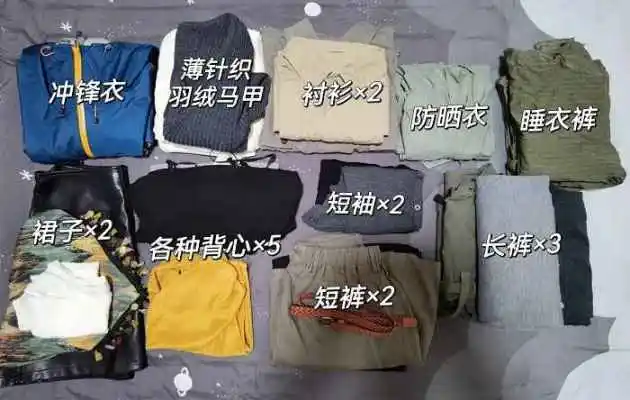
7-Day Laundry Supplement List
A 7-day itinerary has 2 more days of activities than 5 days, requiring a focus on supplementing clothes and consumables. Clothing: add 2 quick-drying T-shirts (7 total, 1 for daily change), add 1 pair of light long pants (3 total, for alternating wear), and add 2 sets of underwear and socks (7 total/pair, for daily change). Consumables: supplement 1 bottle of sunscreen (30ml; the first 5 days use half a bottle, the last 2 days need reapplication), 1 collapsible water cup (replaces disposable cups, reduces waste). Medication: add 3 pills of stomach medicine (13 total, to cope with dietary changes), supplement 50ml of mosquito repellent (mosquitoes are numerous in July, spray twice daily).
Clothes: Calculated by “Daily Change” Quantity
For a 7-day Yunnan solo trip, estimating the clothes is the biggest mistake. The local day-night temperature difference is large (25°C during the day, 15°C at night), the UV is strong (Dali Ancient Town daily UV index 8), and some sections (like the Cangshan trail) will cause sweating. Clothes must be calculated based on the minimum of “1 set change per day”; otherwise, running out of clean clothes midway will be very troublesome.
First, calculate the tops. For 7 days in Yunnan, most people take the Kunming-Dali-Lijiang route, with activities mainly involving strolling ancient towns, cycling around Erhai Lake, and climbing Cangshan Mountain. These activities result in a moderate amount of daily sweating (cycling for 1 hour produces about 0.5 liters of sweat). You must bring 7 quick-drying T-shirts (the 5-day version is 5, so add 2 directly for 7 days). Choose 100% polyester fabric (don’t buy cotton blends; cotton is slow to dry after absorbing sweat). A weight of 180g/m² is most suitable—too thin (below 150g) doesn’t block UV, and too thick (above 200g) is stuffy with sweat. Tests show that this type of T-shirt, when hung in a ventilated area after sweating, is 80% dry in 2 hours. When hung by the guesthouse window at night, it’s completely dry the next morning, just enough for a change.
If you encounter rain (Dali has a 40% chance of showers in July, and Lijiang’s rainy season from June-August has 1-2 hours of light rain daily), 1 light fleece jacket should be prepared (already included in the 5-day version, no need to add one for 7 days, but keep it as a spare). This jacket is not for warmth but for rain protection + windproofing in the rain—the temperature will drop by 3-5°C when it rains. Wearing only a quick-drying T-shirt is too thin; adding the fleece keeps the perceived temperature around 20°C.
Next, look at bottoms. The travel time between Yunnan attractions is long (3 hours from Kunming to Dali, 2.5 hours from Dali to Lijiang), and the legs can get stuffy when sitting for a long time. You must bring 3 pairs of water-repellent long pants (2 pairs for the 5-day version, add 1 for 7 days). Choose 1 pair that is ankle-length (to the ankle), paired with sandals or athletic shoes, for lightness when strolling ancient towns or taking boat rides; choose another pair that is below the knee (10cm below the knee), to protect against mosquitoes by Erhai Lake (mosquito density around Erhai Lake in July is about 15 mosquitoes/square meter) + block UV (below-the-knee design reduces the risk of leg sunburn by 60% compared to shorts). The third pair can be light quick-drying pants (similar material to the first two). If the first two get dirty (e.g., mud from cycling around Erhai Lake), you can wash and hang them that day, and they will be wearable the next day.
Underwear and socks are the most easily overlooked. Underwear must be changed daily (sweat residue breeds bacteria). 7 days require 7 pieces (5 pieces for the 5-day version, supplement 2 pieces). Choose wireless, wide-strap sports bras (good support, won’t shake during trekking), and the material should be 80% polyester + 20% spandex—more breathable than pure cotton and quicker to dry after washing. Socks should be cotton blend (70% cotton + 30% polyester) for sweat absorption and quick-drying. Don’t use pure cotton socks (100% cotton dries slowly after absorbing sweat and will stick to the soles of your feet after 2 hours of trekking), and don’t use wool socks (Yunnan is not cold; wool socks are too thick and stuffy). Bring 7 pairs for 7 days (5 pairs for the 5-day version, supplement 2 pairs). Change 1 pair daily. Even if your shoes get wet on a rainy day, changing to a pair of dry socks avoids foot odor.
Finally, calculate the drying space. Most Yunnan guesthouses have laundry lines (on the balcony or outside the window), but the length is limited (usually 1.5 meters). If all 7 days of clothes (7 tops + 3 pairs of pants + 7 pairs of socks + 7 pieces of underwear) are hung up, you need to roll them into small bundles beforehand (saves 30% space compared to folding flat). Hang quick-drying clothes on the line, and clip socks and underwear to the knots with clothes hangers. They should fit. If you encounter continuous rain (a maximum of 3 consecutive rainy days in July in Yunnan), you can use the guesthouse’s hairdryer to dry them (800W power; blowing a quick-drying T-shirt for 10 minutes can dry it 50%).
Consumables: Supplement Enough for “Daily Use”
Sunscreen: 2 grams daily, at least 20 grams for 7 days
Mosquito Repellent: 1-2 ml daily, at least 7-14 ml for 7 days
Water Cup: 1.5 liters daily, at least 10.5 liters capacity for 7 days
Toiletries: Small packaging, aggregate total volume based on “single use quantity”
Other Small Consumables: Tissues, Wet Wipes Calculated by “Daily Pack”
Medication: Small Adjustments to Cope with “Extended Days”
Stomach Medicine: For every 2 days added, prepare 5 extra pills of basic medicine
Yunnan food is spicy and sour (e.g., Dali Rushan with chili powder, Lijiang Yak Rib Hot Pot). Coupled with the general hygiene of some street stalls, stomach-sensitive people have a 30% chance of experiencing mild diarrhea during a 5-day trip (symptoms: gurgling stomach, 2-3 loose stools per day). You need Berberine (Berberine Hydrochloride), 2 tablets per dose (0.1g/tablet), 3 times a day, taken for 1-2 days to relieve the symptoms.
For a 7-day trip, the chances of exposure to dietary differences increase, and the probability of diarrhea rises to 40%. You need to prepare an extra 5 pills of Berberine (15 pills total)—10 pills for 5 days (2 times a day, 2 pills each time, enough for 2.5 days), with the remaining 5 pills for emergency. A 10-day trip is longer, especially if you visit Dehong (Dai-style Sapi, Paoluda) or Xishuangbanna (Sour Bamboo Shoot Chicken, Bao Shao), the probability of diarrhea may reach 50%. Prepare 20 pills of Berberine, and add 1 box of Montmorillonite Powder (quicker relief from diarrhea; take one sachet if diarrhea is severe).
Don’t use strong medicine like “Changweining”—it’s not needed for mild diarrhea and may cause the body to become dependent. Berberine is an OTC drug, commonly found in pharmacies, with few side effects, suitable for long-term preparedness.
External Medicine: Mosquito Bites and Sunburn, the longer the trip, the more frequently it’s used
Yunnan has two types of mosquitoes: Culex mosquitoes in urban areas (bites at night) and Aedes mosquitoes in scenic areas (Erhai Lake, rainforests, bites during the day). A 5-day trip averages 5 bites (2-3 spots on the legs and arms), and Calamine lotion is enough for itching relief; a 7-day trip may involve 8 bites, and a 10-day trip can reach 12 bites—you need to bring enough Calamine lotion (100ml size, 5 days use 20ml, 7 days use 30ml, 10 days use 50ml). Don’t be stingy; it works better than toilet water.
Sunburn is more subtle. Yunnan’s UV index is 8+ (equivalent to Sanya at noon). A 5-day outdoor activity trip (e.g., climbing Cangshan, cycling around Erhai Lake) has a 20% chance of mild sunburn (red, stinging shoulders and neck). You need Aloe Vera gel (100g size, apply 3 times for 5 days, use 10g). For 7 days, the probability of sunburn increases to 30%, so prepare 150g of Aloe Vera gel (use 20g for 7 days, 130g remaining for next time). For a 10-day trip, if you go to Yubeng Village (3000 meters altitude, stronger UV), the probability of sunburn reaches 40%, so add 1 tube of after-sun repair lotion (contains Vitamin E, to relieve peeling).
Cold Medicine: The longer the temperature difference is prolonged, the higher the probability of catching a cold
Yunnan’s day-night temperature difference is generally over 10°C (25°C during the day, 15°C at night). A 5-day trip has a 20% chance of catching a cold (symptoms: stuffy nose, sneezing). 1 box of Compound Cold Granules (6 sachets, 2 sachets daily, enough for 3 days) is enough. For 7 days, you take off and put on clothes more frequently (e.g., wearing a light jacket when strolling the ancient town in the morning, taking it off when climbing the mountain at noon), and the probability of catching a cold increases to 30%. You need to prepare an extra 3 sachets of cold medicine (9 sachets total)—6 sachets for 3 days, with the remaining 3 sachets for emergency.
A 10-day trip is longer, especially if you visit Diqing (Shangri-La lowest temperature at night is 5°C), and the probability of catching a cold reaches 40%. Prepare 12 sachets of cold medicine, and add 1 pack of Banlangen Granules (for preventing a sore throat). Don’t bring effervescent cold medicine—the powder is easy to spill, and individually packaged tablets are more convenient (e.g., Vitamin C Yinqiao Tablets, 2 tablets daily, 14 tablets for 7 days).
Other Minor Medicines: Supplement Quantity Based on “Frequency of Use”
Motion Sickness Medicine: Yunnan has many mountain roads (108 bends on the winding road from Kunming to Dali). A 5-day trip has 3 car rides, 10% probability of motion sickness; bring 1 box of Dimenhydrinate (6 tablets, enough for 3 times); 7 days has 5 car rides, 15% probability, supplement 2 tablets (8 tablets total); 10 days has 7 car rides, 20% probability, prepare 10 tablets.
Band-Aids: Trekking Cangshan, walking on ancient town stone slabs, a 5-day trip may result in 1-2 minor scrapes (heel, finger); 10 pieces are enough; 7 days may result in 3-4 scrapes, supplement 5 pieces (15 pieces total); a 10-day trip, especially if trekking in rainforests (e.g., Xishuangbanna Tropical Botanical Garden), has a high probability of scrapes, prepare 20 pieces (choose waterproof type, won’t fall off when sweating).
In summary, the key to medication adjustment is “the longer the trip, the longer the time exposed to risk, so prepare more based on probability.” Add 5 pills of stomach medicine, supplement the volume of external medicine, and bring a few extra sachets of cold medicine. These small adjustments will make the trip more reassuring—there are many clinics in Yunnan, but waiting in line to buy medicine delays fun. Preparing enough in advance is more worry-free.
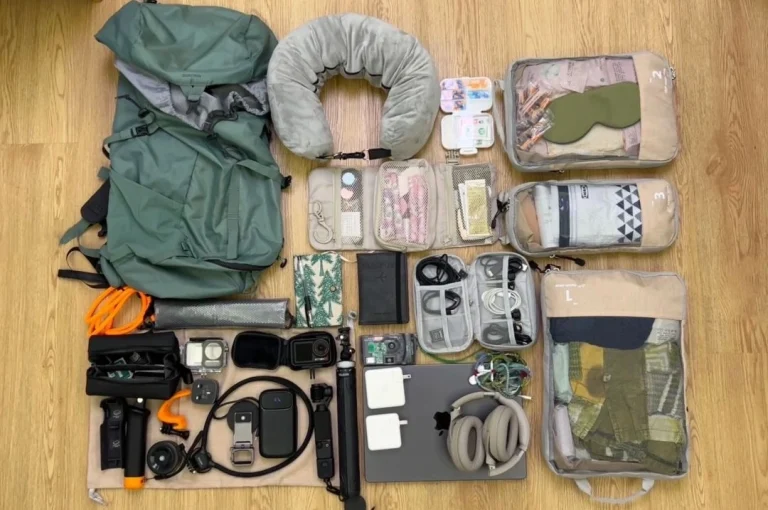
Essential Common Medicines
Yunnan has a large temperature difference (daily 10-18°C) and food that tends to be sour and spicy. For a 5-day trip, prepare 1 box of Berberine (100 tablets, for diarrhea), 1 box of Ibuprofen (20 tablets, for fever and pain relief), and 1 pack of band-aids (10 pieces, for minor scrapes). For 7 days or more, add 1 box of Rhodiola (start taking 3 days in advance, for altitude sickness). For 10 days of trekking, prepare 2 packs of iodine cotton swabs (for treating outdoor wounds). All medicines should be in small packaging, with a total weight not exceeding 200 grams, covering common needs.
Basic Three: Dealing with Daily Minor Issues
First: Berberine, for Upset Stomach
Yunnan cuisine is known for being sour, spicy, and fresh, but some ingredients may upset sensitive stomachs. For example, eating freshly baked Rushan Shaqima in Dali, which is sweet and hard, may cause indigestion; tasting preserved seafood in Xishuangbanna, if parasites or bacteria are not properly dealt with, your stomach will rumble the next day. This is where Berberine comes in handy.
Choose the most common Berberine Hydrochloride tablets, which are over-the-counter and can be bought at any pharmacy. Bring 1 box (100 tablets) for a 5-day trip. They are individually packaged in aluminum-plastic sheets, moisture-proof, and don’t take up space. Usage is simple: when you feel stomach pain or diarrhea, take 2 tablets (100mg/tablet) with warm water after a meal, up to 3 times a day, for no more than 3 consecutive days. If the diarrhea is severe, such as going to the toilet 5 times a day, and there’s no relief after 2 hours of taking the medicine, you need to go to a local clinic—but this is rare, most people feel better after two doses.
Second: Ibuprofen, for Headaches and Fever
Yunnan’s weather is like a roller coaster. Sunbathing in Lijiang Ancient Town during the day, a thin T-shirt is perfect; strolling Sifang Street at night, the mountain wind is chilling. This temperature difference makes it easy to catch a cold, with symptoms like headache, tight throat, or muscle soreness from climbing Jade Dragon Snow Mountain.
Ibuprofen sustained-release capsules are the most suitable. The sustained-release formula takes effect slowly but lasts a long time. Bring 1 box (20 capsules) for 5 days. Adults with a fever above 38.5°C, or a headache/shoulder pain that prevents lifting the arm, take 1 capsule (300mg/capsule) with warm water. Note: do not take on an empty stomach, as it is easy to irritate the stomach; take a maximum of 4 times a day, with an interval of 6-8 hours. If children are traveling, Acetaminophen oral suspension is safer; use the dosage indicated in the instructions.
Third: Waterproof Band-Aids, for Minor Scrapes
Yunnan’s roads are not all smooth asphalt. Walking on the stone slabs in Shaxi Ancient Town, the moss is slippery, and you might fall and scrape your knee; paddling a leaf boat in Puzhehei, the paddle might hit the side of the boat, causing a small cut on the back of your hand. These minor injuries may not look serious, but they are prone to inflammation if exposed to sweat or water.
Choose waterproof band-aids. The adhesive surface can stick to damp skin, and the middle has a sterilized gauze pad. Bring 1 pack (10 pieces) for 5 days, which is enough. When treating a wound, first rinse it with mineral water, then tear open the band-aid and apply it, changing it once a day. If the wound is bleeding heavily or has dirt on it, apply some iodine before using the band-aid; do not apply it directly.
Adjust by Days, Don’t Bring Too Much
These three are enough for a 5-day trip: Berberine for upset stomach, Ibuprofen for headache and fever, and band-aids for minor scrapes. If the trip is extended to 7 days, such as adding Shangri-La, the altitude is higher (3459 meters), and some people may experience dizziness and chest tightness. At this point, you can add 1 box of Rhodiola capsules (start taking 3 days in advance to prevent altitude sickness). For a 10-day trekking trip to Yubeng, there are many gravel roads, and knees are easily scraped. Add 2 packs of iodine cotton swabs, which are gentler than alcohol and do not sting when wiping the wound.
Put all medicines in a small medicine box, and carry it with your ID card and power bank. Don’t put it in checked luggage; if it gets lost, it will delay your trip. Also, check the expiration date of the medicine before departure. Don’t bring anything that expires in just 1 month.
These medicines don’t cost much: Berberine 10 yuan, Ibuprofen 20 yuan, band-aids 5 yuan, 35 yuan in total. But they will make your trip to Yunnan more worry-free, so you won’t be in a bad mood because of diarrhea or a headache.
Extended Days: Increase Medicine as Needed
For a 5-day trip, Berberine, Ibuprofen, and band-aids are enough; for 7 days, adding Shangri-La/Lugu Lake (altitude above 2400 meters), 30% of tourists experience mild altitude sickness, so 1 box of Rhodiola (12 pills × 2 plates, take 3 days in advance) is needed. For 10 days to Yubeng/Tengchong (more trekking, gravel roads are easy to scrape), add 2 packs of iodine cotton swabs (20 pieces); more mountain bends, increased probability of motion sickness, prepare 1 box of Dimenhydrinate (12 tablets). Control the total medicine weight to within 300 grams, and carry the small medicine box with you.
7-Day Trip: Preventing Altitude Sickness in High-Altitude Areas
The 7-day itinerary often adds Shangri-La and Lugu Lake. Shangri-La city has an altitude of 3459 meters, and Pudacuo National Park is even higher (3600 meters). In the first 1-2 days of arrival, about 30% of tourists will have mild altitude sickness: dizziness, heavy walking, and difficulty sleeping at night. This is not an illness but the body not adapting to the low-oxygen environment.
This is when Rhodiola capsules should be added. It contains Rhodiola glycosides, which help the body adapt in advance. Taking it 3 days before departure has the best effect—for example, start taking it on the 5th day before departure, 2 times a day, 2 capsules each time (50mg/capsule). Even if there is a slight reaction upon arrival at the plateau, it will be milder than for those who didn’t take it. It is not needed for a 5-day trip, but it is just right for the adaptation period of a 7-day trip. Don’t wait until severe breathing difficulties occur; at that point, you need to inhale oxygen directly.
10-Day Trip: Prepare More Disinfectants for Outdoor Trekking
The 10-day itinerary often includes Yubeng and Tengchong Volcanic Geothermal National Geological Park. The round trip trekking distance from Yubeng Village to Ice Lake is 14km, with many gravel roads and thorns along the way. Scraped elbows and knees are common. The trails near Tengchong Hot Sea are slippery, and the elderly and children can easily fall and get minor scrapes. Waterproof band-aids are not enough at this point—band-aids only protect the surface; the inside of the wound needs to be disinfected.
You need to add iodine cotton swabs, 2 packs (20 pieces total) are enough. Dip the cotton swab tip in iodine, and gently apply it around the wound. It is less irritating than alcohol and won’t sting. Especially for children who cry and refuse to let you apply alcohol, iodine cotton swabs are a good alternative. In addition, the 10-day trip involves more outdoor time, more sweating, and wounds are easily infected. Clean the wound with an iodine cotton swab once a day, and it will generally scab in 3 days.
Many Mountain Roads: Motion Sickness Medicine is also Necessary
The 10-day itinerary often involves the Sichuan-Tibet line or winding mountain roads. For example, from Lijiang to Lugu Lake, there are over 100 bends on the 200km mountain road. Even if you don’t usually get motion sickness, the bumpy mountain roads and the smell of gasoline can cause nausea and vomiting. Dimenhydrinate tablets (Dramamine) can be used for emergency relief. It’s not needed for a 5-day trip, but 1 box (12 tablets) is recommended for a 10-day trip. Take 1 tablet 30 minutes before getting on the bus, and it lasts for 4-6 hours. Note: do not take it with Ibuprofen, as it may increase stomach discomfort.
Table: New Medicines Added for Extended Days
|
|
|
|
|
|---|---|---|---|
|
|
|
|
|
|
|
|
|
|
|
|
|
|
|
Carrying Tips: Don’t Be Greedy, Enough is Enough
For a 7-day trip, adding Rhodiola increases the total medicine weight from 200 grams to 250 grams; for 10 days, adding iodine cotton swabs and motion sickness medicine increases the total weight to about 300 grams. Put all of them in a small, palm-sized transparent medicine box, and carry it in your chest pocket with your passport and cash, so you can quickly access it when getting off the bus to eat or going to the toilet.
For a 7-day or 10-day trip to Yunnan, you don’t have to add a bunch of medicines. Instead, you need to supplement the essentials for specific scenarios like “high altitude,” “outdoor trekking,” and “bumpy mountain roads.” Bringing these few extra items will allow you to watch the sunrise at Meili Snow Mountain without dizziness, take photos at Ice Lake in Yubeng without worrying about scrapes, and not feel nauseous on the road around Lugu Lake.
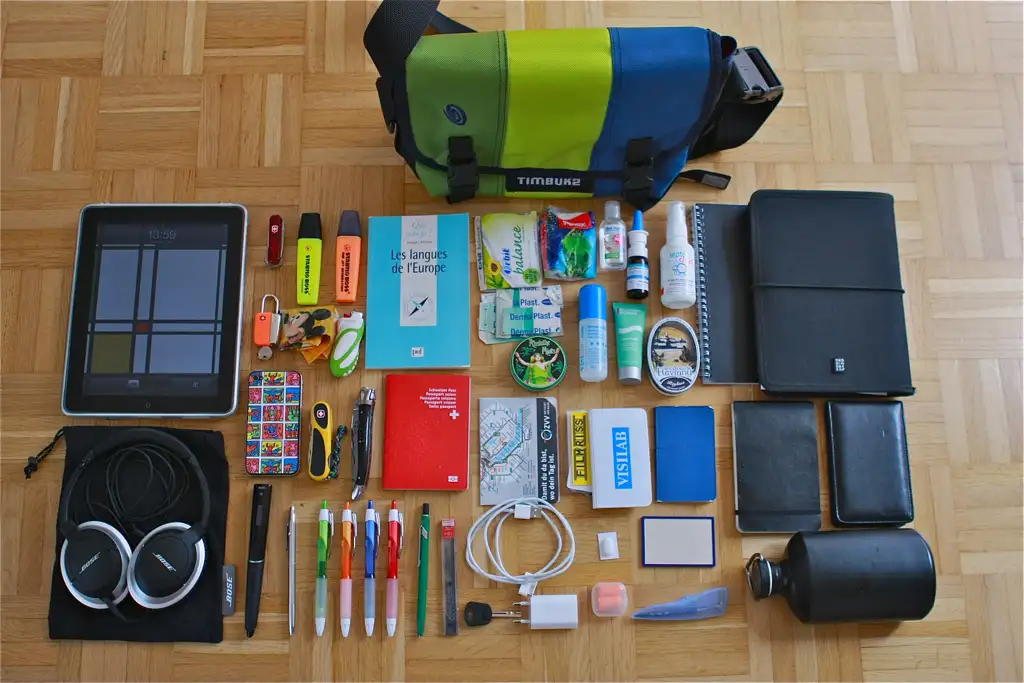
Carrying Small Tips
Put medicines in a small transparent medicine box (10cm×5cm), divided by days, for quick retrieval; roll clothes into cylinders (saves 30% space compared to folding), and put them into waterproof compression bags (20L size holds 7 days of clothes); put trekking shoes in a separate mesh bag, and place them on the upper layer of the suitcase to prevent crushing; label all items with the date, as Yunnan has high humidity (over 70% annual average), to prevent medicines from getting damp. A 5-day trip requires 1 20-inch carry-on suitcase + 1 backpack, a 7-day trip adds 1 waterproof bag, and a 10-day trip adds 1 small waist bag. The total weight does not exceed 20 pounds.
Medicines in a Small Box, Quick to Find
Medicines cannot be randomly stuffed into the suitcase. Yunnan has high humidity (over 70% annual average), and tablets can soften and become ineffective when damp. Buy a palm-sized transparent medicine box (10cm×5cm×2cm), divided into 7 or 10 compartments—a 5-day trip uses 5 compartments, 1 compartment per day for the day’s medicine; a 7-day trip adds 2 compartments, 1 for Rhodiola, and 1 for spare Berberine. Choose a medicine box with a clasp, so it won’t open during air travel. Don’t use plastic bags; they are prone to leaks and make finding medicine a mess. Before departure, put the medicine box in the side pocket of your backpack. When you have a headache, you can grab it right away, 10 times faster than searching through your suitcase.
Roll Clothes Tightly, Saves Space and Prevents Wrinkles
Folding clothes takes up space and is prone to wrinkles. Try the “rolling method”: lay the T-shirt flat, fold the left and right sides to the middle into a strip, and then roll it up from the bottom. Tests show that rolling 10 T-shirts saves 30% space compared to folding. Don’t compress thin down jackets; put them in a mesh storage bag (20cm×30cm); it is both lightweight and prevents them from being crushed and deformed by other clothes. The clothes for a 7-day trip can fit in a 20-inch carry-on suitcase: 3 quick-drying T-shirts + 2 fleece jackets + 1 pair of shell pants + 1 pair of shoes. There is still space left to stuff sun protection sleeves.
Trekking Gear Separate, Anti-Pressure and Anti-Dirt
For trekking in Yubeng or Haba Snow Mountain, you need to bring hiking boots, crampons, and quick-drying pants. These items are dirty and can stain clean clothes if mixed. Buy a 20L waterproof trekking bag (sturdier than a backpack). Put the shoes in separately, and stuff old socks into the toe to prevent deformation; wrap the crampons in plastic bags twice to prevent puncturing the bag. Put the trekking bag on the upper layer of the suitcase. When getting off the bus for trekking, you can just grab it, without having to search the entire suitcase. The total weight of the trekking bag for a 10-day trip is controlled within 5 pounds, containing 2 pairs of shoes + crampons + quick-drying pants + knee pads, just right.
Odds and Ends in Bags, Clear at a Glance
Small items like power banks, toiletries, and sunscreen are easily lost if scattered. Prepare 3 transparent zip-lock bags: the first for electronics (power bank, earphones, universal adapter), the second for toiletries (small bottles of shampoo, toothpaste, towel), and the third for sun protection (sunscreen, sunglasses cloth, lip balm). Label the bags with “Electronics,” “Toiletries,” and “Sun Protection.” When looking for something, you don’t have to search. Yunnan has large scenic areas. Put the zip-lock bags in your pocket when strolling the ancient town. You can use them whenever you need them, which is safer than putting them in your coat pockets.
Table: Carrying Tool Reference for Different Days
|
|
|
|
|
|---|---|---|---|
|
|
|
|
|
|
|
|
|
|
|
|
|
|
|
Final Check: Weight and Expiration Date
After packing everything, weigh the total: not exceeding 12 pounds for 5 days, 15 pounds for 7 days, and 18 pounds for 10 days. If it exceeds 20 pounds, don’t force it. The car journey between Yunnan attractions is long (e.g., Kunming to Dali 3.5 hours), and carrying a heavy bag is tiring. In addition, make a list before departure to check the expiration date of medicines (at least 6 months before expiration) and whether the clothes are water-repellent (Dali rainy season is June-September; ordinary T-shirts are slow to dry when wet).
Keep Reading
- 8-Day Ultimate Yunnan Route: Kunming – Dali – Lijiang – Shangri-La – Yubeng – Lugu Lake – Xishuangbanna, Experience All in One Trip
- 12-Day Ultimate Northwest Yunnan Route: Kunming – Dali – Lijiang – Shangri-La – Yubeng, Hiking and Culture All in One
- Should I stay at the South Gate or the North Gate of Lijiang Old Town: Comparison of luggage, transportation and accommodation
- How to Get from Dali Railway Station to Dali Ancient City: Bus, Direct Shuttle, and Taxi Compared
- 10-Day Self-Drive on Southern Sichuan-Tibet Route in Autumn | Lake Ranwu + 72 Turns of Nujiang + Lulang Forest Ocean, The Most Splendid Golden Corridor of G318
Dali —: Numbers to Check
Typical Climate & Packing (Past Years)
- January: 2 °C–16 °C °C, [Travel climate reference]
- February: 4 °C–18 °C °C
- March: 6 °C–21 °C °C
- April: 9 °C–24 °C °C
- May: 12 °C–25 °C °C
- June: 15 °C–25 °C °C, Rainy season






