



Day 1: Arrival in Lhasa, Checking into an Oxygen-Supplied Hotel to Adapt
Itinerary and Transportation Details
- Around 10:30 AM: The plane landed at Lhasa Gonggar Airport. Continuous green mountains could be seen outside the window, and the air was significantly thinner than in the inland areas. When picking up luggage, the carousel turned three times before we saw our suitcases, which felt cool with the unique plateau chill. Driver Tashi, who had been contacted a day in advance, was waiting at the exit with a sign. Next to him was a silver medical oxygen cylinder. He said, “Don’t rush to leave after getting off the plane; take a few breaths first.” We rode in a seven-seater Buick GL8 with soft seats. Tashi fixed the oxygen cylinder at the feet of the second row. On the road, he asked “How do you feel” every half hour. The drive to the urban area took 40 minutes, passing a tributary of the Yarlung Tsangpo River where the water surface shimmered with fine light.
- Shortly after 2 PM: Arrived at Beijing Middle Road. I chose this hotel because it is a 10-minute walk from the Jokhang Temple and close to Barkhor Street, making it convenient if my parents wanted to take a slow stroll. During check-in, the receptionist Zhuoma specifically instructed: “The diffuse oxygen supply machine in the room is on 24 hours a day, don’t turn it off. If it’s cold at night, call for a blanket.” The room window faced south, offering a silhouette of Chakpori Hill, and the sunlight shining in was not dazzling. After putting down the luggage, I immediately boiled water to fill the thermos—the plateau is dry, and the throat feels like it’s covered with a layer of paper; drinking warm water at any time can provide relief. My parents rested on the bed. I slowed down the air conditioner fan speed and heard my mom whisper, “It felt a bit stuffy in the car just now, but my head doesn’t feel groggy now.”
- Around 6 PM: Turning right out of the hotel is Yutuo Road. The poplar leaves on both sides of the asphalt road were slightly yellow, rustling in the wind. I supported my parents as we walked slowly, step by step, reaching the outskirts of the Potala Palace Square in 15 minutes. We stood on a gentle slope without climbing stairs, where we could clearly see the entire front of the palace. The setting sun dyed the golden roof orange-red, like a layer of crushed gold, and the distant clouds were gilded. Mom wrapped her coat tightly and said, “The wind is a bit cool, but my breathing is about the same as in Chengdu.” Dad looked up for a while and nodded: “It’s better than when we got off the plane; at the airport, my chest felt tight.”
Accommodation Experience and Adaptation Observation
The hotel chosen this time was a certain oxygen-supplied hotel on Beijing Middle Road (about 450 yuan per night). In addition to the oxygen generator, the room was equipped with a humidifier (the plateau is too dry) and emergency oxygen bags (placed at the bedside). I specifically tested the oxygen generator upon check-in; there was a slight airflow sound from the outlet. Zhuoma said, “This machine is the same model used in hospitals. The diffuse oxygen supply is uniform and won’t cause choking.” My parents lay down until 4 PM. I made them each a cup of Rhodiola tea (prepared in advance). Seeing them finish it and say “my stomach feels warm and I don’t feel nauseous,” I felt relieved enough to boil water for instant noodles (I chose a light tomato and egg flavor, fearing greasiness).
Detailed Summary (Table)
|
Item
|
My Practice and Observation
|
|---|---|
|
Transportation Link
|
Booked a business vehicle (including driver + oxygen cylinder) 1 day in advance. Picked up at the airport exit with a sign. 40-minute drive (many speed limits, no rush).
|
|
Hotel Choice
|
Beijing Middle Road near Jokhang Temple. Chose diffuse oxygen + humidifier room type (400-500 yuan/night). Front desk confirmed the oxygen generator runs 24 hours.
|
|
Adaptation Measures
|
Inhale oxygen brought by the driver after getting off the plane (5 minutes). Lay flat for 2 hours after checking in. Boil water to fill the thermos (drink anytime). Walk slowly for 15 minutes to view the scenery in the evening.
|
|
Parents’ Status
|
Dad said “chest feels tight” upon getting off the plane, relieved after inhaling oxygen. During evening sightseeing, Mom proactively said “not breathless,” with a breathing frequency close to that of the plains (16 times per minute).
|
Personal Tips
- Don’t rush when picking up luggage at Gonggar Airport; altitude sickness may slow down your movements. It is normal to wait two extra rotations of the carousel.
- Choose a business vehicle with seven or more seats; the large space allows for leg stretching. Local drivers like Tashi will also remind you: “Don’t sleep in the car, it easily worsens altitude sickness.”
- Don’t turn off the hotel oxygen generator! My mom got up at midnight to drink water and found the machine had stopped. She quickly called the front desk to restart it; fortunately, it didn’t affect her sleep.
- Choose Yutuo Road instead of the Beijing Middle Road main road for evening strolls; fewer cars and people, more shade under the poplars, suitable for observing the breathing rhythm of elders.
At the end of this day, my parents ate a portion of vegetarian dumplings (15 yuan/portion) at the hotel restaurant, saying “they are softer than airplane meals.” I watched them watching TV in the room after dinner, the oxygen generator running quietly, knowing that the “slow adaptation” of the first day is more important than rushing to attractions—after all, in the next 5 days, their status will be the foundation of the itinerary.
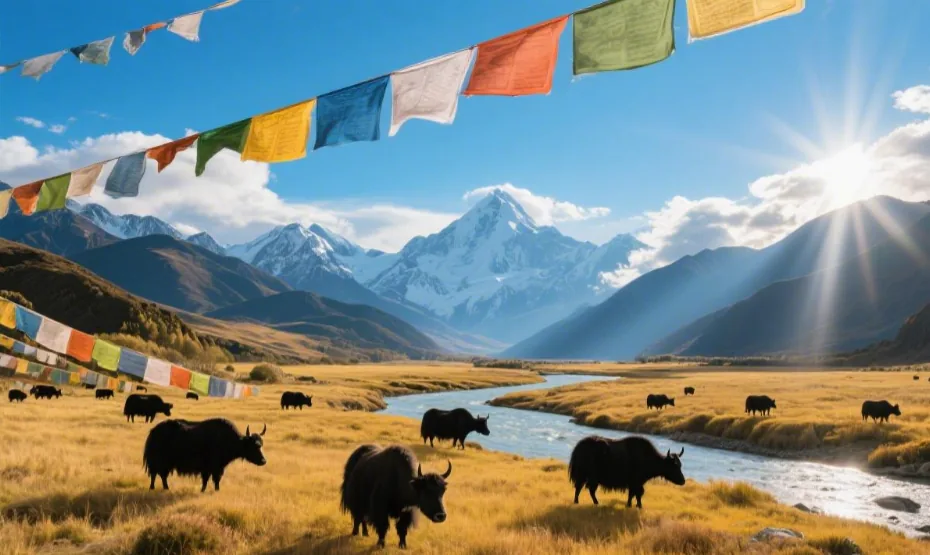
Day 2: Lhasa Cultural Experience—Jokhang Temple and Barkhor Street
Morning: In-depth Visit to Jokhang Temple and Observation of Elders’ Adaptation
- Time: We arrived at the entrance shortly after the Jokhang Temple opened at 9 AM (tickets are 85 yuan/person, payable by cash or WeChat). Rent an electronic guide at the left side of the entrance (20 yuan/unit, 100 yuan deposit), and select the “elderly mode”—slow speech and key points highlighted in red. I first helped my parents put on headphones and taught them how to press the “next page” button to listen to the explanation.
- Highlights: Follow the guide straight to the life-sized statue of Shakyamuni at age 12 (called “Jowo Rinpoche” in Tibetan) on the second floor of the main hall. The light in the hall was dim, with only a few butter lamps floating with smoke. The Buddha statue was draped in gold leaf robes, eyes lowered as if in deep thought. I held my mom’s arm with one hand and shielded my dad’s back with the other, walking half a step slower than usual—fearful that the gaps in the floor tiles might trip them. A Tibetan Ajia (older sister) nearby proactively said “it’s spacious here” and led us to the side of the Buddha statue, avoiding the young people performing prostrations in front.
- Kora Experience: While circling the main hall on the kora path (walking clockwise), we encountered three lamas chanting in a corner, the drumbeats and chanting mixing together. I didn’t let my parents kneel; I just whispered “just follow for one circle.” Dad stared at the prayer wheel in the lama’s hand for a while and whispered, “This wood makes a clattering sound when it turns, different from the temples back home.” The whole visit took 3 hours. We rested twice in the corridor outside the hall, 10 minutes each time. Mom said, “My legs aren’t sore, but my neck is a bit stiff from looking up for so long.”
Afternoon: Flat Walking in Barkhor Street and Resting at a Local Tea House
- Route Choice: We came out of Jokhang Temple around 3:30 PM and walked south along Barkhor Street—choosing the flagstone road to the south (the northern side has a dense crowd of pilgrims walking fast with prayer wheels). There was light grass growing in the gaps of the flagstones, and the road surface was flat without potholes, suitable for elders to walk slowly. Passing a shop selling Thangka, the owner was not there, the door was open, and a Green Tara image was hanging. Mom stood and looked for a while, saying, “The colors are so bright.”
- Experience at Lao Guangming Gangqiong Sweet Tea House: Walking to the street corner, we saw the “Lao Guangming” sign (locals all flock here). Bamboo chairs and low tables were crowded, but no one was fighting for seats. I found a window seat (where we could see an old lady weaving Pulu in the alley) and ordered two pots of sweet tea (10 yuan/pot, served in enamel pots) and two servings of Tibetan noodles (15 yuan/bowl). The sweet tea tasted like milk tea but was not as greasy, with a strong tea flavor and a hint of milk fragrance; beef cubes settled at the bottom of the noodle bowl, and the noodles were soft. Mom said, “It’s more chewy than machine-made noodles back home.” Two Tibetan youths at the next table were chatting about the horse racing festival in low voices. We sat and rested for 1 hour, watching the old lady sitting on the threshold, the shuttle weaving sheep wool thread into patterned Pulu edges.
Accommodation and Night Confirmation
Stayed another night at the oxygen-supplied hotel on Beijing Middle Road (450 yuan/night). Before going to bed, I checked the diffuse oxygen supply machine—there was a slight airflow sound from the outlet, and the temperature showed 22°C (it’s cold at night on the plateau, this setting is just right). I poured each of my parents a cup of warm water (keeping the thermos with me) and confirmed their blankets were tucked in tightly. Mom said drowsily, “I walked a lot today, but I feel at ease.” Only then did I turn off the light.
Detailed Summary (Table)
|
Item
|
My Practice and Observation
|
|---|---|
|
Attraction Experience
|
Focus on the life-sized statue of Shakyamuni at age 12 (second floor main hall) at Jokhang Temple. Select elderly mode for the electronic guide. Follow the kora path and listen to lamas chanting; follow quietly without kneeling.
|
|
Walking Route
|
Choose the southern flagstone road in Barkhor Street (avoiding crowds). The road surface is flat; the light grass in the gaps does not affect walking at a slow pace.
|
|
Food Record
|
Lao Guangming Gangqiong Sweet Tea House: Sweet tea 10 yuan/pot (enamel pot), Tibetan noodles 15 yuan/bowl (beef cubes + soft noodles). Sit by the window to watch the lady weaving Pulu while resting for 1 hour.
|
|
Parents’ Status
|
Rested 2 times during the 3-hour Jokhang Temple visit; Mom said “neck is stiff from looking up.” During the 40-minute walk in Barkhor Street, Dad proactively said “flagstone road is more comfortable than cement.”
|
|
Expense Details
|
Jokhang Temple tickets 85 × 2 = 170 yuan, electronic guide 20 × 2 = 40 yuan; sweet tea 10 × 2 = 20 yuan, Tibetan noodles 15 × 2 = 30 yuan. Total 260 yuan.
|
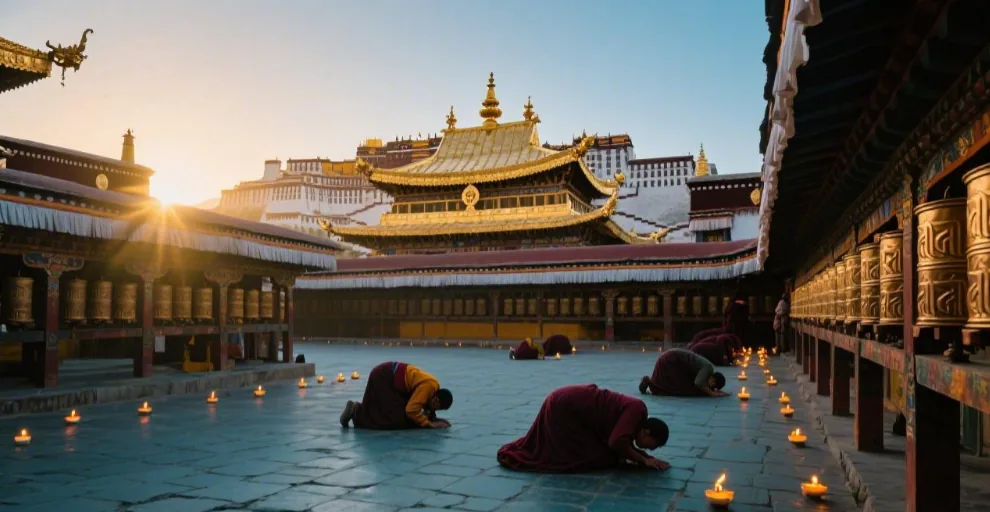
Day 3: Lhasa to Nyingchi, Niyang River Valley Scenery Trip
Morning: Driving on the Lin-La Expressway and Segmented Adaptation
- Departure Preparation: Departed from the Lhasa hotel at 8 AM sharp. Had the driver check the business vehicle in advance (a nine-seater Ford Transit with wide seat spacing so parents could stretch their legs). The vehicle was equipped with medical oxygen cylinders (2 large and 2 small) and a diffuse oxygen generator on top, with outlets facing the back seats. I gave each of my parents a U-shaped pillow and said, “Take a nap on the way, don’t force yourselves to stay awake.”
- Experience on the Way: Driving along the Lin-La Expressway, the first 2 hours showed bare mountains out the window, with occasional flashes of highland barley fields. Driver Tsiren stopped at service areas exactly every 1 hour—choosing the Baiba Service Area (which has a hot water room and clean toilets). My parents got out to stretch. They used their own thermoses to get hot water. Mom said, “This water is warmer than in Lhasa, it’s comfortable to drink.” From the 3rd hour, the green of the Niyang River Valley appeared outside the window, the river water shimmering with emerald light. Dad pointed out the window and said, “These mountains are greener than in Lhasa.”
- Oxygen Details: The diffuse oxygen generator was on the whole time. Tsiren said, “When driving on the plateau, an oxygen concentration of 23% is most suitable and not irritating.” I asked my parents every now and then if they felt “dizzy.” Mom shook her head: “It’s much better than at the airport yesterday, just my ears feel a bit full, like being on a plane.”
Afternoon: Short Stay at the Basum-tso Lake Viewpoint
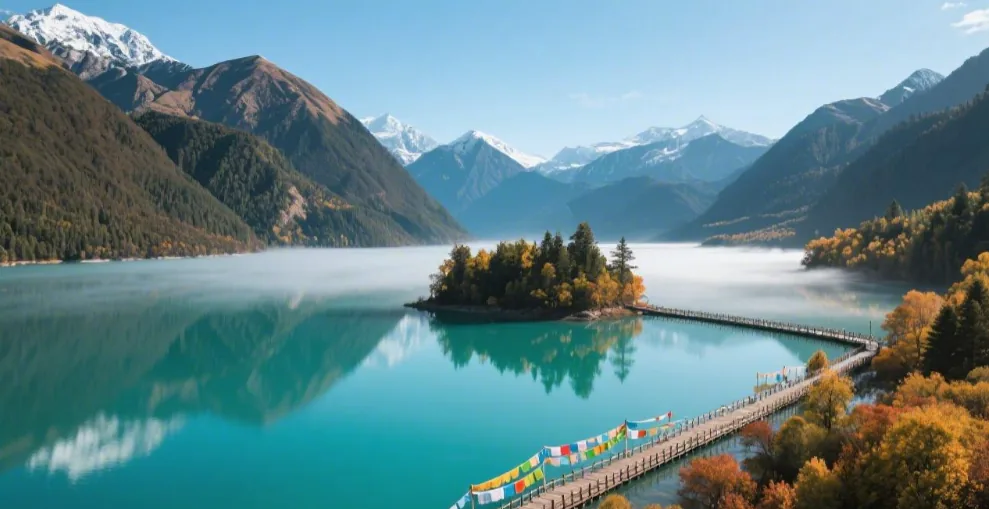
- Viewpoint Location: Around 12:30 PM, when the car reached the vicinity of Basum-tso, Tsiren said, “There’s a viewpoint halfway up the mountain ahead with free parking.” Driving up the winding mountain road, the view suddenly opened up—Basum-tso Lake was like a blue-green jade pendant embedded in the valley. The shore was light green, the middle was deep blue, and the distant snow-capped mountain peaks showed white.
- Parking Experience: After parking, I supported my parents to the wooden railing (the railing is not high, providing a sense of security). I took out my phone to take a panorama. Dad leaned over to look at the screen: “This lake is even more translucent than in photos!” Mom noticed yaks grazing by the lake and said, “Don’t startle them, let’s watch quietly.” The parking lasted for 20 minutes. We didn’t go into the scenic area (to save the effort of climbing stairs and queuing for tickets). Tsiren smoked by the car and said, “You have to take a boat inside, it’s exhausting for elders.”
Evening: Arrival at Nyingchi Urban Area and Dinner
- Arrival and Accommodation: Arrived in Nyingchi urban area around 6:30 PM and checked into an oxygen-supplied hotel on Xiamen Street, Bayi Town (480 yuan per night). This was chosen because it is near the Yak Square vegetable market (a 5-minute walk). The receptionist Zhuoga said, “The room oxygen generator is the same model as in Lhasa and runs 24 hours. It’s also equipped with an electric blanket (it’s about 10°C at night in Nyingchi).” After putting down the luggage, I immediately went to the market to buy apples and pears (10 yuan for 3 jin, crisp and juicy) for my parents as a midnight snack.
- Dinner Record: Found a “Yuwei Sichuan Cuisine” restaurant next to the hotel (the owner is from Chongqing and said “I’ll make it light for the elders”). Ordered light version Twice-cooked Pork (the front leg meat was fried until fragrant, without bean paste) and stir-fried potato shreds (cut thinly, with only salt and minced garlic). The rice was local rice (distinct grains, not sticky). Dad took two bites and said, “This rice is softer than in Lhasa, it’s easy to swallow.” Mom mixed the potato shreds into the rice: “No chili, it doesn’t burn the stomach.”
Detailed Summary (Table)
|
Item
|
My Practice and Observation
|
|
|---|---|---|
|
Transportation
|
Nine-seater Ford Transit business vehicle, equipped with a diffuse oxygen generator (23% concentration). Stopped at Baiba Service Area every 1 hour (hot water, toilets). 4-hour drive (speed limit 80 km/h).
|
|
|
Attraction Experience
|
Basum-tso Viewpoint (free): Parked for 20 minutes halfway up the mountain. Photographed the lake (blue-green layers + snow mountain background) without entering the area to save energy.
|
|
| Accommodation |
Oxygen-supplied hotel on Xiamen Street, Bayi Town (480 yuan/night). Near Yak Square vegetable market (convenient for buying fruit). Room has electric blanket + 24-hour oxygen generator.
|
|
|
Food
|
“Yuwei Sichuan Cuisine” light twice-cooked pork (35 yuan), stir-fried potato shreds (18 yuan), local rice (5 yuan/bowl). Parents praised the rice as “soft and easy to digest.”
|
|
|
Parents’ Status
|
During the drive, Mom said “ears are full (normal plateau reaction).” Proactively said “the lake is beautiful” at the viewpoint. After dinner, Dad claimed “ate more heartily than in Lhasa.”
|
|
|
Expense Reference
|
Vehicle fee (including oxygen) 800 yuan (shared), dinner 61 yuan, fruit 10 yuan. Total 871 yuan.
|
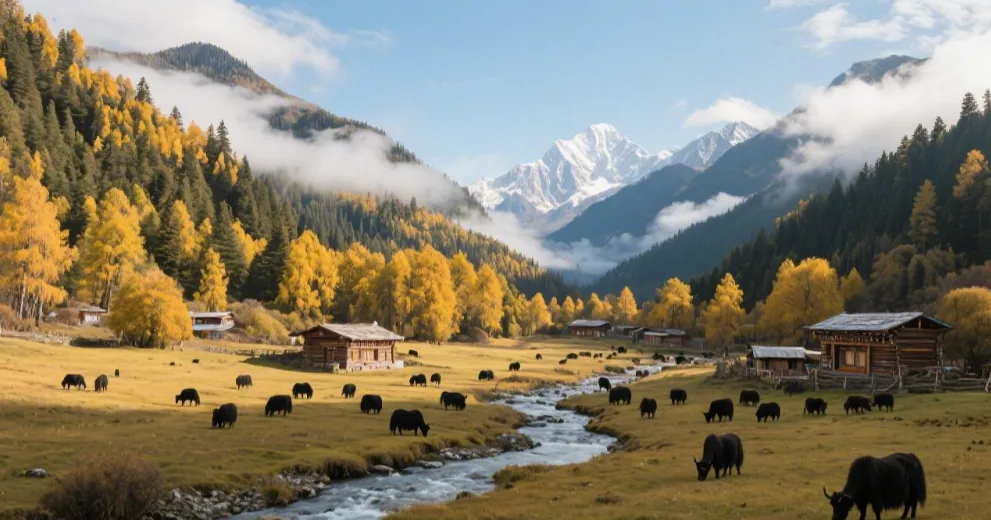
Day 4: Leisure Tour of Lulang Town in Nyingchi
Morning: Driving from Nyingchi to Lulang and High Mountain Pasture Experience
- Departure and Drive: Shortly after 9 AM, checked out of the Nyingchi Bayi Town hotel and departed in a seven-seater business vehicle (driver Duojie, a local Tibetan familiar with Lulang road conditions). The drive took 1.5 hours along a tributary of the Niyang River. On the left were emerald river waters (slow flow, allowing a view of the pebbles at the bottom), and on the right were stretches of spruce forests (straight trunks with swaying light spots on the ground). Duojie said “this road is called Lulang Forest Highway, the colorful forests are even better in autumn.” My parents nodded while staring out the window. Mom said “the trees are denser than in Lhasa, and the air smells humid.”
- High Mountain Pasture Stay: Around 10:30 AM, the car reached the High Mountain Pasture (free and open, with obvious signs by the road). After parking, I helped my parents out of the car. Underfoot was soft meadow (stepping on it felt like a thick carpet, no gravel). In the distance, black and white spotted dairy cows and sheep were grazing unhurriedly. I told my parents to wait by the roadside and not chase after them—surely enough, a lamb tottered closer. Mom whispered “don’t scare it” and took a photo with her phone (the lamb had long eyelashes, looking like a ball of fluff). The stay lasted 30 minutes. We didn’t go deep into the pasture (fearing slopes). Duojie smoked by the car and said “the grass is deep inside, elders might get stuck.”
Afternoon: Lulang Forest Viewing and Resting at a Tibetan Tea House
- Viewing Platform Wooden Plank Road: Arrived at the Lulang Forest Viewpoint around 2 PM. A sign at the entrance read “Elevation 3700m.” The wooden plank road was flat with no slopes (each section about 50m long, with handrails at turns). Walking up the slope, both sides were dense with pine and birch trees, the pine needles falling softly on the ground. Reaching the middle platform, we could see Namjagbarwa Peak in the distance—the clouds were as thick as cotton wool, then suddenly a corner opened up, revealing the pyramid-shaped peak (silvery white snow with gray rock edges). Dad held his phone and took a picture: “This peak looks majestic, more powerful than in photos!” Mom said “I’m satisfied just seeing a corner, I heard it’s covered by clouds for many days throughout the year.” The walk on the plank road took 40 minutes (round trip) without climbing stairs, so knees were not tired.
- Tibetan Tea House Experience: Coming down from the viewpoint, Duojie took us to Tashi’s Tea House in the village (run by local Tibetans, a wooden house with a courtyard). Entering, there was a fire pit. The owner Zhuoma greeted us with a smile and served low-sugar butter tea (25 yuan/pot, served in a ceramic pot)—the tea flavor was strong with a hint of milk fragrance, and only a little sugar was added. My parents drank it and said “it doesn’t scratch the throat.” The accompanying barley cake (10 yuan/portion) was freshly baked, crispy on the edges and soft inside, perfect for dipping in the butter tea. Zhuoma sat opposite and chatted: “My husband went to the mountains to pick matsutake, he kneaded the dough for this cake this morning.” As we left, she gave us a handful of dried hawthorn: “Chew two if you’re hungry on the road, it helps digestion.”
Accommodation: Oxygen-Supplied Guesthouse in Zhaxigang Village and Courtyard Time
Chose an oxygen-supplied guesthouse in Zhaxigang Village (520 yuan/night), which saved 1 hour of driving back to Nyingchi urban area (sparing my parents from more jolting). The guesthouse was a two-story Tibetan-style building with white-plastered outer walls and a courtyard filled with Gesang flowers (pink, white, and purple). The owner Dunzhu turned on the floor heating in advance (the room floor was warm, no cold feet when taking off shoes) and also boiled ginger tea (made in a copper pot with ginger slices and red dates). Dad drank two bowls and said “my stomach feels like it’s holding a small sun.” The room had a diffuse oxygen generator (the same model as the Lhasa hotel), and an oxygen bag was placed at the bedside just in case. Mom liked the rattan chairs in the courtyard best, sitting and watching the Gesang flowers sway in the wind in the evening, saying “it’s more interesting than a hotel room.”
Key Details Summary (Table)
|
Item
|
My Practice and Observation
|
|---|---|
|
Transportation
|
Seven-seater business vehicle (driver Duojie, familiar with local roads). 1.5-hour drive (speed limit 60 km/h). Saw Niyang River tributary and spruce forests.
|
|
Attraction Experience
|
High Mountain Pasture (free): Soft meadow without gravel. Waited by the road for livestock to approach for photos (30 minutes). Lulang Forest Viewpoint: Walked on flat plank road with no slopes (40 minutes). Saw a corner of Namjagbarwa Peak through the clouds.
|
|
Accommodation
|
Oxygen-supplied guesthouse in Zhaxigang Village (520 yuan/night). Floor heating + diffuse oxygen generator. Courtyard with Gesang flowers. Owner Dunzhu boiled ginger tea (copper pot) and prepared oxygen bags.
|
|
Food Record
|
Tashi’s Tea House: Low-sugar butter tea 25 yuan/pot (ceramic pot), barley cake 10 yuan/portion (freshly baked and crispy). Hawthorn jerky for digestion.
|
|
Parents’ Status
|
When taking photos at the pasture, Mom said “the lamb is cute and not scary.” At the viewpoint, she said “a corner is clear enough.” In the guesthouse, Dad said “feet are warm from the floor heating,” and before sleeping, claimed it was “more comfortable than the Nyingchi hotel.”
|
|
Expense Reference
|
Vehicle fee (Nyingchi-Lulang) 300 yuan, tea house 35 yuan, guesthouse 520 yuan. Total 855 yuan.
|
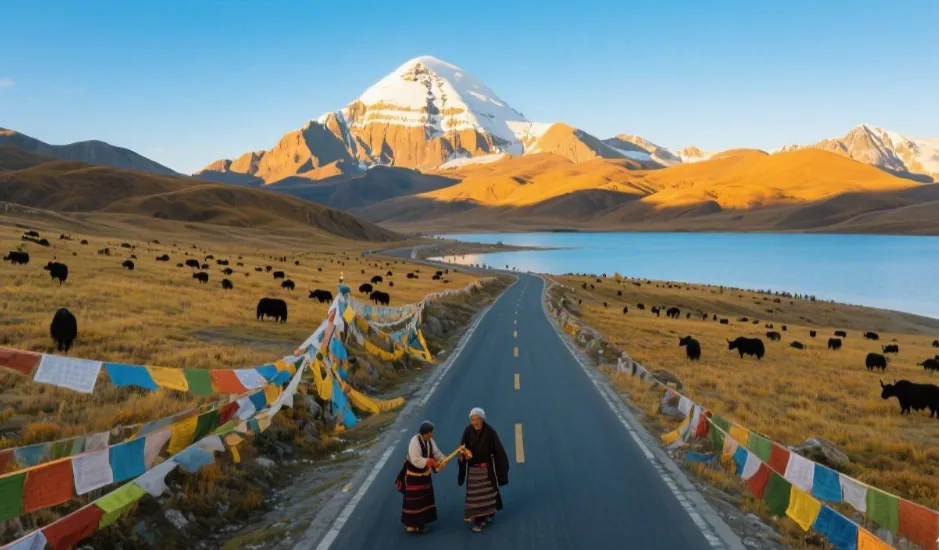
Day 5: Basum-tso Lake Center Island and Lakeside Stroll
Morning: Taking a Boat to the Island and Visiting Cuozong Gongba Monastery
- Departure and Drive: Shortly after 9 AM, checked out of the Lulang guesthouse and went to Basum-tso in the seven-seater business vehicle (still with Duojie). The drive took about 1 hour. The mountain road had many turns but was gentle. Outside the window, spruce forests gradually thickened, with occasional flashes of streams (the sound of water rushing like white noise). Duojie said “Basum-tso’s elevation is 3480m, lower than Lulang, you should be more comfortable.” My parents nodded while looking out the window. Dad said “this road is a bit narrower than the one to Lulang yesterday, but the car is stable.”
- Tickets and Boarding: Arrived at the scenic area entrance around 10:30 AM. Bought a package ticket (entrance fee 120 yuan/person + boat ticket 50 yuan/person, payable by cash or WeChat). Several large blue boats (capacity 50 people, double-decked) were docked at the pier. We chose a seat at the front of the second deck (good view and not bumpy). When the boat started, the waves were not big. My parents held the railing and watched the lake water change from light green to deep blue. Mom said “it’s like sitting in a cradle, not dizzy”—surely enough, it was stable throughout, and I didn’t see them frown.
- Lake Center Island and Cuozong Gongba Monastery: The boat docked after 20 minutes. We landed on the Lake Center Island (stone-paved paths, no stairs). In the center of the island is Cuozong Gongba Monastery (a small monastery with red walls and a golden roof). There is a thousand-year-old peach tree at the entrance (branches reaching to the roof). When entering the hall, we caught the monks churning butter: two young monks surrounded a wooden barrel, repeatedly pounding the milk dregs with a long pole. Bubbles gurgled in the barrel, and the scent of milk mixed with butter drifted out. I whispered to my parents “this is for making butter, used for lighting lamps and offering to Buddha.” Dad leaned in to watch: “This requires steady strength, just like kneading dough.” After visiting the monastery, we rested on wooden chairs by the island, watching the lake water hit the shore and the waves breaking into white stars.
Afternoon: Strolling on the Lakeside Wooden Plank Road and Observing Wilderness
- Route Choice: Left the island around 2 PM. As planned, we walked the flat section of the plank road from Jieba Village to the viewpoint (avoiding steep slopes). This section of the plank road is built along the lake. On one side is the lake water (blue like a gem, with fine scales under the sun), and on the other side is a wild grassland (blooming with purple primroses and yellow dandelions). Duojie said “this section at Jieba Village has fewer tourists and the plank road was recently built, no potholes.” Surely enough, it was smooth, and my parents didn’t need me to support them.
- Stroll Experience: The whole walk took 1 hour (round trip). When tired, we sat on stones by the lake to rest (the stones were warmed by the sun and not cold). Mom noticed a marmot peeking out by the plank road and quickly took a photo: “This little guy is round and plump, more active than those in the zoo!” Dad pointed to the distant snow-capped mountains and said “that peak looks like a twin to the Namjagbarwa we saw yesterday”—it was actually a branch of the Nyenchen Tanglha Mountains, which is clearer when there are fewer clouds. We didn’t rush, walking to the viewpoint platform and then turning back. The wind on the platform was strong, and Duojie handed over light jackets (which he carried with him). Dad put one on and said “there is moisture in the wind, it’s cool and comfortable.”
Evening: Returning to Nyingchi and Stone Pot Chicken Dinner
- Return and Accommodation: Left Basum-tso around 4:30 PM. 1-hour drive back to Nyingchi urban area. Checked into the same oxygen-supplied hotel on Xiamen Street, Bayi Town (staying for two consecutive nights so parents are familiar with the room layout). After putting down the luggage, I immediately went to “Lulang Stone Pot King” restaurant next to the hotel (the owner is from Lulang, recommended by Zhuoma at the tea house on the fourth day).
- Dinner Record: Ordered a clear broth stone pot chicken (168 yuan/pot, enough for 3 people), added matsutake (50 yuan/portion), yam (20 yuan/portion), and corn (15 yuan/cob). The stone pot is made in Medog (black with textures, good heat retention). After the soup boiled, I served a bowl to each of my parents first—the soup was milky white, the chicken meat was stewed until tender and falling off the bone, the matsutake had a strong fresh flavor, and the yam was waxy but not falling apart. Mom drank two bowls of soup: “It’s lighter than I imagined, no burden on the stomach.” Dad chewed a chicken leg and said “this pot is well-stewed, even the bones have flavor.” We ordered a portion of stir-fried Chinese kale (25 yuan) to cut the greasiness.
Detailed Summary (Table)
|
Item
|
My Practice and Observation
|
|---|---|
|
Transportation
|
Seven-seater business vehicle (driven by Duojie). 1-hour drive from Nyingchi to Basum-tso (gentle mountain road), 1-hour return drive.
|
|
Attraction Experience
|
Lake Center Island: Took a large boat to the island (stable and no seasickness). Visited Cuozong Gongba Monastery (saw monks churning butter, thousand-year-old peach tree). Lakeside Plank Road: Chose the flat section from Jieba Village to the viewpoint (1 hour). Rested on lakeside stones to see marmots and wild flowers.
|
|
Food Record
|
“Lulang Stone Pot King” clear broth stone pot chicken 168 yuan (plus matsutake 50 + yam 20 + corn 15), with stir-fried Chinese kale 25 yuan. The soup was fresh and the meat tender. Parents praised it as “light and easy to digest.”
|
|
Parents’ Status
|
While on the boat, Mom said “no dizziness, like a cradle.” During the lakeside walk, she proactively said “the plank road is flat and not tiring to walk.” After the chicken soup, Dad claimed “even the bones are well-stewed.”
|
|
Expense Reference
|
Package ticket (120+50) × 2 = 340 yuan, stone pot chicken 168 + side dish 25 + extra dishes 85 = 278 yuan, vehicle fee 200 yuan. Total 818 yuan.
|
|
Pitfall Avoidance
|
Don’t buy “roadside boat tickets” at Basum-tso (might have no insurance); choose the official scenic area ticket office. Don’t walk on undeveloped wild paths around the lake (grass outside the plank road is deep and easy to get stuck).
|
Day 6: Returning to Lhasa from Nyingchi, Ending the Journey
Morning: Sending off at Nyingchi Airport and Return Transportation Choice
- Airport Drop-off Arrangement: My parents’ return flight was scheduled to depart from Nyingchi Mainling Airport at 10 AM. We left the Bayi Town hotel at 8 AM (a 40-minute drive). Driver Duojie drove the seven-seater business vehicle, with diffuse oxygen still on (concentration set to 22%). I gave each of my parents a U-shaped pillow: “Take a nap, I’ll wake you up when we reach the airport.” Passing the Niyang River Bridge, the water surface reflected the morning light. Dad looked out the window and said “I’ve seen more water in these 6 days than in my whole life back home.”
- Experience at Nyingchi Airport: Nyingchi Airport is indeed small (the terminal building has only one floor). There was no queuing at the check-in counters, and two staff members at the security gate smiled and said hello (Duojie often brings guests, they are familiar faces). When Mom handed her ID into the window, she said “it’s my first time flying from such a small airport.” The security officer helped her open her thermos to take a sip: “Plateau water, drink slowly.” Before boarding, Duojie gave me a note: “Lhasa airport exit phone number 138待确认, call anytime if anything happens.”
- Return Transportation Comparison: I had hesitated whether to fly home directly from Nyingchi (to save time), but my parents wanted to see Lhasa one last time, so we eventually chose the flight from Nyingchi to Lhasa (a 1-hour flight). Duojie said “the bullet train takes 4 hours and has many mountain bends, the elders’ waists can’t take it”—later it proved correct. When the plane landed, Mom said “it was much more stable than the car to Lulang yesterday.”
Afternoon: Pre-return Check and Instructions at Lhasa Airport
- Arrival and Check-in: The plane landed at Lhasa Gonggar Airport at 1:30 PM. After picking up luggage, took a business vehicle back to the urban area (a 40-minute drive). My parents said “there was plenty of oxygen on the plane, no dizziness.” My heart was half-relieved. Returned to the oxygen-supplied hotel on Beijing Middle Road (the old place where we stayed for 6 nights). After putting down the luggage, I let them lie flat to catch their breath.
- Pre-return Check: I started packing at 4 PM, checking each item: parents’ IDs (placed in a waterproof bag inside the passport folder), thermoses (filled with warm water, as the plateau is dry), portable oxygen cans (2 per person, pressure gauge in the green zone), Rhodiola capsules (half a bottle left, in a small medicine box), and thick coats (Dad’s hardshell jacket and Mom’s fleece jacket folded at the top). Mom leaned over to look: “You’re more thorough than my own daughter.”
- Instruction Details: I wrote the instructions for using the oxygen cans on sticky notes and put them on the cans (“inhale 10cm from nose after opening the valve”). I told Dad “don’t shower immediately after getting home, lie down for half an hour to adjust first”; I told Mom “don’t fill the thermos too full, it spills easily under low plateau air pressure.” Finally, I knelt down to tidy their collars: “Send me a message when you get home to tell me you’re safe.”
Experience (Table Summary)
|
Category
|
My Practical Details
|
|---|---|
|
Transportation
|
Chose plane from Nyingchi to Lhasa (1 hour, stable), avoiding bullet train (4 hours of bends and jolts). Departed 2 hours early for airport drop-off (40-minute drive). Driver Duojie left an emergency phone number.
|
|
Accommodation
|
Stayed at the Beijing Middle Road oxygen-supplied hotel on the return day (familiar environment puts parents at ease). Room oxygen generator runs 24 hours (confirmed airflow sound before bed).
|
|
Rhythm
|
No attractions scheduled on the return day; focus on rest throughout the day. If returning to Lhasa after the morning drop-off, rest on the plane; lie flat in the hotel in the afternoon to avoid fatigue.
|
|
Equipment
|
Check portable oxygen can pressure (gauge in green zone), thermos water level (half-full to prevent spilling), and waterproof bag for documents (ID + flight tickets together). Sticky note with oxygen usage on the cans.
|
|
Pitfall Avoidance
|
Don’t check luggage at Nyingchi Airport (small airport baggage handling is slow). Bring thermoses (get hot water after security). Ensure spare oxygen cans are ready before returning from Lhasa (2 per person).
|
|
Recommendation
|
Choose a morning flight from Nyingchi to Lhasa (stable weather). Return to the urban hotel after landing (more worry-free than staying near the airport). Driver Duojie can help book tickets (cheaper than online).
|
Expense Reference (2 people for 6 days, excluding round-trip airfare)
- Accommodation: 6 nights × 500 yuan (Lhasa 3 nights 450 yuan/night, Nyingchi 2 nights 480 yuan/night, Lulang 1 night 520 yuan/night) = 2930 yuan (actually slightly below budget)
- Transportation: Business vehicle charter (including oxygen, driver’s food and lodging) 4000 yuan (daily average 667 yuan for 6 days, including Nyingchi-Lulang-Basum-tso detour)
- Tickets: Jokhang Temple 85 × 2 = 170 yuan, Basum-tso package (120+50) × 2 = 340 yuan. Total 510 yuan (no other paid attractions)
- Dining: 6 days × 150 yuan (including sweet tea, Tibetan noodles, stone pot chicken, etc.) = 900 yuan (parents didn’t buy extra snacks)
- Others: Portable oxygen cans (spare) 80 yuan, Rhodiola capsules 120 yuan. Total 200 yuan
- Grand total about 8540 yuan (average 4270 yuan per person, zero extra spending for elders)
Related Reading
- Tibet Classic 8-Day Grand Loop | Potala Palace + Namtso Lake + Everest Base Camp, Snow Peaks & Sacred Lakes a First-Timer Must-See
- 7-Day Tibet Entry Route for Mild Altitude Sickness | Nyingchi + Lhasa + Yamdrok Lake, A Smooth Low-to-High Elevation Transition for First-Timers
- 7-Day Shigatse Exploration: Tashilhunpo, Sakya, and Palcho Monasteries – Thangka Art & Tibetan Architecture
- 8-Day Tibet Honeymoon: Love Above the Clouds.
- 7-Day Tibet Winter Budget Guide | Sunbathing in Lhasa + Frozen Lake Pumo + Sera Monastery, Ticket-Free with Fewer Crowds & Better Scenery
Lhasa — — Practical Data
Tickets & Booking
- Sera Monastery ticket: CNY 50 per person (half price with student ID; free on the 15th day of each Tibetan month); open about 09:00–17:00 (last entry 16:00); no booking required[src]
- Norbulingka ticket: Standard ticket CNY 60 per person, concession CNY 30 per person (excluding the zoo ticket); off-peak season (Nov–Apr of the following year) CNY 30 per person. Concession groups: seniors 65 and above, minors aged 7–17, current full-time undergraduate students and below, non-stationed military personnel and the “three categories of dependents”, and disabled persons get half price; no booking required[src]
Transport & Schedules
- Lhasa station → Shigatse station | Train (direct express Z8801): Departs 08:10 and arrives 10:39, 248 km total, about 2 h 29 min; hard seat CNY 40.5, hard sleeper upper CNY 111.5/middle CNY 116.5/lower CNY 119.5. There is also a C-series intercity train a[src]
- Lhasa station → Nyingchi station (Bayi) | Train (EMU C881 / conventional K9801): C881 EMU 07:55–11:36, 435 km, about 3 h 41 min; K9801 conventional 08:40–14:00, about 5 h 20 min. Runs daily[src]
Where to Stay · Room Type · Nearby
- Around Potala Palace Square/Yutuo Road/Beijing Middle Road | Reference price Budget about CNY 200–400, mid-range about CNY 400–800, high-end above CNY 800 (reference) | Room tip: Prefer “oxygen-supplied hotels” with diffused or nasal-cannula oxygen, which can relieve discomfort when first arriving | Nearby add-ons: Potala Palace, Chakpori viewing platform (the photo spot on the CNY 50 note), Zongjiao Lukang Park, Barkhor Street[src]
- Barkhor Street/old-town inns and guesthouses | Reference price About CNY 150–500 per night (reference) | Room tip: Walking distance to the Jokhang Temple and Barkhor Street, good for experiencing the old-town atmosphere; street-facing | Nearby add-ons: Jokhang Temple, Barkhor Street, Makye Ame, Ramoche Temple, Muru Temple[src]
Typical Climate & Packing (Past Years)
- January: -7.4 °C–8.4 °C °C, Lhasa is at an elevation of about 3650 m with a large year-round day
- February: -4.7 °C–10.1 °C °C
- March: -0.8 °C–13.3 °C °C
- April: 2.7 °C–16.3 °C °C, Spring is dry and windy
- May: 6.8 °C–20.5 °C °C, One of the comfortable periods
- June: 10.9 °C–24.0 °C °C, Rainy season begins; frequent afternoon showers






