



Day 1: Landing in Lhasa, Slowly Adapting to the Highland Rhythm
At 10:30 AM, the plane landed at Gonggar Airport. As soon as the cabin door opened, a cold wind carrying fine snow rushed in. My phone showed a temperature of -5°C, and I could see white breath as I breathed. Following the signs to the taxi queue outside the terminal, there were only two cars ahead. I got into a metered taxi. The driver said, “Beijing Middle Road in the city, 80 yuan, no meter no go,” but it turned out the meter hit exactly 80 yuan upon arrival, which was more honest than expected.
After dropping off my luggage, I went straight to the sweet tea house 50 meters to the left of the hotel—I had researched this before coming. The owner is from Sichuan, and the sweet tea is savory with a milky fragrance, 15 yuan per pot is enough for two people. My heart started beating a bit fast right after sitting down, so I took out the pulse oximeter from my bag (bought before the trip for 200 yuan). It measured blood oxygen at 88%. I quickly poured the tea into a thermos and took small sips. Half an hour later, it rose to 93%, and I felt relieved. A reminder here: do not bathe within the first 24 hours of arriving in Lhasa. I couldn’t resist last time and ended up with a headache so bad I couldn’t roll over in bed. This time, I specifically put my change of clothes in the closet and only wiped my face.
After 5 PM, the sun began to set. I put on my hard shell jacket (with a fleece inner) and strolled west along Yutuo Road, reaching the perimeter of the Potala Palace in 10 minutes. The streetlights under the palace walls were already lit, illuminating several Tibetan elders sitting on the stone steps. Their prayer wheels were polished bright from use, and the tunes of their sutra chanting were low and deep. One Grandma even smiled at me and pointed to my sweet tea pot, as if saying “drinking this in this weather is right.”
Case: A young man on the same flight rushed to take a shower right after landing and ended up vomiting in the hotel lobby. I later learned that bathing during altitude sickness causes blood vessels to dilate and consumes oxygen; his blood oxygen dropped to 85% and he was sent to the hospital for oxygen, delaying half a day of his trip.
- Prioritize metered taxis from the airport; from Gonggar to the city is about 60 km, 80 yuan is normal.
- Choose a hotel on Beijing Middle Road, close to Barkhor Street and the Potala Palace. The tea house downstairs provides hot drinks anytime.
- Don’t buy sweet tea that’s too sweet; the savory flavor is better for fatigue. Pair it with a piece of Highland Barley Cake (5 yuan) to stay full.
- Don’t wander too far in the evening; watching the night view around the Potala Palace is enough. Return to your room if the wind gets strong.
|
Day 1 Info
|
Detailed Description
|
|---|---|
|
Transportation
|
Gonggar Airport → Budget hotel on Beijing Middle Road, taxi meter 80 yuan (60 km, 1 hour drive)
|
|
Accommodation
|
Budget hotel standard room 180 yuan/night (including breakfast), good heating, street view from the window
|
|
Food
|
Sweet tea house downstairs 15 yuan/pot (savory milky flavor), paired with 5 yuan Highland Barley Cake
|
|
Expenses
|
Transportation 80 yuan + Sweet tea 15 yuan = 95 yuan (small daily expenditures)
|
|
Precautions
|
Do not bathe upon arrival. If blood oxygen is below 90%, use a thermos with hot water to warm your hands. Keep Ibuprofen ready (for headaches).
|
At 8 PM, I returned to my room. The hotel heating was set to 22°C. I hung my wet socks on the radiator and listened to the occasional sound of prayer wheels outside. The first day of landing in -5°C was not as hard as imagined. The secret to adapting to the plateau is “slowness”—move half a beat slower, breathe a bit more steadily, and let your body find its own rhythm.
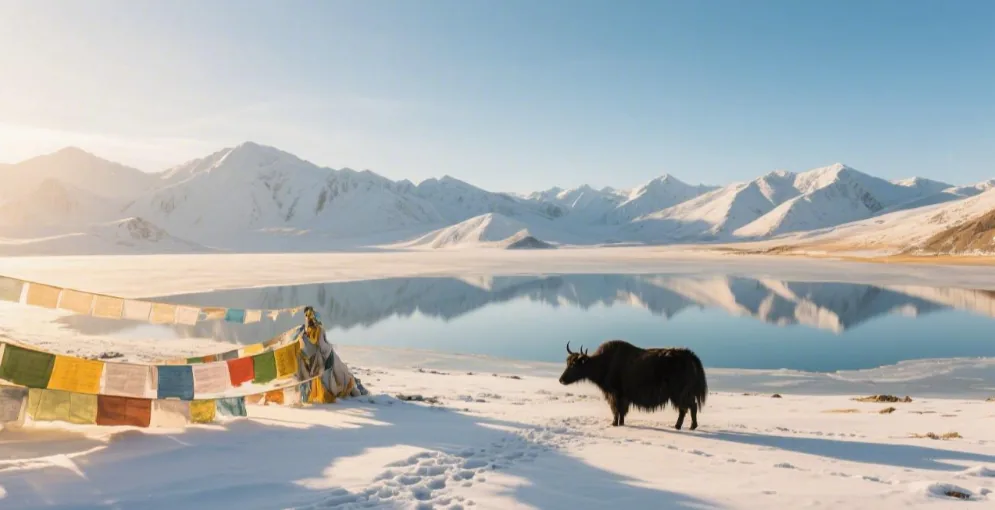
Day 2: Wandering Lhasa City, Sunbathing and Sightseeing for Free
On the second day, I woke up naturally. Opening the curtains, the sun was bright outside. The phone showed 8°C with little wind—perfect time to go out and “recharge.” Leaving the hotel on Beijing Middle Road, a 10-minute walk led to Jokhang Temple Square. Around 9:30 AM, the smoke from sang-offering mixed with sunlight, and the stone pavement was warmed by the sun; you could feel the warmth seeping up from the stone cracks when stepping on it. I followed the locals and walked around the temple three times clockwise. Each time I passed the temple gate, an old lady would press a candy into my hand (said to be for blessings). On the third lap, I met an old man spinning a prayer wheel who said in broken Mandarin, “Walk slowly, and your heart will be quiet.” I nodded in agreement, and my pace slowed down too.
Near 11 AM, I wandered into the Barkhor Street kora. The “Guangming Gang Qiong ” sweet tea house branch was packed. I spent 3 yuan for a cup of sweet tea (slightly lighter than the one below the hotel, but with a strong tea taste) and sat on a small stool against the wall to let the sun soak through my back. Next to me, several prostrating pilgrims had dust on their foreheads; every time they kowtowed, they wiped the stone slab with their sleeves, moving as precisely as a pendulum. I brought a bag of 5 yuan Highland Barley Cakes and broke them into small pieces to eat with the tea. The cakes were crispy enough to drop crumbs, and the tea was savory and refreshing. This “street breakfast” cost 8 yuan, much more comfortable than a restaurant.
At 1:30 PM, I strolled to the Yaowang Mountain Lookout. It’s diagonally opposite the Potala Palace and requires no ticket; just a few steps up. I used my phone’s telephoto lens (set to 3x) to capture the golden roof on the side of the Potala Palace. The afternoon sun hit the gilded tiles obliquely, reflecting light without being dazzling, allowing clear view of the patterns on the eaves. There was an open space by the railing where I sat watching others take photos. A young man came at noon and his photos of the palace came out washed out in the strong light. Later, after the sun moved west, he got better shots—remember that the light is best for photos after 2 PM.
At 3 PM, I went to Zongjiao Lukang Park. Upon entering, I first heard “cracking” sounds; the lake surface was covered in a thin layer of ice with cracks like spider webs. Groups of black-headed gulls were by the shore. I spent 2 yuan on a bag of breadcrumbs, and they fluttered their wings to grab them when I scattered them. A brave one landed by my feet, tilting its head to look at the bag in my hand. The stone benches by the lake were full of people sunbathing. I followed them and padded my back with a newspaper (borrowed from the hotel). It was warm and not hard, watching the reflections of the snow mountains on the ice—the afternoon passed just like that, daydreaming.
Case: A girl next to me wearing a thin sweatshirt sat for ten minutes before rubbing her hands and shivering. Later, she borrowed my fleece liner to recover, saying she thought Lhasa wouldn’t be cold during the day. Actually, the three-layer onion dressing method is a must—I wore a wool sweater inside, fleece in the middle, and a hard shell outside. I could take one off if it got hot, and didn’t feel cold even sitting on stone benches.
- Don’t walk counter-clockwise around Jokhang Temple Square, and don’t step on the stone pavement barefoot (there are stone chips).
- Choose sweet tea houses in Barkhor Street with many locals; 3 yuan/cup of sweet tea is great value.
- Take photos of the Potala Palace from Yaowang Mountain after 2 PM; use 3x zoom for golden roof details.
- Don’t go near the edge of the ice in Zongjiao Lukang Park. Feed black-headed gulls breadcrumbs (no human snacks).
|
Day 2 Info
|
Detailed Description
|
|---|---|
|
Time
|
9:30 AM to 4:00 PM (Wake up naturally, adjust rhythm with the sun)
|
|
Route
|
Hotel → Jokhang Temple Square (10 min walk) → Barkhor Street (5 min walk) → Yaowang Mountain (15 min walk) → Zongjiao Lukang Park (8 yuan taxi)
|
|
Expenses
|
Sweet tea 3 yuan + Barley cake 5 yuan + Breadcrumbs 2 yuan + Taxi 8 yuan = 18 yuan
|
|
Key Experiences
|
Warm stones at Jokhang Square, pilgrims in Barkhor Street, Potala Palace profile at Yaowang Mountain, gulls on the ice at Zongjiao Lukang
|
|
Precautions
|
Three-layer onion dressing (Wool sweater + Fleece + Shell), use newspaper to sit on stone benches, don’t feed gulls salty food
|
Returning to the hotel in the evening, my back felt hot from the sun. I felt this day was more relaxing than two hours in a gym. The sun in Lhasa isn’t “burning,” it’s “warming.” Strolling slowly lets the light seep into your bones, and the tension from altitude sickness loosens up.
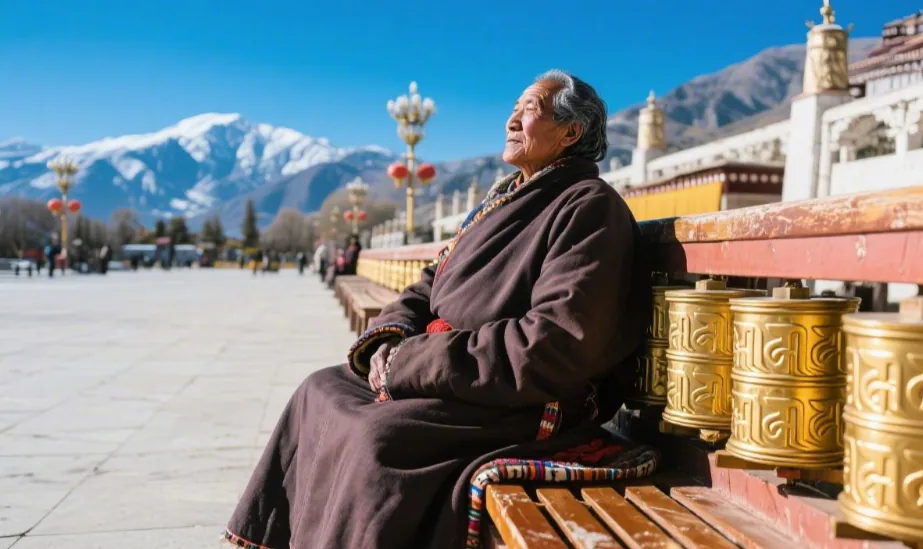
Day 3: Watching Sutra Debates at Sera Monastery, Experiencing Tibetan Buddhist Life
Starting at 9 AM from the hotel on Beijing Middle Road, I called a ride-hailing car. The driver was a Tibetan Master who said, “Sera Monastery, 15 minutes away, I know the road well.” As we passed Norbulingka, he pointed outside and said, “They watch peach blossoms there in summer; in winter the trees are bare, but the debates go on.” The car fare was 25 yuan. When we reached the gate, it was exactly 9:50 AM, the gate just opened, and there were few tourists.
Securing a spot is key. I went straight to the wooden fence on the east side of the debate ground—you must arrive here before 10:50 AM, or you’ll be blocked by shadows. The wooden fence was warmed by the sun. I chose a middle position directly facing the debate platform. An old local man sitting next to me handed me a piece of dried yak milk (naizha) and said, “Eat something to line your stomach, the debate takes a long time.” At 10:50 AM, monks began to enter, wearing crimson robes and carrying sutras, dividing into groups of two facing each other on the ground.
The debate began. The monks’ hand claps sounded like whips cracking the air. The right hand hit the left palm with a “clap” while the left foot stomped the ground with a thud. The sound of debate hit like a drumbeat—sutra verses mixed with Tibetan Q&A. Although I couldn’t understand, I could see the questioners pointing to the ground to emphasize points, and the answerers shaking their heads while citing scriptures. One young monk got impatient, stood up and spun around, his robe swirling like a flower. The whole audience laughed, but he remained serious and continued the debate.
After it ended, I approached a lama who understood Mandarin to ask about the hand gestures. He nodded with a smile, and I paid 20 yuan for a 10-minute explanation. A thumb up means “affirmation” (like my nod), a curved index finger pointing at the other is “questioning,” and palms together over the head is “asking for guidance.” He said, “Debating isn’t arguing; it’s making Buddhist logic clearer,” and I finally understood those intense expressions were sincere.
At 2 PM, I took the small back mountain trail to hike to the top. The path is a dirt road with gravel slopes; carrying a trekking pole is so important (I rented one at the small shop at the foot of the hill for 10 yuan/pole). Along the way, I saw marmots poking their heads out of burrows, and prayer flags at the top fluttering loudly in the wind. Forty minutes later, I reached the summit, and the Lhasa River Valley was spread out before me—the golden roof of the Potala Palace sparkled in the sun, the Lhasa River was like a silver chain winding around the city, and the distant peaks wore snow caps. I sat on a rock eating an apple I brought (5 yuan each), watching clouds float in the valley until the sun moved west to descend.
Case: A girl came in a short skirt and shivered by the wooden fence; she ended up borrowing a monk’s robe to wrap herself. An older man without a trekking pole slipped on the way down and scraped his knee.
- Choose local drivers for taxis; you can chat about monastery rules (like no flash photography during debates).
- Don’t be late for the east wooden fence; direct sunlight before 10:50 AM offers the best view, and the warm fence is comfortable for long sits.
- Ask a lama to explain hand gestures after the debate (the 20 yuan is worth it); don’t guess the meanings.
- The back mountain trail is steep; bring trekking poles for slip resistance and wear non-slip shoes (no flat sneakers).
|
Day 3 Info
|
Detailed Description
|
|---|---|
|
Transportation
|
Taxi from the city 25 yuan (15 min); driver is familiar with traffic and chats about Sera’s history
|
|
Tickets
|
Free in winter with on-site ID registration (Bring original, no photocopies)
|
|
Experience
|
Watching debates from the east fence (loud clapping and stomping), 20 yuan for lama’s hand gesture explanation (thumb for affirmation), 40 min hike to the summit to overlook the valley
|
|
Expenses
|
Taxi 25 yuan + Explanation 20 yuan + Pole rental 10 yuan + Apple 5 yuan = 60 yuan
|
|
Precautions
|
Bring trekking poles, stay quiet during debates, don’t walk off-path alone on the mountain, wear non-slip shoes
|
Returning to the hotel in the evening, my legs were a bit sore but my heart was clear. Sera Monastery’s debate isn’t like a performance; it’s truly living life as a practice—the serious look of the monks is more touching than any scenery.
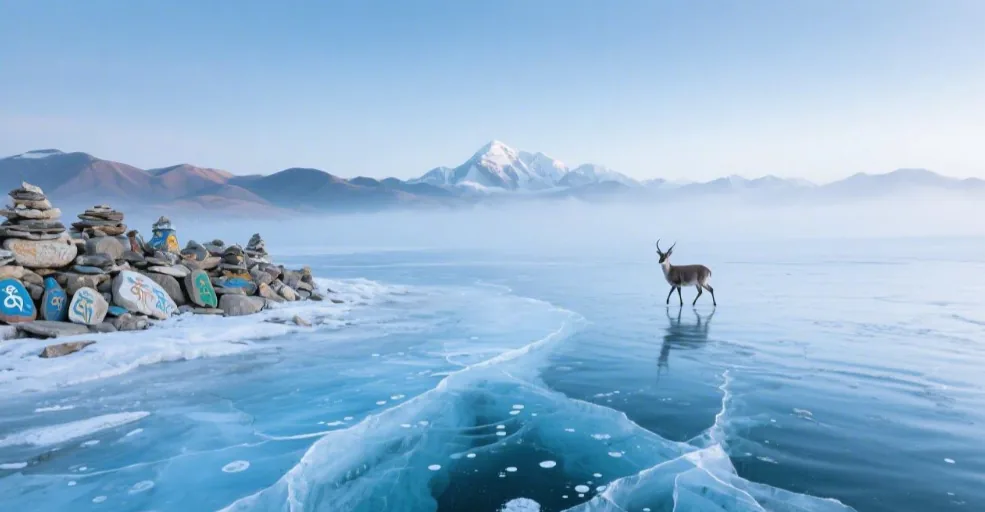
Day 4: Lhasa → Yamdrok Lake → Pumoyumco
Last night, I chatted with the hotel owner, saying I wanted to see the ice at Yamdrok Lake and Pumoyumco. He helped me contact a driver he often works with, saying a 7-seater business car including the driver costs 800 yuan a day, 200 cheaper than if I found a travel agency myself. This morning at 8 AM, the driver arrived punctually at the hotel. The car was a Buick GL8 bought last year with plenty of rear space. The driver even handed me a bottle of portable oxygen, saying “Take a few puffs if your head hurts on the road.”
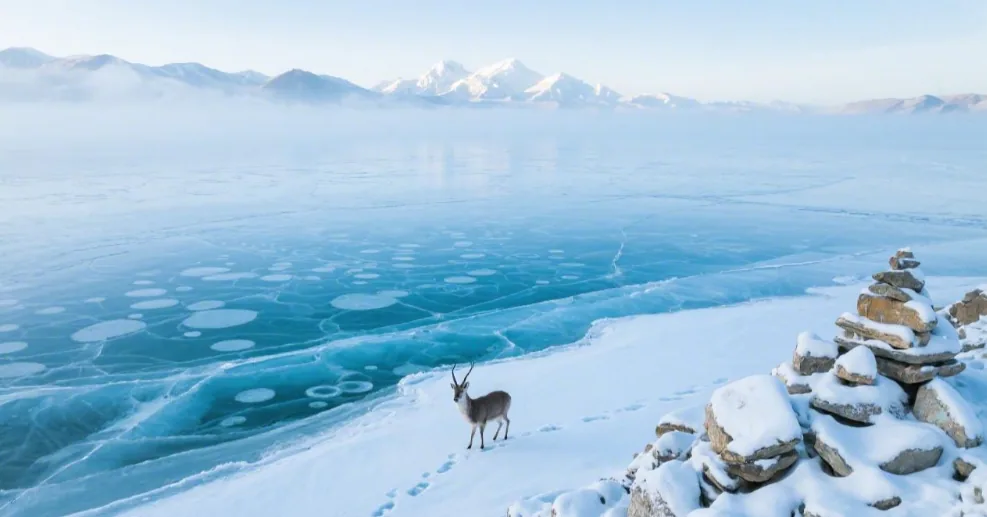
Heading south out of Lhasa, we first passed the Qushui Bridge and drove along the Yaye Expressway for over two hours, reaching Gangbala Pass at 11:30 AM. The wind made my scarf whistle, and the altitude meter jumped to 4998m. My legs felt weak getting out of the car, so I quickly held the railing to catch my breath. The part of Yamdrok Lake toward Nagarzê County was frozen thick, reflecting a deep blue in the sun like a giant sapphire. The cracks in the ice looked like tree branches, appearing at least 10 cm thick. I squatted down to tap it; it sounded “thump-thump,” quite solid. There were nomadic yaks grazing near the ice. A yak’s hoof made a “crack” sound on the ice, so I quickly backed into the safety zone—the ice might look flat, but there could be hidden cracks.
Continuing north, we reached the shore of Pumoyumco at 2 PM. Tuiwa Village by the lake is one of the highest villages in the world. The Tibetan homestays are made of stone with white-washed walls and prayer flags at the door. A standard room is 280 yuan/night. The rooms have electric blankets, but the main heating comes from the yak dung stove in the living room. The flames licked the black stove walls, making the room warm. The hostess brought butter tea and said, “It’s cold at night, wear more.” For dinner, I had her braised yak meat with potatoes. The potatoes were stewed soft, and the yak meat was chewy. The soup had a handful of cilantro, and it was filling for 50 yuan per person, more authentic than city restaurants.
Case: An aunt in the same car didn’t prepare any chocolate and felt dizzy and nauseous at Gangbala Pass. Luckily the driver had oral glucose solution, which helped. She later told me, “I should have listened to you and brought two pieces of dark chocolate.”
- Booking a car through a hotel owner is more reliable; the driver knows the roads (knows which ice sections are safe).
- Don’t run too fast for photos at Gangbala Pass; breathing is hard at 5000m. Stand steady to take panoramas.
- Choose Pumoyumco homestays with yak dung stoves; they are warmer than just electric blankets (night temp around -10°C).
- Chat with the hostess at dinner; you can ask which part of the ice is best for photos (she pointed to the shallow beach on the west shore).
|
Day 4 Info
|
Detailed Description
|
|---|---|
|
Transportation
|
Hotel owner booked a 7-seater business car (800 yuan/day with driver), departed 8:00, Lhasa → Yamdrok Lake (2.5h) → Pumoyumco (1.5h)
|
|
Experience
|
View Yamdrok blue ice at Gangbala Pass (4998m) (ice thickness 10cm+, deep blue reflection), stay at a Tibetan homestay in Tuiwa Village (stone house + yak dung stove)
|
|
Accommodation
|
Tibetan homestay in Tuiwa Village standard room 280 yuan/night, with electric blanket + stove, hostess cooks home-style food
|
|
Food
|
Dinner braised yak meat with potatoes (50 yuan/person), with butter tea (free refills)
|
|
Tips
|
Leave a 5cm gap in the car window to prevent fogging (large temp difference), bring chocolate for blood sugar (easy to get dizzy at 5000m), bring portable oxygen
|
|
Expenses
|
Car 800 yuan (for the day) + Accommodation 280 yuan + Dinner 50 yuan = 1130 yuan (Approx 377 yuan per person share)
|
In the evening, sitting at the homestay door, I watched the ice surface reflect the sunset, casting orange-red light onto the snow mountains. The driver said, “Pumoyumco is only like this in winter; in summer it’s all water, no ice cracks.” The day’s bumps were worth the silence of the frozen lake.
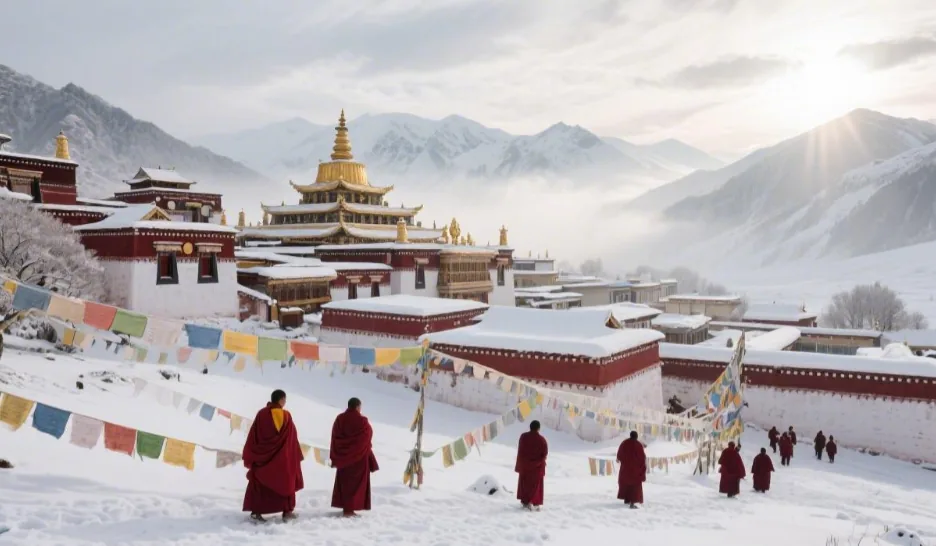
Day 5: Frozen Panorama of Pumoyumco, Capturing Snow Scenery with Few People
Just as dawn broke, the yak dung stove in the Tuiwa Village homestay was still crackling. I put on thick socks and waterproof snow boots, and stuck a hand warmer to the back of my phone (tested last night at -8°C for four hours, battery dropped from 70% to 30%; it would definitely shut down at -10°C). The hostess brought hot ginger tea and said, “The wind by the lake is harsh, drink this before you go.” I gulped some down, grabbed my folding stool (tested it for stability; comfortable for long sits), and stepped out at 8:50 AM.
The lake shore hike started at 9:00 AM sharp. I walked along the tracks left by nomadic motorcycles—the tracks are dark gray, like a safety belt on the white ice. Absolutely do not stray from them. The ice occasionally made “cracking” sounds like glass shards being scattered. Up close, these were thermal expansion and contraction cracks; some were wide enough to fit a finger. I squatted to listen, the sound so crisp I could count the rhythm. After walking for half an hour, I saw a few black-necked cranes pacing near the ice edge. They flew away as I approached, their wings stirring up fine snow that landed on my jacket hood.
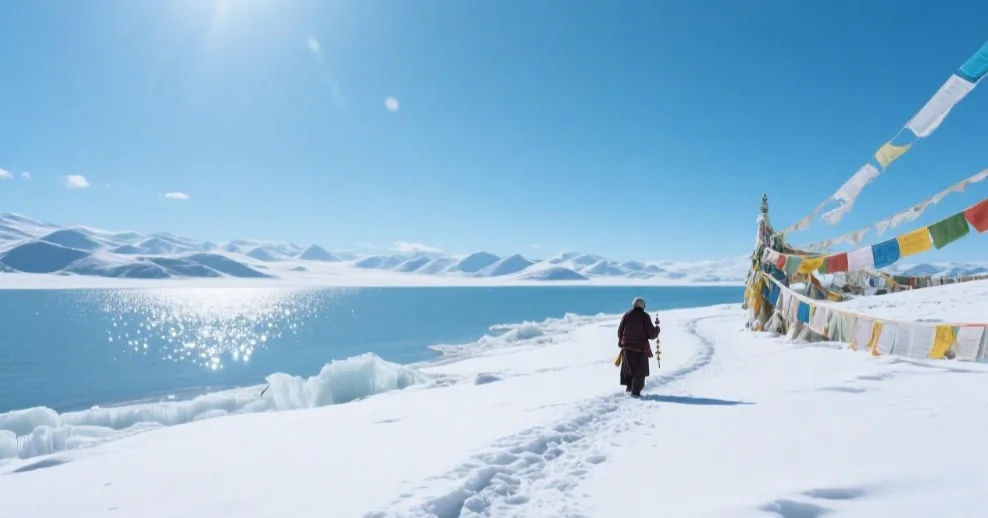
Arrived at Tuiwa Village at noon. This village is really high; the prayer flags on the poles were frozen stiff and rattled in the wind. I went to see that stone-built toilet (altitude 5070m)—the walls were made of fist-sized pebbles without cement, and the door was a piece of broken wood. Crouching down, you could see the peak of Kulagangri Snow Mountain in the distance. Next to the toilet was a pile of Mani stones carved with the Six-Syllable Mantra. I took out my camera to shoot the prayer flag groups: dozens of flags hung from the top of the poles to the ground, red, yellow, blue, with the snow mountain and frozen lake as a background. When the sun shone obliquely, the shadows of the prayer flags stretched long, looking like a colorful ribbon tied to the mountain. An old lady at the village entrance saw me taking photos and waved me into her house for butter tea. She said, “In winter, only three of us elders stay to guard the village.” The tea bowl was wooden and felt warm in my hand.
Ice photography at 2:00 PM. I chose a red hard shell jacket (bought in Barkhor Street for 80 yuan; bright colors stand out on the ice) and walked to an ice hole on the west bank—the hole was carved by nomads, about half a meter in diameter, and you could see the deep blue water flowing beneath the ice. I had the driver use a telephoto lens to take photos of me with the Kulagangri Snow Mountain in the background. The reflection from the ice hole shone on the snow mountain like a blue glass inlay. I used the folding stool to sit by the lake and take time-lapse photos, one every 10 minutes, watching the clouds float over the mountain. The ice color changed from bright white to orange-yellow as the sun went down. Four photos put together became the “Frozen Lake Sunset Sonata.”
Case: The young man in our car didn’t use a warmer, and his phone shut down automatically after 30 minutes of shooting on the ice. He was stomping in frustration until he borrowed my warmer for 20 minutes to turn it back on. He said, “I should have learned from you; this thing is more useful than a power bank.” Also, a girl tried to take a shortcut on the ice, but a nomad on a motorcycle chased her down yelling, “It’s not frozen solid there!” Scaring her back to the tracks.
- Stick to the motorcycle tracks during the hike; don’t walk on new ice out of curiosity (ice cracks are a warning).
- Respect the stone toilet in Tuiwa Village; don’t carve graffiti (villagers say it’s “the face of the village”).
- Choose a red hard shell jacket for ice photography. Stand near ice holes (but not too close, the ice is thin).
- Use the folding stool for time-lapse in a backlit position (sunset on snow mountain creates layered shadows).
- Stick hand warmers (choose large ones, stick to the back battery area) on your phone; it will definitely shut down below -10°C without them.
|
Day 5 Info
|
Detailed Description
|
|---|---|
|
Time
|
9:00 AM to 4:00 PM (Natural light shooting, adjusted with ice reflection)
|
|
Experience
|
Lakeshore hike (following motorcycle tracks, hearing ice cracks), Tuiwa Village (5070m stone toilet + prayer flags with mountain), ice photography (red jacket near ice hole with Kulagangri backdrop)
|
|
Gear
|
Phone warmers (large ones on the back, -10°C test), folding stool (for time-lapse), red jacket (80 yuan, bright color stands out)
|
|
Expenses
|
Warmers 5 yuan (2 pieces) + Stool rental 10 yuan (from homestay) = 15 yuan
|
|
Precautions
|
No entry into unfrozen deep water areas, don’t stay where ice cracks are dense, use the stool for time-lapse (prevent leg numbness)
|
|
Cultural Observation
|
Elders guarding Tuiwa Village, Mani stones with Six-Syllable Mantra, prayer flags “tying ribbons” for snow mountains
|
In the evening, I packed up and returned to the homestay. My legs were frozen stiff, but I had over 200 photos in my camera—the texture of ice cracks, the shadows of prayer flags, the blue of the snow mountains, and my silly red-clothed self by the ice hole. The hostess looked at the photos and said, “Pumoyumco is like this in winter, few people, real scenery.” I nodded, thinking this frozen lake is the soul of Tibet’s winter.
Day 6: Pumoyumco → Lhasa, Finishing with an Easy Journey
Departing Tuiwa Village at 9:00 AM, the driver had preheated the car. I discussed the return route with him: “I didn’t see enough of Yamdrok Lake’s full view at Gangbala Pass yesterday, can we detour back today?” He laughed and said, “Sure, it’s an extra 20 km, the lookout won’t be crowded.” The car went south along the east bank of Pumoyumco, reaching Gangbala Pass at 10:20 AM. The wind was slightly lighter than yesterday. The altitude meter stopped at 4998m. Frost covered the lookout railings. I blew on my hands and took out the camera to photograph Yamdrok: the lake water was as blue as crumpled silk, winding from the foot of the mountain to the base of Mt. Noijin Kangsang. Sunlight hit the crests of the waves like scattered gold. Yesterday’s blue ice section was hidden in a bay, looking like a knot in the blue ribbon.
On the way down, we passed through Nagarzê County and stopped at a roadside gas station. The convenience store shelves had vacuum-packed naizha (dried milk) for 25 yuan a bag. I squeezed the package (hard and airtight) and haggled with the owner: “Can it be cheaper for two bags?” She smiled and waved her hand, “This is all the stock in winter, no haggling.” I scanned the code and paid 50 yuan (for two). The naizha was sour with a milky scent, becoming more flavorful the more I chewed—a good snack for the road.
At 12:30 PM, we reached Nagarzê town. The driver recommended the “Sichuan Cuisine House” at the intersection: “Locals go there often, it’s affordable.” I ordered twice-cooked pork over rice for 30 yuan. The pork slices were well-marbalanced with fat and lean, the bean paste was fragrant, and the rice was piled high. I finished the whole bowl, even the soup—the driver said he eats here every time he does a long haul because it’s filling.
At 4:00 PM, back in Lhasa, as soon as the car stopped, I went straight to Guangming Gang Qiong Sweet Tea House (the old one by Jokhang Square). It was crowded. I found a small stool in a corner and spent 1 yuan for a cup of sweet tea (the tea bucket is by the table, help yourself) and ordered Tibetan noodles for 8 yuan (noodles as thick as chopsticks, broth thick enough to coat a spoon). The tea was savory and milky, and the noodles with a bit of cilantro were so satisfying they washed away the soreness from the car ride.
Case: An uncle in the same car initially complained that detouring to Gangbala was a waste of time, but after seeing the full view of Yamdrok from the lookout, he took photos for half an hour. Getting back in, he muttered, “Glad I listened to you; this view is ten times better than yesterday’s partial one.” Also, a girl didn’t buy naizha and was hungry on the road, having only crackers. She said, “I should have bought two bags with you; this naizha is much more filling than crackers.”
- Discuss detouring back to Gangbala Pass (free lookout) with the driver in advance to see the full view of Yamdrok Lake.
- Buy vacuum-packed naizha at Nagarzê gas stations (25 yuan/bag, hard packaging prevents moisture); it’s sour, fragrant, and a great snack.
- Choose the twice-cooked pork over rice at Sichuan Cuisine House (30 yuan) for a filling lunch.
- Head straight to Guangming Gang Qiong Sweet Tea House upon reaching Lhasa; 1 yuan tea + 8 yuan noodles is the perfect end (crowded but best value).
|
Day 6 Info
|
Detailed Description
|
|---|---|
|
Time
|
Depart 9:00 AM, arrive Lhasa 4:00 PM (7 hours total, including 1 hour detour)
|
|
Route
|
Pumoyumco → Detour to Gangbala Pass (full view of Yamdrok) → Nagarzê (buy naizha, lunch) → Lhasa City (Guangming Gang Qiong Sweet Tea House)
|
|
Transportation
|
Continued from previous day’s car (7-seater business car); driver is familiar with the detour (no snow or hidden ice)
|
|
Food Log
|
Nagarzê Sichuan Cuisine House twice-cooked pork 30 yuan (filling), Guangming Gang Qiong sweet tea 1 yuan + Tibetan noodles 8 yuan (fatigue relief)
|
|
Shopping
|
Nagarzê gas station vacuum naizha 25 yuan/bag (50 yuan for two, sour and chewy)
|
|
Experience
|
Full view of Yamdrok from Gangbala lookout (blue ribbon around Mt. Noijin Kangsang), finishing with 1 yuan sweet tea and noodles
|
|
Expenses
|
Naizha 50 yuan + Lunch 30 yuan + Sweet tea 1 yuan + Noodles 8 yuan = 89 yuan (small daily expenditures)
|
|
Precautions
|
Confirm road conditions with the driver for the detour (occasional hidden ice in winter), choose vacuum naizha (loose ones get damp), bring change for the tea house (self-service)
|
In the evening at the hotel, I flipped through the photos—the Yamdrok blue ribbon at Gangbala, the naizha bags at the gas station, the steaming bowl of noodles at the tea house. This detour was not in vain; it made the beauty of Yamdrok more complete. Lhasa’s tea houses are like energy stations; a bowl of noodles and a cup of tea wash away the exhaustion of the plateau.
Day 7: Leaving Lhasa, Bringing Home Memories
Woke up at 7:00 AM to pack my suitcase. On the last day, I needed to sort out the souvenirs to buy and the details for leaving. First, I went to Baiyi Supermarket (Yutuo Road branch, 800m from the hotel). The back of the shelves is the yak jerky section—I specifically chose the individually wrapped ones (50g per pack, easy to seal if not finished). I picked ones with more lean meat and clear texture, and asked the clerk, “Which one sells well?” She pointed to one for 98 yuan/jin, saying “This is hind leg meat, no silver skin, not hard to chew.” I weighed half a jin (49 yuan) and put it in a transparent bag labeled “Lhasa · Yak Jerky.” In the incense section, there was Minzhulin Monastery Incense (35 yuan/box, 20 sticks). I smelled it; it was a light scent of cedar and Tibetan medicine, not choking and more durable than loose incense in Barkhor Street. I bought two boxes (70 yuan) for my elders.
Turning right out the door was Barkhor Street. Passing a silver stall, I saw an old lady holding a bracelet, asking “500 yuan for pure silver.” I shook my head and walked away—a friend bought one here last year and found out it was less than 70% silver. Later, I went to the state-owned old shop “Zangyuan Ge”. The same bracelet was clearly priced at 320 yuan with a certificate of authenticity; that’s an honest price.
Departure tips to remember: I checked my flight in advance; it departs at 3:00 PM. Calculating for arriving 2.5 hours early, I left at 12:30 PM. Check-in at Gonggar Airport in winter is indeed slow; there were over 20 people ahead of me. Luckily, I didn’t cut it close. At security, the staff looked at my Border Permit and asked, “Going to Pumoyumco?” I nodded. He pointed to the line “Lhozhag County” and said, “It’s good that’s written clearly, or you couldn’t get in.” I had this permit issued at my place of household registration before leaving, filled with “Shannan Region.” If I hadn’t brought it, having one handled in Lhasa would take 3 days and cost 150 yuan; I found it easier to do it in advance.
Winter Pre-trip Notes (Table Version)
|
Item
|
Practical Details
|
|---|---|
|
Transportation
|
For the Lhasa → Pumoyumco car, choose a 7-seater business car (800-1000 yuan/day). Request the driver to bring snow chains (my car had iron chains, very stable on ice). Don’t choose sedans (low chassis can bottom out).
|
|
Accommodation
|
Choose Pumoyumco homestays with electric blankets + coal stove rooms (night temp -15°C; in Tuiwa Village, I turned on the blanket 1h before bed and the stove burned all night, the bed was very warm). Off-season price 200-300 yuan/night (mine was 280 yuan).
|
|
Documents
|
Get the Border Permit done at your household registration office (fill in “Shannan Region” or “Lhozhag County”), or have it handled in Lhasa (3 working days, 150 yuan, bring ID photocopy).
|
|
Gear
|
Essential: Down jacket (filling over 200g, mine was just right for -10°C), Snow boots (V-sole for non-slip, never slipped on ice), Thermos (1L capacity, hot water for the whole day).
|
Total Expense Reference (Basic Per Person Consumption)
- Transportation: Car for 4 days (Lhasa → Yamdrok → Pumoyumco → Return) 3200 yuan (7-seater, split between 3 people is 914 yuan) + City taxis (Sera, airport, etc.) 150 yuan = 1064 yuan
- Accommodation: 6 nights (Budget hotel on Beijing Middle Road 180 yuan/night × 3 nights + Tuiwa homestay 280 yuan/night × 2 nights + City hotel 180 yuan/night × 1 night) ≈ 1200 yuan
- Dining: Average 80 yuan × 7 days (Sweet tea 3 yuan, Tibetan noodles 8 yuan, twice-cooked pork 30 yuan, braised yak 50 yuan, etc.) = 560 yuan
- Tickets: Only Potala Palace reservation 200 yuan (Sera Monastery, Yamdrok Lake, Pumoyumco all free)
- Total Expenditure approx 3024 yuan (excluding round-trip flights)
Case: Lao Zhang, who traveled with me, didn’t bring a Border Permit and was stopped at the Pumoyumco checkpoint. He spent 200 yuan for an emergency agent (same day pick up), delaying the trip by 2 hours and almost ruining subsequent plans. He said, “I should have read what you wrote about ‘must specify Lhozhag County’ and prepared my documents in advance.”
- For souvenirs, choose individually wrapped yak jerky from Baiyi Supermarket (98 yuan/jin, lean) and Minzhulin Incense (35 yuan/box, light and durable).
- Avoid silver stalls in Barkhor Street (inflated prices); trust state-owned old shops (with certificates and clear pricing).
- Arrive 2.5 hours early at the airport (slow winter check-in). Border Permit must specify Lhozhag County (Pumoyumco is under its jurisdiction).
- Gear check: Down jacket filling 200g+, V-sole snow boots, 1L thermos.
At the airport in the evening, after checking my luggage, I sat in the departure hall flipping through photos—the ice cracks of Pumoyumco, the hand claps at Sera Monastery, the scent of sweet tea in Barkhor Street. These 7 days weren’t about rushing through spots; I just slowly bathed in the sun and walked. Spending three thousand yuan, I exchanged it for a backpack of memories. Tibet’s winter isn’t lively, but it keeps the truest scenes for those willing to wait.
Keep Reading
- 6-Day Tibet Slow Travel Guide for Seniors | Jokhang Temple + Nyingchi Lulang + Basum Lake, Non-Tiring & Oxygen-Sufficient Itinerary
- Tibet Classic 8-Day Grand Loop | Potala Palace + Namtso Lake + Everest Base Camp, Snow Peaks & Sacred Lakes a First-Timer Must-See
- 7-Day Tibet Entry Route for Mild Altitude Sickness | Nyingchi + Lhasa + Yamdrok Lake, A Smooth Low-to-High Elevation Transition for First-Timers
- 7-Day Shigatse Exploration: Tashilhunpo, Sakya, and Palcho Monasteries – Thangka Art & Tibetan Architecture
- 8-Day Tibet Honeymoon: Love Above the Clouds.
Lhasa — — Practical Data
Tickets & Booking
- Jokhang Temple ticket: Peak season (Apr 21–Oct 19) CNY 85 per person; off-peak season (Oct 20–Apr 20 of the following year) CNY 35 per person; photography inside the temple about CNY 90 extra; advance booking required (Real-name registration one day ahead via the “Jokhang Temple Ticket Reservation mini-program”, then pay and exchange the ticket on site with ID; seniors over 60, military personnel, veterans, disabled persons and public-security and firefighting personnel may buy on site without a reservation; children under 10 free)[src]
- Sera Monastery ticket: CNY 50 per person (half price with student ID; free on the 15th day of each Tibetan month); open about 09:00–17:00 (last entry 16:00); no booking required[src]
- Norbulingka ticket: Standard ticket CNY 60 per person, concession CNY 30 per person (excluding the zoo ticket); off-peak season (Nov–Apr of the following year) CNY 30 per person. Concession groups: seniors 65 and above, minors aged 7–17, current full-time undergraduate students and below, non-stationed military personnel and the “three categories of dependents”, and disabled persons get half price; no booking required[src]
Transport & Schedules
- Lhasa station → Shigatse station | Train (direct express Z8801): Departs 08:10 and arrives 10:39, 248 km total, about 2 h 29 min; hard seat CNY 40.5, hard sleeper upper CNY 111.5/middle CNY 116.5/lower CNY 119.5. There is also a C-series intercity train a[src]
- Lhasa station → Nyingchi station (Bayi) | Train (EMU C881 / conventional K9801): C881 EMU 07:55–11:36, 435 km, about 3 h 41 min; K9801 conventional 08:40–14:00, about 5 h 20 min. Runs daily[src]
- Lhasa → Namtso (Damxung) | Chartered car/shared car/self-driving: About 240 km total, about 4–5 h one way, passing Damxung county and the Lakenla Pass (about 5190 m); a scheduled bus plus a local shared car is possible but takes longer[src]
Where to Stay · Room Type · Nearby
- Around Potala Palace Square/Yutuo Road/Beijing Middle Road | Reference price Budget about CNY 200–400, mid-range about CNY 400–800, high-end above CNY 800 (reference) | Room tip: Prefer “oxygen-supplied hotels” with diffused or nasal-cannula oxygen, which can relieve discomfort when first arriving | Nearby add-ons: Potala Palace, Chakpori viewing platform (the photo spot on the CNY 50 note), Zongjiao Lukang Park, Barkhor Street[src]
- Barkhor Street/old-town inns and guesthouses | Reference price About CNY 150–500 per night (reference) | Room tip: Walking distance to the Jokhang Temple and Barkhor Street, good for experiencing the old-town atmosphere; street-facing | Nearby add-ons: Jokhang Temple, Barkhor Street, Makye Ame, Ramoche Temple, Muru Temple[src]
Typical Climate & Packing (Past Years)
- January: -7.4 °C–8.4 °C °C, Lhasa is at an elevation of about 3650 m with a large year-round day
- February: -4.7 °C–10.1 °C °C
- March: -0.8 °C–13.3 °C °C
- April: 2.7 °C–16.3 °C °C, Spring is dry and windy
- May: 6.8 °C–20.5 °C °C, One of the comfortable periods
- June: 10.9 °C–24.0 °C °C, Rainy season begins; frequent afternoon showers






