



Day 1: Landing at Nyingchi Mainling Airport, Initial Adaptation to Low Altitude
Transportation: I contacted a carpool through Ctrip Local Guide 1 day in advance. The driver was a Tibetan brother who said over the phone, “From Mainling Airport to the city is 30 per person, and I’ll pick you up in an SUV.” When I landed, he was holding a sign with my name, wearing a Tibetan robe over jeans, and playing Tibetan folk songs in the car. The road was asphalt, with highland barley fields just sprouting on both sides. It took about 20 minutes to reach the city, faster than expected. On the way, the driver mentioned that a tourist last month started running to catch a bus right after getting off the plane, gasped for air in the airport hall for a long time, and only recovered after buying oxygen tanks. Hearing this, I didn’t dare to rush and made a point to walk slowly without dragging my suitcase while picking up my luggage.
Accommodation: I booked the “Linzhi Impression” Hotel by the Nyang River for 200 per night for a standard room. The front desk girl from Sichuan said, “This room faces west, so you can see the river view in the afternoon.” The room had a bay window facing a bend in the Nyang River, with misty mountains on the opposite bank. The bedding was freshly changed pure cotton with no odor. The air conditioning heating was just right, and no oxygen equipment was used (it really wasn’t necessary).
Cuisine: For dinner, I went to “Stone Pot King” located in an old alley in the city. Several dark stone pots were placed at the entrance. The owner, a local from Nyingchi, said, “A small portion of stone pot chicken is 98; local chicken is stewed for 2 hours with green bamboo shoots and wild mushrooms.” When served, the soup was boiling. The chicken was skin-on leg meat and not dry. The bamboo shoots were crisp and tender, and the mushrooms were soaked in broth. One sip was so fresh it made my eyebrows jump. No MSG was added, and it left my stomach feeling warm and cozy, unlike the tension usually felt at high altitudes.
Adaptation Details: I chose a 9:30 AM flight, so it was still bright when I landed. I wore a thin hardshell jacket (fleece liner + windproof shell) upon exiting the cabin; it felt cool but not piercing, like a late autumn morning. I went to bed at 9:00 PM without turning on the electric blanket. I slept soundly without headaches or insomnia. I woke up once in the middle of the night with a dry nose, so I applied the Vaseline lip balm (small tube kept in my pocket). In the morning, there were traces of blood in my nose, which I wiped away with a tissue dipped in warm water.
The driver taught me on the way: Don’t rush to take a shower when you first arrive; let your body recognize the altitude first. I took note and waited until the second day.
| Item | Breakdown (Per Person) | Remarks |
|---|---|---|
| Transportation | Carpool 30 (Airport → City one way) | Tibetan brother’s SUV, 20-minute drive |
| Accommodation | Linzhi Impression Hotel 200/night | Standard room with bay window overlooking Nyang River, no oxygen supply |
| Cuisine | Stone Pot King small portion chicken 98 | With bamboo shoots + wild mushrooms, fresh soup without MSG |
| Others | Vaseline Lip Balm (carry with you) | For dry nose, small tube for easy reapplication |
Key Reminder: Initial adaptation to low altitude is all about being “slow“—slow walking, slow talking, and slow eating to let your heart and lungs get used to the air density. I didn’t take any Rhodiola rosea throughout the trip and survived the first day by relying on this “slowness.”
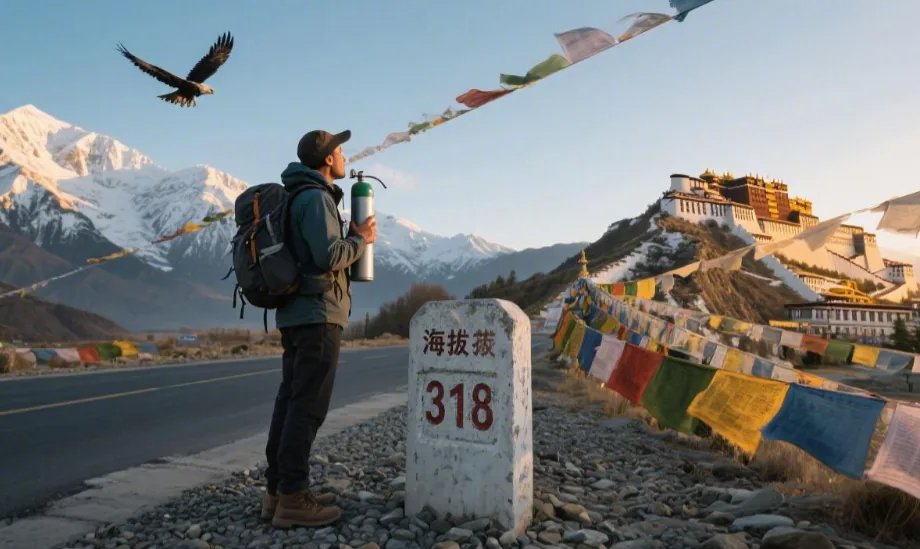
Day 2: Nyingchi City – Basum Tso, Lightweight Lake Circuit with Snow Mountain Views
Transportation: Through the front desk of the Linzhi Impression Hotel, I found a local driver named Tashi, who drove an 80% new Wuling Hongguang. We agreed on 400/day including fuel and tolls the day before. He was waiting at the hotel entrance promptly at 8:00 AM today, with bottled water and tissues prepared in the car. We set off just as the sky brightened, taking the auxiliary road of the Lhasa-Nyingchi Highway. Highland barley fields on both sides were turning green. We passed small streams occasionally and arrived at the Basum Tso Scenic Area gate in exactly 1 hour, 10 minutes faster than the navigation estimate. Tashi said, “I know this road well; I won’t get lost,” and he proved it.
Attractions & Activities: Admission is 120 (including scenic map), and the sightseeing bus is 50/person (mandatory, as the lake circumference is 20 km and would take 4 hours to walk). First, we went to Jieba Village. Prayer flags hung in front of Tibetan wooden houses. I found a teahouse run by an Ajia (older sister). She was kneading dough in an apron and said, “Tibetan noodles 10/bowl, sweet tea 3/cup, all you can drink.” The noodles were served in a coarse ceramic bowl, thick and chewy, with a salty-savory yak bone broth. The sweet tea was like milk tea but richer and not too sweet. Then I took the sightseeing bus to the pier and bought a boat ticket for 50/person (one way to the lake island). The wooden boat swayed for 10 minutes. The lake had small waves, and the snow mountains (I could catch a glimpse of the peak of Mount Gyala Peri) were reflected in the water. The Tsozong Gongba Monastery on the island is very small with red walls and golden roofs. The prayer wheels were shiny bronze. Inside, there is a statue of Padmasambhava. I circumambulated it three times and left after 15 minutes without staying too long. For the lake circuit, I chose the lakeside wooden plank road (from the pier toward Jieba Village). The plank road is right by the water. Walking for half an hour, you see the snow mountain reflections turn from blurry to clear. The lake water is a gradient emerald green. When tired, I rested for 5 minutes at the observation deck (which has wooden chairs). Don’t climb off-road slopes—I saw someone climbing a small hill, panting and leaning against a tree, and they were later advised to come down by staff.
Accommodation Experience: I stayed at Linzhi Impression again, telling the front desk I’d “renew for the same room” to avoid re-adapting. The bay window still looked out at the Nyang River. Returning at 9:00 PM, I found the quilt had been sunned and smelled like sunshine, making me sleep even better than the first night, even without the air conditioning turned on.
Pitfalls to Avoid: People in plain clothes at the scenic area entrance were shouting “Lake tour 50/person, closer than the bus.” I heard a tourist ask, and it turned out the person then said “plus a 20 environmental fee.” In reality, they just take you to a private pasture with no good views. Tashi said, “The official sightseeing bus takes the main lake road and stops at 3 observation decks; don’t be tempted by cheap offers.” Also, some people only visit the pier, take a photo of the island, and leave, missing the snow mountain reflections entirely—the lakeside wooden plank road is the essence. After walking halfway, you’ll understand why it’s called “Little Switzerland in Tibet.”
Tashi chatted with me: “At this altitude in Basum Tso, walking slowly is fine. Look at those running to take photos; they’ll be sitting on the ground panting in a moment. When I drive the sightseeing bus, I often remind tourists to ‘lengthen your breath’—it works better than medicine.”
| Item | Breakdown (Per Person) | Remarks |
|---|---|---|
| Transportation | Chartered car 400/day (incl. fuel and tolls) | Tashi’s Wuling Hongguang, departed at 8:00, 1 hour to scenic area |
| Tickets + Bus | 120 + 50 = 170 | Sightseeing bus is mandatory, stops at 3 decks |
| Jieba Village | Noodles 10 + Sweet Tea 3 = 13 | Ajia’s teahouse, ceramic bowl, yak bone broth |
| Island Boat Ticket | 50 (one way) | 10-minute wooden boat, don’t miss the prayer wheels |
| Lakeside Plank Road | Free (included in bus route) | 30-minute walk for reflections, chairs at observation deck |
Key Reminder: The “lightweight” aspect of Basum Tso lies in not rushing—take the bus to the end, walk the plank road slowly, and sit at the observation deck to look at the water when tired. At 3480 meters, walking like this only causes slight shortness of breath, and resting for 5 minutes allows recovery. I didn’t take Rhodiola rosea; I relied on Tashi’s “lengthened breathing” (inhale 4 seconds, exhale 6 seconds) and walked steadily.
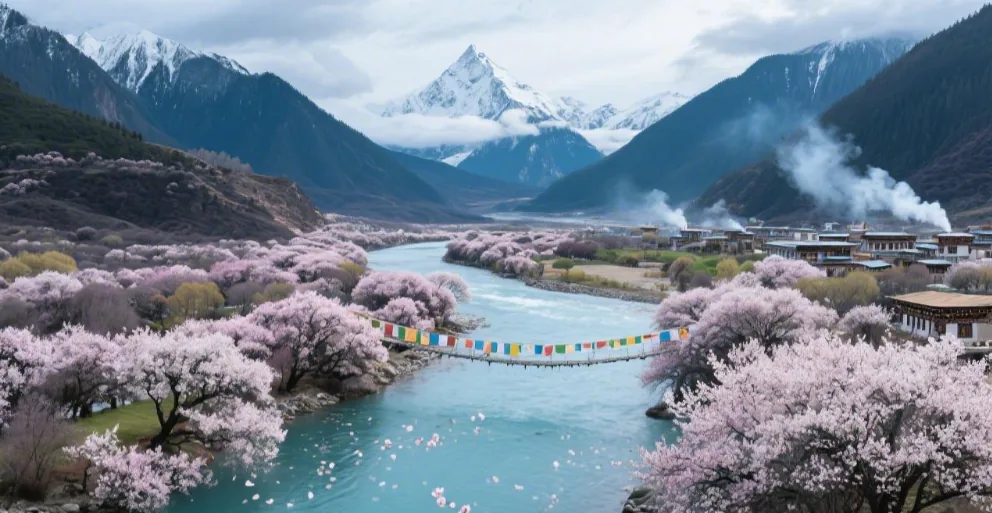
Day 3: Nyingchi – Yarlung Tsangpo Grand Canyon, Viewing Namcha Barwa Peak
Transportation: Used the same driver Tashi from Day 2. We agreed to set off from Linzhi Impression Hotel at 8:00 AM. He drove his Wuling Hongguang along the asphalt road from Nyingchi to Pai Town. The road is lined with spruce forests, and altitude rises gradually after several bends. We arrived at the Grand Canyon gate at 9:00 AM. Tashi said, “I can drive this road with my eyes closed; it’s 10 minutes faster than GPS.” Admission is 150 (incl. map), and the bus is 90/person (mandatory, 40 km section, takes 1 hour from the gate to Zhibai Village; walking would take 5 hours). The bus is equipped with an audio guide (100 deposit, refunded upon return) telling the legends of Namcha Barwa.
Attractions & Activities: First to Zhibai Village Observation Deck (the bus terminus), elevation about 3100 meters. There is a sign “Best Observation Point for Namcha Barwa.” When I arrived at 9:30, the clouds were as thick as cotton wool, showing only a tiny tip. I waited for 1 hour. Around 11:00, a gust of wind dispersed the clouds, and suddenly I saw the complete triangular peak. Sunlight hit the snow, turning it golden, with mist swirling around the middle like a belt. At that moment, I forgot the cold and rushed to take videos. Then I walked the flat riverside path, 2 km down from Zhibai Village. The stone path is right by the Yarlung Tsangpo River. The water was muddy yellow and turbulent, with whirlpools carrying dead branches, sounding like muffled thunder. Colorful prayer flags were planted by the path, and I occasionally saw herders moving yaks across the river. At 2:00 PM, I took the bus back to the gate and transferred to Sosong Village (20 minutes from the scenic area). I stayed at a Tibetan homestay “Galsang Flower Blooms.” The stone walls were painted white, and Galsang flowers grew in the yard. The room was 150/night with Tibetan rugs on the beds. The best part was the fire pit—the host Amma was tending the fire, with yak meat patties roasting on an iron plate above, 20 each. The crust was crispy and the filling juicy and not gamey, perfect with butter tea.
Cuisine Records: The scenic area restaurant is at a mid-way bus stop. I ordered a 40 rice bowl (shredded pork with green peppers + rice). The rice was just the right texture, and the meat was stir-fried yak meat, slightly spicy and a good portion size. The next table ordered a “Tibetan Set Meal” for 80, which had butter tea, tsampa, and air-dried meat. The butter tea was too salty, the tsampa stuck to their teeth, and the meat was too hard to bite. As expected, don’t order the set meals; simple dishes are more reliable.
Details: The canyon is windy. After 10:00 AM, the wind howls, making it hard to stand. I wore a woolen hat to protect my ears (I didn’t bring a scarf, and my ears hurt from the cold). Tashi said, “This wind is the Yarlung River Canyon’s ‘natural blower’; a hat is more useful than a mask.” The Sosong Village homestay had electric blankets. I turned it on for half an hour before bed; the bed was warm without feeling dry. Amma also gave me a hot water bottle for my feet, so it wasn’t cold even at 8 degrees at night.
“Tashi told me on the way: ‘Viewing Namcha Barwa requires patience; it has a strange temper and hides as soon as clouds cover it. Waiting an hour is considered fast; some wait all afternoon.’ I believed him, and indeed, the surprise came after waiting.”
| Item | Breakdown (Per Person) | Remarks |
|---|---|---|
| Transportation | Charter extension (incl. fuel and tolls) | Tashi’s Wuling Hongguang, 8:00 departure, 9:00 arrival |
| Tickets + Bus | 150 + 90 = 240 | Bus mandatory, 40 km section, audio guide deposit 100 |
| Zhibai Observation Deck | Free (included in ticket) | Wait 1 hour for the peak; the moment clouds part is worth it |
| Riverside Path | Free (2 km flat road) | Stone path to see Yarlung River rapids and herders’ yaks |
| Sosong Homestay | Galsang Flower Blooms 150/night | Stone house + fire pit, electric blanket + hot water bottle |
| Fire Pit Pancake | Yak meat patty 20 each | Crispy crust, juicy filling; pair with butter tea to cut grease |
| Scenic Area Meal | Shredded pork rice bowl 40 | Yak meat stir-fry, large portion; avoid 80 “Tibetan Set” |
Key Reminder: “Peak viewing” at Yarlung Tsangpo Grand Canyon is about patience—wait for clouds to clear at Zhibai Village, don’t rush off. The riverside path is 2 km with no elevation gain; walking slowly to see the river is not tiring. The fire pit patties in Sosong Village are a specialty; 20 is well worth the price. Walking these paths at 3000 meters altitude, I followed Tashi’s advice to “take a few steps and take a breath,” so I didn’t get short of breath, all thanks to slow adaptation.
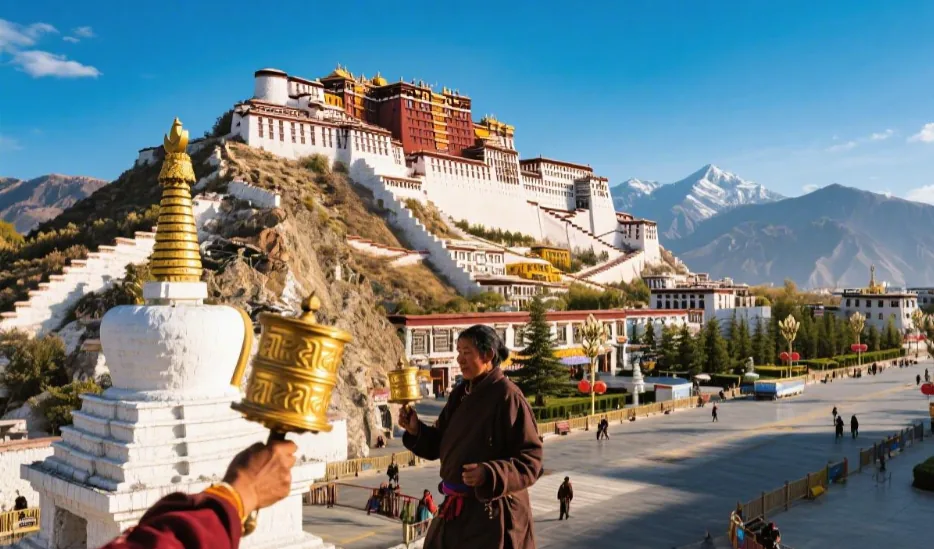
Day 4: Nyingchi → Lhasa, Driving along Lhasa-Nyingchi Highway, Arriving in Lhasa in the Evening
Transportation: Still Tashi’s Wuling Hongguang. We agreed to depart from Sosong Village at 8:00 AM today. The trunk was packed with my luggage and apples bought the night before (to eat on the way). He changed to a new set of tires, saying, “The Lhasa-Nyingchi Highway has many tunnels, and old tires have poor grip.” We took the Lhasa-Nyingchi Highway (dual carriageway, 100 speed limit). The first half from Nyingchi to Gongbo’gyamda is high mountain canyon with dense spruce forests and occasional oases formed by Yarlung River tributaries. The second half from Gongbo’gyamda to Lhasa is flat, with large barley fields and Tibetan villages dotted with white walls and red roofs outside the window. We stopped at Gongbo’gyamda Service Area at 12:00. Tashi said, “The glucose water sold here is authentic, 10 per small bottle, drink it on the road to replenish energy.” I bought two bottles and took a sip; it was slightly sweet but not sickly. It proved useful—I felt a bit weak at 3:00 PM, and half a bottle helped me recover. The total drive took 6 hours (including 20 minutes of rest at the service area), arriving in Lhasa city at 6:30 PM, half an hour earlier than expected.
Accommodation Experience: Stayed at “Home Inn Selected” on East Beijing Road for 280/night. When checking in, a Tibetan girl named Drolma at the front desk said, “The room is on the 3rd floor, facing north, 800 meters from Jokhang Temple, a 5-minute walk.” The room was small but clean. The bedding was freshly changed light blue plaid. The air conditioning heating was just right (it was 5 degrees outside in Lhasa in the evening). The window faced the old sycamore trees on East Beijing Road, and the leaves were rustling. The most convenient part was the proximity to Jokhang Temple. After dropping my luggage, I strolled over. It was a 5-minute walk on stone roads, passing a small shop selling prayer wheels where the owner was dozing at the door.
Cuisine Records: For dinner, I went to Guangming Gang Qiong Sweet Teahouse (a “time-honored” place recommended by locals) in an alley on Danjielin Road. There was a long queue at the door. The teahouse was full of long wooden tables, with many locals wearing Tibetan robes or jackets. I followed their lead: pay 1 deposit for a porcelain bowl, then go to the counter to get sweet tea (3/cup) and Tibetan noodles (8/bowl). The sweet tea was kept in an aluminum pot and had milk foam when poured into the bowl; it tasted like a rich version of milk tea, milky but not greasy. The Tibetan noodles were thick noodles in yak bone broth with a handful of green onions, a very solid portion. I shared a table with two local Ajias and listened to them chat about “son going to school in Chengguan District” and “cordyceps prices rising this year.” The dialect mixed with laughter felt as real as eating at a neighbor’s house.
Adaptation Reminder: When getting off the car at 6:30 PM, I clearly felt the air was dry, making my throat tighten upon inhaling. Drolma at the hotel front desk specifically warned: “Don’t shower when you arrive in Lhasa; you’ve walked today, and your pores are open, making it easy to catch a cold.” I resisted until noon the next day. I applied Vaseline lip balm (small tube kept with me) that night, so my lips didn’t crack. I drank warm water every hour (using my own thermos) at about 40 degrees, which made me feel more relaxed.
Tashi told me on the road: “The Lhasa-Nyingchi Highway looks flat, but the altitude actually climbs from 2900 to 3650. Driving slowly lets you adapt. Don’t skimp on glucose water; a sip helps if you feel dizzy.”
| Item | Breakdown (Per Person) | Remarks |
|---|---|---|
| Transportation | Charter extension (Tashi’s Wuling) | 8:00 departure, 6-hour drive (incl. 20-min rest) |
| En Route | Lhasa-Nyingchi Highway | First half canyons/spruce, second half fields/villages |
| Service Area | Glucose water 10/bottle (small) | Bought at Gongbo’gyamda, drink when feeling weak |
| Accommodation | Home Inn Selected 280/night | East Beijing Rd 3F, north window, 800m to Jokhang |
| Cuisine | Guangming Gang Qiong: Tea 3 + Noodles 8 | 1 bowl deposit, share long tables with local Ajias |
| Adaptation | Vaseline Lip Balm (carry with you) | Prevent cracking; drink 40-degree water every hour |
Key Reminder: The first day in Lhasa is all about being “gentle“—gentle transportation (6-hour unhurried drive), gentle activity (5-minute walk to the teahouse), and gentle on the body (no shower, slow water intake). Keep glucose water for emergencies—I used half a bottle. The Tibetan noodles at Guangming Gang Qiong Sweet Teahouse are authentic and filling for 8, more solid than internet-famous shops.
Day 5: Slow Tour in Lhasa, Potala Palace + Jokhang Temple Barkhor Street
Itinerary & Transportation: Departed from Home Inn Selected Hotel and walked 800 meters to Potala Palace Square (stone road, 15 minutes). I booked the 9:00 AM session ticket 1 day in advance using the “Potala Palace Ticket Reservation System” (WeChat mini-program) for 100/person and received a text message with a QR code. Before entering the palace, I took Bus 24 (2/ride) at the square bus stop to the entrance of Barkhor Street and took it again from Jokhang Temple back to the hotel in the afternoon to save leg power. I hired an official guide at the Potala entrance (queued up, 50/person for a group, I joined a small group of 3). The girl was named Deji, wearing Tibetan clothes and a work badge. She told stories of Princess Wencheng building the palace—Songtsen Gampo gathered Tubo craftsmen and Tang Dynasty painters to build it. The Red Palace symbolizes the Buddha realm, and the White Palace is the administrative residence. I was so engrossed I forgot about the altitude.
Attractions & Activities: Entered Potala at 9:00. First visited the White Palace (winter palace of the Dalai Lama); the corridor murals tell the life of Songtsen Gampo. Then went up to the Red Palace (temple complex). When filming the murals of the stupas of past Dalai Lamas, I gasped after a few steps at 3650 meters, so I immediately sat on the stone steps of the Red Palace (in the shade) to rest for 3 minutes. The steps were hard on the butt but cool. I moved on after recovering. At 2:00 PM, I went to Jokhang Temple (admission 85). After entering, I turned right and headed straight for the life-sized statue of Sakyamuni at age 12 (covered in gold leaf and inlaid with gems). Pilgrims were performing prostrations outside the glass case. I stood and watched for 10 minutes, not daring to move closer (there are fences, and staff will gently remind you “don’t touch”). The circumambulation path is outside the temple. I followed the flow of locals clockwise. The bronze prayer wheels were shiny, and my mind felt quiet after one circuit.
Recommendation: From Jokhang Temple, it’s a 5-minute walk to Barkhor Street. I bought a small copper prayer wheel (20 each) at “Old Prayer Wheel Shop.” The Tibetan owner said, “It’s handmade and can turn for 10 years.” it was heavier than I imagined, engraved with the Six-Syllable Mantra. Don’t buy “Dzi beads”—I saw “thousand-year-old Dzi beads” priced at 500 at a stall. Deji said, “Those are all new, dyed black and weathered; Tibetans don’t sell real Dzi beads to tourists.”
Personal Experience: Total steps for the day were controlled at 9000 (mobile pedometer), alternating between walking and the bus without forcing a climb up the hill behind Potala. I returned to the hotel at 5:00 PM to lie down for 1 hour, watching the sycamore shadows outside the window under a thin quilt. No headache or shortness of breath, much steadier than expected.
Deji told me on the way: “The steps of the Red Palace in Potala are steep; walk slowly and sit down if you’re panting. Everyone is like this at this altitude; don’t push yourself.”
| Item | Breakdown (Per Person) | Remarks |
|---|---|---|
| Transportation | 800m walk + Bus 2/ride (No. 24) | Hotel → Square → Barkhor entrance, 2 round trips |
| Potala Ticket | 100 (1-day advance reservation) | 9:00 AM session, bring ID + QR code text |
| Guide | 50 (Official group of 3) | Deji on building history and symbolism |
| Jokhang Ticket | 85 | View Sakyamuni statue, don’t touch |
| Prayer Wheel | 20 each (Barkhor old shop) | Small copper handmade mantra wheel, turns smoothly |
| Avoid Pitfalls | Don’t buy Barkhor “Dzi beads” | Fake dyed goods; real ones aren’t for tourists |
| Step Control | Approx. 9000 steps total | Combine walking + bus, rest 1 hour in evening |
Key Reminder: A slow tour of Lhasa is about “controlling the volume“—hire an official guide for Potala (50 is worth it; the stories make more sense than looking alone), rest in the Red Palace and don’t push yourself; look but don’t touch the Jokhang statue; buy a small prayer wheel for 20 as a memento in Barkhor Street. Keep steps under 10,000 and lie down at the hotel for a while in the evening. Walking like this at 3650 meters is safe and painless.
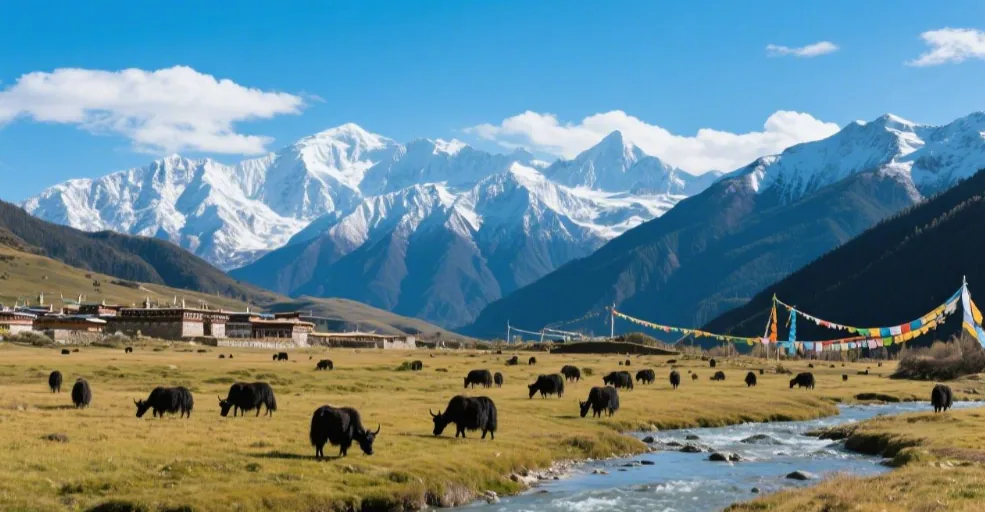
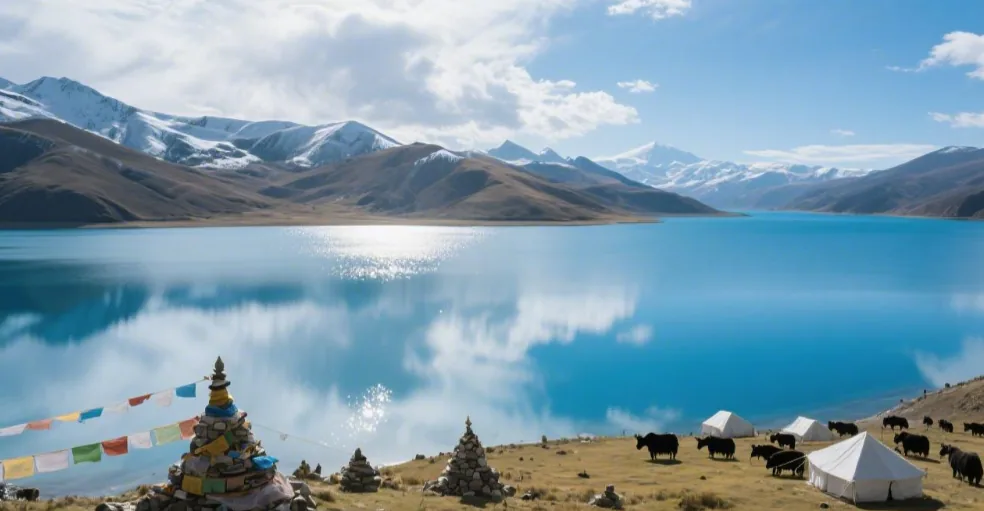
Day 6: Lhasa → Yamdrok Tso, Half-Day Lake Circuit to See the Blue
Transportation: Still used Tashi’s chartered seven-seater business van (confirmed 500 round trip including fuel by phone the day before). He was waiting at the Home Inn Selected Hotel entrance at 8:00 AM sharp. Oxygen cylinders were prepared in the car (I didn’t take any; Tashi said, “You’ve adapted well, you don’t need them”) along with bottled water. We drove along the Lhasa River road. After passing Qüxü County, we started climbing the winding mountain road. Outside the window, the valley barley fields turned into exposed grey-white rock walls. We reached Gambala Pass (elevation 4998 meters) 2 hours later. Tashi parked and said, “Don’t rush out; stand and adapt for 5 minutes.” I held onto the car door and took deep breaths, looking at the snow-capped Nyenchen Tanglha Mountains in the distance. My heart rate went from my usual 70 to 90; I only got out after settling down. Then we followed the gravel road downhill for 20 minutes to the Yamdrok Lake Observation Deck (elevation 4441 meters). A sign for “Yamdrok Tso National Nature Reserve” stood by the parking lot.
Attractions & Activities: The observation deck faces the Yamdrok Lake bay directly. At 9:30 AM, the sunlight hit at an angle, and the lake water was as blue as melted gems, with some emerald green near the shore, looking integrated with the sky from afar. I found a side angle (avoiding the crowds) and crouched low to capture reflections, framing the snow mountains, lake, and prayer flags. I tried to walk quickly for two steps toward the railing, and my heart rate immediately soared to 110. I quickly sat down to rest for 10 minutes (drinking my own warm water), watching other tourists lying down to photograph clouds, and I followed suit for a bit. Tashi said, “The scenery toward Nagarze County is better for the lake circuit, showing the ‘Swan Neck’ bend,” but a round trip that day would add 3 hours (1.5 hours one way). Fearing I wouldn’t make it back to Lhasa in time, I decisively gave it up. I only walked 200 meters on the wooden plank road around the observation deck, watching water birds glide over the surface.
Cuisine Records: For lunch, I brought my own whole wheat bread (2 slices with peanut butter) and boiled eggs, which was light and filling. A Tibetan aunt had a stall at the observation deck selling grilled sausages for 25/skewer (double the price in Lhasa). One bite showed the meat was hard and the seasoning too salty for the throat. The barley cakes for 15 each were too dry and choking. I regretted not bringing more bread. Tashi laughed and said, “Food is expensive here; bring self-heating rice next time.”
Pitfalls to Avoid: Don’t stay at Gambala Pass (4998m) for more than 20 minutes—a couple with us ran around taking photos and 15 minutes later the girl said she had a headache; Tashi quickly handed her glucose water to help her recover. Don’t believe the “Horse Riding by the Lake” solicitations on the roadside (quoted 300/hour); the horse paths are bumpy, and the scenery is about the same as the observation deck, making for low cost-performance. Tashi reminded me, “A lake circuit of Yamdrok takes at least 1 day; a same-day round trip only lets you see the ‘tip of the iceberg,’ so don’t be greedy.”
Tashi told me on the way: “At this altitude at Yamdrok, walking slowly is better than anything. Look at that person who just ran to take photos; they’ve been sitting on the ground recovering for 10 minutes. Let’s watch slowly; the blue lake isn’t going anywhere.”
| Item | Breakdown (Per Person) | Remarks |
|---|---|---|
| Transportation | 500 round trip (7-seater business van) | Tashi, 8:00 departure, 2 hours to Gambala Pass |
| Gambala Pass | 4998m elevation, adapt for 5 minutes | Stand and breathe deeply, view Nyenchen Tanglha |
| Yamdrok Deck | 4441m elevation, front-lit AM (9-11:00) | Gem-blue water, side angle for reflections |
| Circuit Note | Nagarze direction is scenic but adds 3 hours | Gave up on same-day trip, walked 200m plank road |
| Cuisine | Own bread + eggs; Grilled sausage 25/skewer | Sausage is hard/salty; better to bring own |
| Avoid Pitfalls | Stay ≤ 20 mins at peak; refuse horse riding | Running causes headaches; riding 300/h is poor value |
Key Reminder: A half-day Yamdrok trip is about “seeing one spot and resting enough“—don’t force yourself to run at 4441m. Photograph the blue lake when it’s front-lit, bring your own simple meals to save money, and control the volume without being greedy. I walked slowly + rested throughout. We started the return journey at 3:00 PM and arrived in Lhasa at 5:00 PM without altitude sickness or exhaustion.
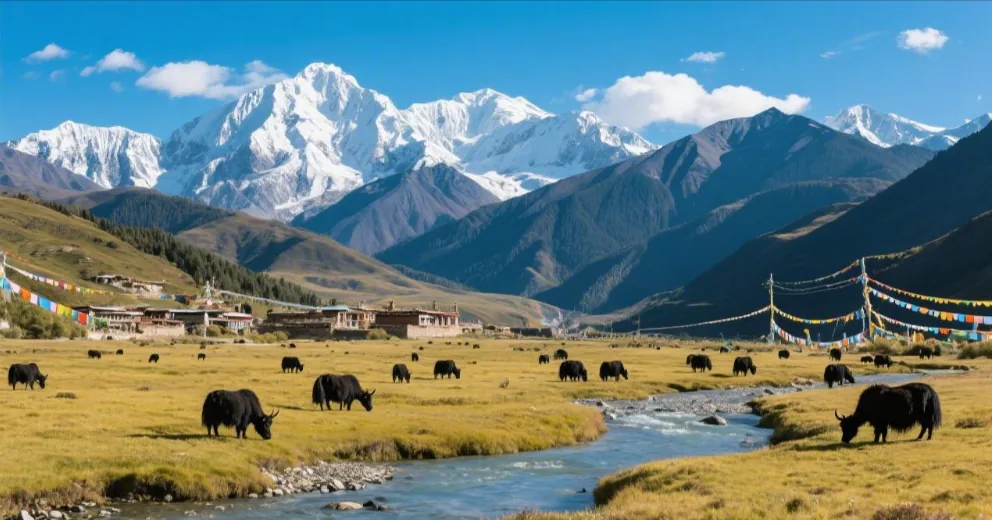
Day 7: Rest in Lhasa, Return Trip According to Flight/Train
Itinerary Arrangement: Started packing luggage at 9:00 AM. Folded the hardshell jacket and thin sweater worn over the 7 days (stuffed Tibetan incense bags bought by the Nyang River into the gaps as souvenirs). Went to the Home Inn Selected front desk at 10:00 to get my deposit back. Drolma, the Tibetan girl, returned the 280 immediately after checking the room card, saying, “As long as you were comfortable.” At 11:30 AM, walked to “Makye Ame” on Barkhor Street (the sign looked appealing when I passed by last time). The window seat on the second floor looks out at the golden roof of Jokhang Temple. I ordered yogurt cake for 15 (menu said “yak yogurt base + honey sauce”). The cake was dense and not sour, with a rich yogurt taste and some milk curd particles. Eating it helped cut the greasiness of the 7 days of Tibetan food. I packed a small piece to bring back for the driver, Tashi.
Return Suggestions: I booked a 2:00 PM flight (after 12:00 noon). I told Tashi the night before “don’t get up early to drop me off.” I weighed myself on the hotel scale before leaving and had lost 2 kg (started at 65 kg, now 63 kg). Drolma said, “Dehydration at high altitude is normal; drink more warm water to replenish it.” When organizing documents, I specifically checked for my ID card (kept in the inner pocket of my jacket). I used the ID card to enter the station at airport security, which was 10 minutes faster than queuing for a ticket. Tashi said when he came to see me off in the morning, “Leave after noon; air pressure is low in the morning and it’s tiring. Your complexion has been steady these past few days, so don’t overexert yourself.”
Expense Summary (7-day actual personal expenditure):
Chartered Car 2100: Nyingchi 2 days (Tashi’s Wuling 400/day × 2 = 800) + Nyingchi → Lhasa (Tashi 600) + Lhasa → Yamdrok round trip (Tashi’s 7-seater van 500) + Lhasa rest day airport drop-off (Tashi 200). Total 2100 (including all fuel and tolls).
Accommodation 1400: Linzhi Impression 2 nights (200 × 2 = 400) + Sosong Village “Galsang Flower Blooms” 1 night (150) + Lhasa Home Inn Selected 3 nights (280 × 3 = 840). Total 1390 (rounded to 1400).
Tickets 600: Basum Tso 170 (120 ticket + 50 bus) + Grand Canyon 240 (150 ticket + 90 bus) + Potala Palace 100 + Jokhang Temple 85 + Yamdrok deck free. Total 595 (rounded to 600).
Catering 800: Daily average 114, including stone pot chicken 98, noodles/tea 21, Guangming Gang Qiong meal 40, fire pit patty 20, etc. Actual 797 (rounded to 800).
Total 4897 (excluding flight tickets 2130, Chengdu ↔ Nyingchi round trip).
Final Reminder: Mitigating altitude sickness is about “low-altitude transition + slow activity“—I started from 2900m in Nyingchi, with a daily rise of no more than 800m, and sat at observation decks to rest when tired. Don’t believe in “miracle drugs” for altitude sickness; I only drank the 2 bottles of glucose water (10/bottle) bought at the Gongbo’gyamda Service Area. I survived by “walking slowly, talking slowly, and drinking warm water every hour.” If beginners follow this route, they’ll have nothing but a dry nose that needs lip balm; no headaches or oxygen were needed, and it was very stable.
Tashi told me on the way: “You followed the right route—starting in Nyingchi, finishing in Lhasa, and not being greedy with the Yamdrok day trip. Bring your family next time, and I’ll drive for you again.”
| Item | Breakdown (Per Person) | Remarks |
|---|---|---|
| Transportation | Chartered 7 days 2100 | Nyingchi 800 + Nyingchi-Lhasa 600 + Yamdrok 500 + Drop-off 200 |
| Accommodation | 6 nights total 1400 | Nyingchi 400 + Sosong 150 + Lhasa 840 |
| Tickets | 595 (rounded to 600) | Basum 170 + Canyon 240 + Potala 100 + Jokhang 85 + Yamdrok 0 |
| Catering | 797 (rounded to 800) | Avg 114/day, incl. stone pot chicken, noodles, tea, patties, etc. |
| Others | Glucose 20 + Balm 15 + Prayer Wheel 20 | Practical items, not essential but enhance experience |
Key Reminder: Choose a flight after 12:00 noon for the return trip to leave enough morning time for rest; weigh yourself before leaving (losing within 2 kg is normal) and bring your ID; record expenses as they occur, and don’t believe in “low-price all-inclusive” tours. Controlling your own pace is much safer.
Keep Reading
- 7-Day Shigatse Exploration: Tashilhunpo, Sakya, and Palcho Monasteries – Thangka Art & Tibetan Architecture
- 8-Day Tibet Honeymoon: Love Above the Clouds.
- 7-Day Tibet Winter Budget Guide | Sunbathing in Lhasa + Frozen Lake Pumo + Sera Monastery, Ticket-Free with Fewer Crowds & Better Scenery
- 6-Day Tibet Slow Travel Guide for Seniors | Jokhang Temple + Nyingchi Lulang + Basum Lake, Non-Tiring & Oxygen-Sufficient Itinerary
- Tibet Classic 8-Day Grand Loop | Potala Palace + Namtso Lake + Everest Base Camp, Snow Peaks & Sacred Lakes a First-Timer Must-See
Nyingchi —: Numbers to Check
Tickets & Booking
- Basum Tso ticket (prices posted by the official Tibet Culture and Tourism account): Adult CNY 120; concession ticket (student/senior) CNY 60; ticket + bus adult CNY 165, senior/student CNY 105; ticket + lake-island boat + sightseeing bus package CNY 325 (senior/student CNY 265); no booking required[src]
- Namcha Barwa/Sejila Pass: Sejila Pass is free (elevation about 4728 m, with an oxygen rest station); Namcha Barwa itself has no separate ticket and is usually viewed from the south bank viewpoints or north bank Suosong village; no booking required[src]
Transport & Schedules
- Lhasa station → Nyingchi station (Bayi) | Train: C881 EMU 07:55–11:36, 435 km about 3 h 41 min; K9801 conventional 08:40–14:00, about 5 h 20 min[src]
Where to Stay · Room Type · Nearby
- Nyingchi Bayi town (city) | Reference price About CNY 200–600 per night (reference) | Room tip: Well equipped and a transfer base for Nyingchi’s scenic areas; at about 3000 m elevation, suitable for those sensitive t | Nearby add-ons: Gala Peach Blossom Village, Niyang River scenery belt, Biri Holy Mountain, Sejila Pass[src]
- Lulang Town/Zhaxigang village | Reference price Guesthouses/star-rated hotels (reference; book ahead in peak season) | Room tip: Lulang Town is at about 3400 m with lower temperatures—bring a down jacket; there are quality guesthouses and star-rated | Nearby add-ons: Lulang Forest Sea viewing platform, Lulang alpine pasture, Zhatang Lucuo, Sejila Pass[src]
Typical Climate & Packing (Past Years)
- January: -5 °C–8 °C °C, Nyingchi is at an elevation of about 3000 m, a lower-altitude and hi
- February: -3 °C–10 °C °C
- March: 0 °C–13 °C °C, Peach blossom season begins
- April: 3 °C–17 °C °C, Peak peach blossom season; blossoms bloom on both banks of the canyo
- May: 7 °C–19 °C °C
- June: 10 °C–21 °C °C, Rainy season begins






