



Day 1: Landing in Lhasa, Adapting to Altitude Staying in the City
After 2 PM, when the plane wheels touched the Gonggar Airport runway and stopped, the plateau sunlight was like needles pricking my eyes. I squinted and dragged my suitcase out of the cabin, and the cold wind wrapped with the smell of dust rushed over—only then did I truly feel I had arrived in Tibet. The private car contacted in advance was already waiting at the exit; it was a seven-seater business van. The driver master, wearing a Tibetan robe over jeans, smiled when he saw me: “Is it the girl’s first time? I’ll drive slowly, let the altitude rise gently.” On the way, we passed a tributary of the Yarlung Tsangpo River; the turbid river water rolled with silt and surged, and the prayer flags on the shore flapped loudly in the wind. Half an hour’s drive steadily delivered me to an oxygen-supplied hotel near Barkhor Street.
The hotel was not very new, but its strength was in its honesty: on the side of the bedside table, there was a green oxygen supply button, and with one press, a thin stream of gas came out; the heating was turned up high, and it was so dry my nose felt like it was on fire. I asked the front desk for a basin of tap water to put by the heater, and borrowed a portable humidifier to use with mineral water. After putting down my luggage, I first unscrewed the thermos and gulped down half a bottle of warm water—the first priority of the plateau is hydration, don’t wait until you are thirsty to drink.
Around 12:30, I wandered to “Snowland Restaurant” in the alley. The wooden sign was faded, and inside were long wooden tables, with tourists who had just landed sitting around. I ordered a bowl of Tibetan noodles; the noodles were as thick as a pinky finger, and the soup surface floated with a layer of golden oil flowers. One sip had the richness of yak bones simmered slowly, without that fake freshness of MSG; the sprinkled green onions carried a raw green scent. The paired sweet tea was ordered in a pot and put into a thermos; it tasted like milk tea but was not that sweet, and the warmth slid from the throat to the stomach, comfortable. The old man at the next table said he eats here every time he comes; the boss lady’s dough kneading is chewy.
After 3 PM, I returned to the hotel and didn’t dare to wander blindly. On the sofa lay pomegranates sent by the hotel front desk, said to be freshly picked locally; the seeds were red and translucent. I peeled and ate them one by one, watching the kora pilgrims at the entrance of Barkhor Street outside the window: the old grandma’s prayer wheel turned with a clatter, and young people with backpacks followed the queue. The sunlight stretched their shadows very long. Around 6 PM, I tried to climb two flights of stairs to the convenience store to buy snacks; my legs felt like they were filled with lead, my chest felt stuffy, and I had to lean against the wall and rest three times before reaching the second floor. After returning, I immediately took out the portable small oxygen bottle I brought (a 100-yuan portable model) and inhaled for five minutes at the lowest setting before my breathing smoothed out—only then did I know that “walking slowly and moving gently” was not polite talk.
At 7:30 PM, the owner brought over home-made potato stewed meat, served in a coarse porcelain bowl. The potatoes were floury and melted into the meat soup with one clip; the yak meat had a bit of tendon and tasted of milk, accompanied by the sound of prayer wheels drifting from the Jokhang Temple outside (one strike at a time like a drum), eating until my whole body was warm. At 9 PM sharp, I turned off the lights and lay flat; although a bit excited (after all, the honeymoon had started), there was no headache or insomnia, only that in my dreams I could still hear the prayer wheels spinning.
|
First Day Altitude Adaptation Matters
|
Specific Operations
|
Points of Attention
|
|---|---|---|
|
Hydration after arrival
|
Drink 300ml of warm water upon landing, drink small amounts multiple times throughout the day (thermos is a must)
|
Avoid gulping down a lot at once, which increases the burden on the heart
|
|
Accommodation choice
|
Prioritize oxygen-supplied hotels in the city (better if within a 10-minute walk to Barkhor Street)
|
Confirm the room has an independent oxygen outlet or humidifier
|
|
Activity intensity
|
Afternoon limited to slow walking around the hotel (such as peeling pomegranates and watching the street view)
|
Climb stairs no more than 2 floors, rest immediately if tired
|
|
Dietary adjustment
|
Choose light Tibetan food (Tibetan noodles, sweet tea), avoid oily and high-protein foods
|
Potatoes and porridge are easy to digest, mainly supplement carbohydrates
|
|
Timing of oxygen inhalation
|
Use a portable bottle for 5 minutes (lowest setting) for slight shortness of breath (e.g., after climbing stairs)
|
Do not rely on it in non-emergency situations to avoid inhibiting the body’s own adaptation
|
The core of this day is “letting the body recognize the road”: the sunlight, the wind, the dry air, and the occasional panting are all reminding me—this is not the plain. But fortunately, the hotel is warm, the food is fragrant, and the sound of the prayer wheels is reassuring. Carving the words “save physical strength” into the brain is more useful than any guide.
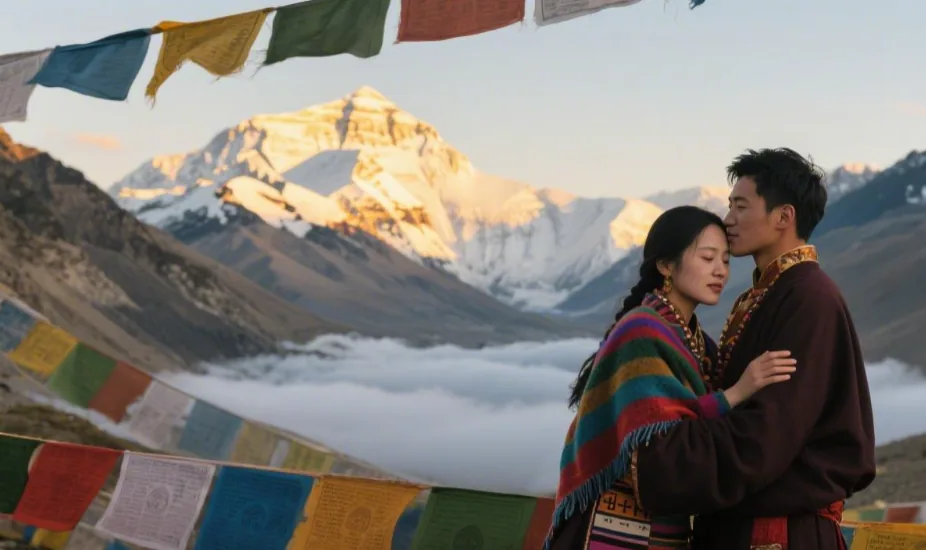
Day 2: Potala Palace Kora, Enjoying Afternoon Tea at St. Regis
At 6:30 AM, clutching the Potala Palace tickets grabbed on the official website 7 days in advance (tickets are released at 2 PM every day, I set an alarm to click right on time and chose the morning session), I stood in line on the east side of Potala Palace Square. Most people in the queue were tourists wrapped in windbreakers. An auntie wearing a knitted hat taught me: “Stand against the wall, it’s not sunny in the shadow; later the ticket gate will distribute narrators, renting one for 20 yuan is worth it.” At 8:00 sharp, the turnstiles opened, and I followed the flow of people slowly up the steps—taking only half a foot for every step, knees slightly bent like stepping on cotton. Sure enough, I didn’t pant to the point of leaning on the railing like I did when I followed a tour group last time.
The murals in the Red Palace corridor moved me the most: where the gold leaf had fallen off, the cinnabar base color was revealed. Touching with fingertips, one could feel the mineral pigment particles mixed by painters hundreds of years ago, as rough as old tree bark, yet warmer than the replicas in museum glass cabinets. The Qing Dynasty golden seal in the Treasure Hall was smaller than imagined, about the size of a fist, with a coiled dragon carved on the seal knob. When the light hit it, the dragon scale patterns were distinct, and the sign next to it read “Emperor Qianlong’s Imperial Seal for the Dalai Lama.” I leaned in to see the seal script; the small characters were carved deep and hadn’t been worn down by time.
At 12:15 PM, I exited the West Gate of Potala Palace, turned right and walked fifty meters to “Old Fish’s Restaurant.” Opening the wooden door curtain revealed warm yellow light, with old photos hanging on the walls showing the Potala Palace in all four seasons. I ordered yak meat rice; when it was served, the meat pieces were piled into a small mountain. The chopsticks could break them with one clip; the meat fibers were mixed with carrot cubes and green peppers, stewed so soft they didn’t get stuck in teeth, and the gravy soaked into the rice could make me eat two big mouthfuls. A Tibetan brother at the next table said they come often; the boss is from Sichuan, and the sauce mixed is not harsh on the throat. I even ate the soup mixed with rice.
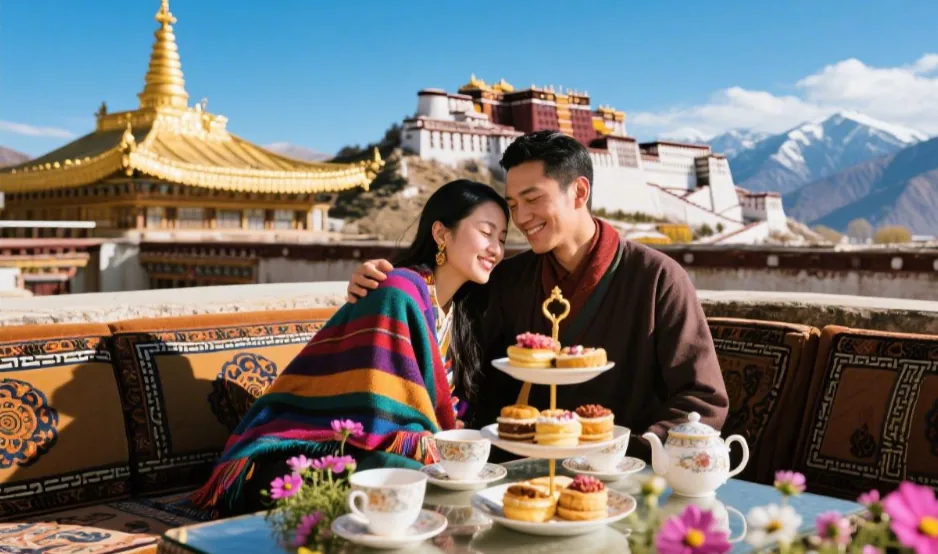
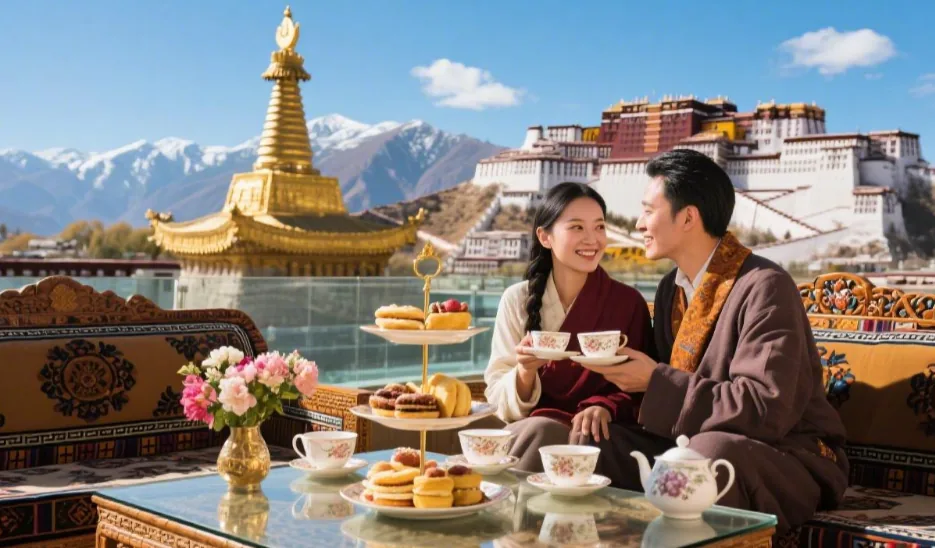
At 2:30 PM, I took a taxi to the St. Regis. The driver was a local young man who said “taking Jiangsu Road is close, no traffic jams.” In fifteen minutes, we arrived at the hotel entrance. A doorman in a Tibetan uniform helped me with my luggage and led me to the elevator to the top floor terrace. I chose the southeast corner window seat, directly facing the white walls of the Potala Palace, with the 3 PM sunlight slanting over, not blinding. The afternoon tea set was for two: in the savory items, the butter tea was served in a small copper pot, poured out slightly salty with a milky fragrance, and the paired tsampa balls were squeezed into small lumps, tasting of highland barley when chewed; the highland barley cookies were roasted crisp and dropped crumbs on the plate; the strawberry tart cream was not greasy, and the bottom tart crust was so crispy it fell apart; the raisin scones were heated until the syrup flowed. The two of us shared it just right.
When waiting for the sunset, the outer walls of the Potala Palace gradually changed from bright yellow to orange-red, then to pink-purple, as if smeared by someone with a paintbrush. The camera couldn’t capture that kind of light flow; I held up my phone to record a video. The wind blew up the scarf of a guest next to me, and the corner of the scarf just happened to pass over the golden roof of the Potala Palace, making the picture more vivid than a photo.
I remember Xiao Zhang, who came with me last time, was in a hurry to take photos and ran up the steps; as a result, he panted so hard he sat on the ground at the entrance of the Red Palace, and the staff had to use an oxygen bottle for emergency help. This time I told him in advance, “Potala Palace is not a treadmill, it is a history book for you to read slowly.” He followed me one step at a time, didn’t complain of tiredness once, and even took a close-up of a mural saying he would frame it.
|
Potala Palace Visit and St. Regis Afternoon Tea Items
|
Operation Details
|
Points of Attention
|
|---|---|---|
|
Potala Palace Tickets
|
Grab tickets on the official website 7 days in advance (tickets released at 2 PM), choose the morning session for fewer people
|
Bring original ID card; ticket gate scans ID + face recognition
|
|
Visit Pace
|
Walk slowly on the steps (half a foot per step), lightly touch murals in the Red Palace to feel the pigments
|
No running or jumping; at 3750 meters altitude, it is easy to get short of breath
|
|
St. Regis Afternoon Tea
|
Choose the southeast window seat on the top floor terrace (facing Potala Palace); light is best around 3 PM
|
Set includes butter tea/highland barley cookies/scones/fruit tarts, enough for two
|
|
Sunset Viewing
|
6:30 PM to 7:00 PM (half an hour earlier in winter), recording video produces better results
|
Prepare a thin jacket; it is windy on the terrace
|
The beauty of this day lies in “balancing movement and stillness”: the stillness of the Potala Palace is the heaviness of history, the fragrance of the butter tea is the warmth of the present, and in the light and shadow of the sunset over the Potala Palace, my lover and I looked at each other, and both knew this trip was not in vain.
Day 3: Yamdrok Lake Loop, Double Travel Photos as Souvenirs
At 7:30 AM, the chartered seven-seater business van parked on time at the hotel entrance. The driver Tashi said this car has run the Yamdrok Lake line for three years, and the high chassis is not afraid of crushed stone roads. When the two of us got in, he was adjusting the on-board oxygen concentrator, saying “today the journey is long, breathe at any time if you are tired.” Along the Ya-Ye Expressway going south, the mountains became increasingly bald; the exposed rocks were like they had been sliced by a knife, with withered grass embedded in the cracks and occasional flashes of purple gentian flowers.
Around 9 AM, we reached Gambala Pass (altitude 4998 meters). The wind was so strong it made a whistling sound when speaking. I wrapped my windbreaker tightly and got out of the car; my hair was instantly blown into a bird’s nest. Beside the stone monument at the pass, there were Tibetans setting up stalls to sell air-dried yak meat, torn into strips and eaten with chili powder; the salty fragrance could ward off the cold for a while. After gnawing on the dark chocolate I brought (high-energy type), I quickly scurried back into the car to go down the mountain—staying at the pass for more than ten minutes makes it easy to get a headache.
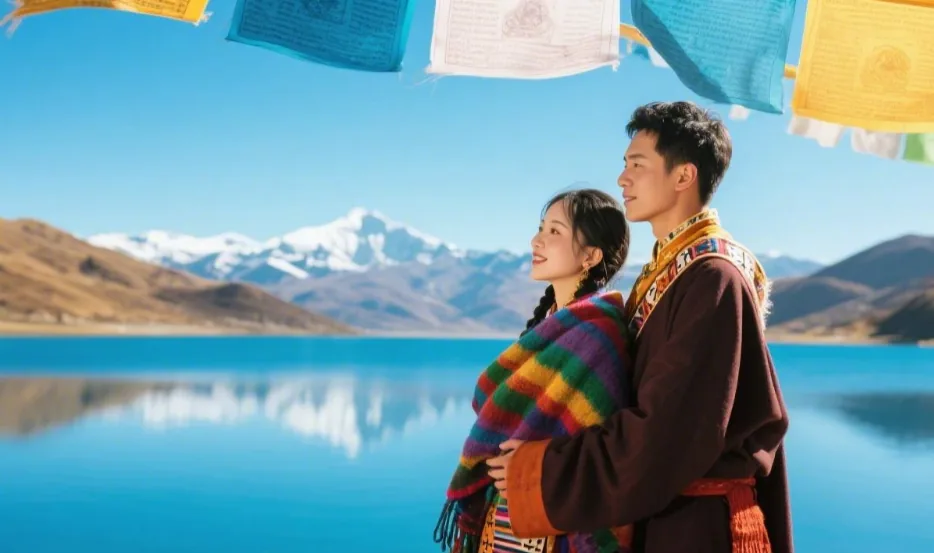
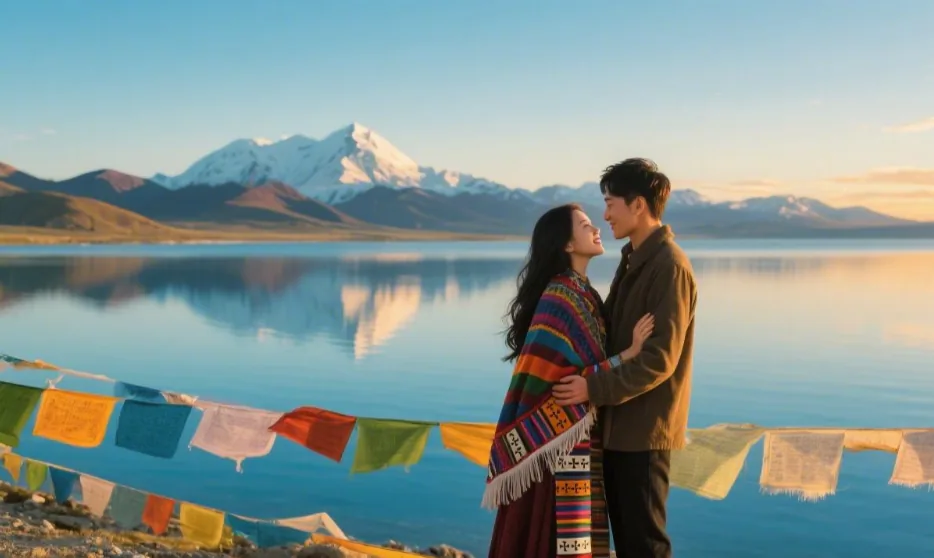
At 11:30 AM, we arrived at the west bank of Yamdrok Lake. The shallow beach is hidden at the fork 2 kilometers north of Tuiwa Village, Nakartse County (Tashi said this is a photographer’s private spot, avoiding the Luri La observation deck where tour groups gather). The lake water was as blue as if mixed with pigment. At the shallow beach, the water depth was just over the ankles, and the small stones underneath were poking the feet. Standing in the water in a white long dress, I didn’t care if the hem got wet; behind me, the reflection of the Ningjin Kansang snow peak just filled the viewfinder. My lover squatted low to take the photo, the wide-angle lens taking in the whole patch of blue and my shadow.
At 4 PM, the light was softest, so we moved to the prayer flag stone pile to take profile photos. The prayer flags flapped loudly in the wind; I took a strip and wrapped it around my wrist, the red silk highlighting the fairness of the skin. My lover used a 70-200mm telephoto lens, the background blurred into a patch of blue, with the snow mountain peak just showing. I rented a Tibetan scarf (30 yuan/piece, with a rental sign stuck in a rock crack), wrapped it around my shoulders and took a few backlit shots; the way the scarf tassels floated looked like dancing.
On the return journey, we passed the Karola Glacier observation deck; the ice tongue was grayish but close enough to see the surface cracks like wrinkles on an old person’s face. Tashi stopped for ten minutes for us to take photos, reminding us “don’t get close to the fence, last year a tourist stepped into the void and fell.”
At 7 PM, we returned to “Puncog Kangsang” restaurant in Lhasa city and ordered the signature stone pot chicken. The Medog soapstone pot had been stewed for three hours; when the lid was lifted, the matsutake fragrance rushed to the nose. The chicken meat was stewed until it fell off the bone, and one bite released the freshness of the chicken soup. The potatoes soaked up the meat soup and were sandy and soft, and even the green vegetables in the pot had a mushroom flavor. The waiter said the stone pot was carried back from Medog; it heats evenly and doesn’t stick to the bottom, no wonder the taste is different.
I remember coming to Yamdrok Lake with a tour group last time; a friend wore a black windbreaker and stood by the lake, looking like a silhouette in the photo. Another took photos at noon, and under the strong light, the lake water looked white, and the photos had no layers. This time the two of us remembered the secret of “shallow beach + white dress + 4 PM”. When the final photos were posted on WeChat Moments, many people asked if filters were added.
- Chartering details: 600 yuan per day for a seven-seater business van (including fuel and driver meal allowance). Tashi is familiar with every photo spot and will proactively stop to wait for the light.
- Photo props: Rent Tibetan scarves by the shallow beach (30 yuan/piece), or bring your own light-colored silk scarf (use clips to fix when the wind is strong).
- Warmth points: The wind by the lake is colder than at the mountain top. Put on a fleece jacket immediately after shooting (recommended to bring styles with detachable sleeves).
|
Yamdrok Lake Photo Tips
|
Operation Details
|
Points of Attention
|
|---|---|---|
|
Best shooting time
|
3-5 PM (direct light without glare, move to 2-4 PM in winter)
|
Avoid the strong noon light (lake water looks white and distorted)
|
|
Clothing suggestions
|
Light-colored long dress (white/light blue) + fleece jacket (strong wind by the lake)
|
Choose ankle-length dresses to prevent lake water from splashing and cooling the calves
|
|
Props
|
Rent Tibetan scarves (30 yuan/piece at the shallow beach stalls) or bring your own silk scarf
|
Scarves can serve as foreground/background to add color layers
|
|
Photo spots
|
West bank shallow beach (2km north of Tuiwa Village), beside prayer flag stone piles
|
Avoid the Luri La observation deck where tour groups gather
|
The essence of this day is “right time, right place, right people“: the right time (4 PM), the right place (private shallow beach), and the right preparation (white dress and scarf), letting the beauty of Yamdrok Lake not be wasted. When my lover pressed the shutter, I saw his eyes reflecting the snow mountains and the blue lake, even more moving than the photos.
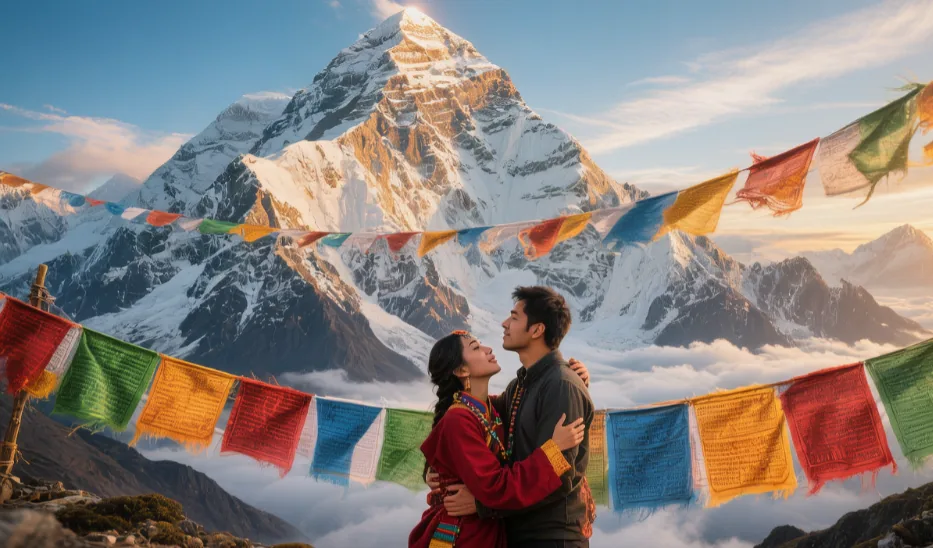
Day 4: Lhasa to Shigatse via Gyantse Ancient City
At 8 AM, I was clutching the Tibet AL license plate bus ticket booked three days in advance (the driver said this license plate is exclusive to legitimate tourist buses, and inspections are strict on the road). I was waiting in the second-floor waiting hall of Lhasa Passenger Station. The bus was a white Yutong; the seat covers were washed until they were white but not broken. The driver was a Tibetan uncle wearing a duck-tongue cap. Seeing me carrying a thermos, he asked: “The girl is going to Shigatse? It’s four hours on the road, drinking hot water helps.” At 8:10, we departed on time, following National Highway 318 to the west. Just out of the city, we encountered a washboard road—the road surface had grooves like a washboard, and the wheels rolled over with a “clatter clatter” sound. My tailbone felt sore from the bumping underneath, so I quickly tucked my backpack behind my waist. The auntie in the next seat said she took an ordinary bus last time and the bumping made her herniated disc hurt for three days.
At 12:30 PM, we arrived in Gyantse county town. “Zongshan Hotel” is right diagonally opposite the Palcho Monastery. The paint on the wooden sign was peeling in several places, and inside, the Eight Immortals tables were crowded, mostly with local Tibetans sitting there. I ordered Tibetan buns; a steamer of six was served. The skin was so thin it was translucent, and when bitten open, it was yak meat filling mixed with fine green onions. The meat was fragrant and not gamey, and the gravy seeped into the skin. Eating them dipped in a bit of vinegar was even more refreshing. The paired sugar-free yogurt was in a ceramic bowl, with a layer of milk skin on the surface; it was sour enough to make me frown, but after eating the buns, it just happened to cut through the greasiness of the meat filling. The boss said the bun filling used yak meat slaughtered that day, and the onions were from their own garden, no wonder the fragrance was so authentic.
After the meal, I strolled to the Palcho Monastery. The Kumbum Stupa is right at the temple entrance; the white stupa body was studded with Buddhist niches, a patch of gold under the sunlight. Entering the stupa door revealed a narrow staircase, so steep it was almost vertical, without railings. I tried to climb two steps and my legs shook, remembering a friend who insisted on reaching the top last time and panted against the wall for ten minutes after coming down. Walking around the base of the stupa, I finally understood the word “awe”—the stupa base bas-reliefs were all densely packed with small Buddha statues, some sitting, some standing. The clothing patterns were carved finer than hair strands, and there were scenes of King Gesar’s battles, where even the manes of the warhorses could be counted one by one. The wind blew through the stupa, and the copper bells on the eaves rang, as if telling stories from a thousand years ago.
At 6 PM, we arrived in Shigatse city and stayed at “Shandong Hotel”—the name is plain but honest. The heating in the room was turned up high, and a free oxygen concentrator stood by the bedside table (it can be used just by plugging it in, and the flow knob adjusted to the minimum was just right). The young man at the front desk saw my nose was a bit dry and handed over a small spray bottle: “Fill the humidifier with half a bottle of mineral water and half a bottle of cold boiled water, don’t use tap water, it easily clogs the filter element.” He demonstrated as he spoke, spraying twice towards the humidifier filter, and the mist immediately became even.
Last time I came to Shigatse with a tour group, the guesthouse had no oxygen supply. In the middle of the night, my head hurt so much I hit the wall, and it was a teammate who ran to the pharmacy to buy an oxygen tank. This time I did my homework in advance and booked this place. The trio of heating + oxygen supply + humidifier let me sleep soundly that night, without nosebleeds or coughing.
- Transportation details: Tibet AL license plate legitimate bus ¥120/person (including insurance). The whole G318 journey is about 280 kilometers, stopping at Gyantse and Bailang service areas.
- Palcho Monastery highlights: Walk around the Kumbum Stupa base to see the bas-reliefs (no entry fee). The stairs to the top are steep and not recommended (those afraid of heights should be cautious).
- Accommodation tips: Shandong Hotel heating is on 24 hours. The oxygen concentrator is free to use (turn off the power when checking out). Spare humidifier filters can be collected from the front desk.
|
Items Along the Way from Lhasa to Shigatse
|
Operation Details
|
Points of Attention
|
|---|---|---|
|
Transportation choice
|
Book Tibet AL license plate legitimate bus in advance (purchase tickets at Lhasa Passenger Station)
|
Refuse unlicensed black cars; safety is guaranteed
|
|
Road condition response
|
The washboard road on G318 is bumpy; prepare a U-shaped pillow for the waist, drink less water to prevent frequent bathroom breaks
|
Those with tailbone discomfort should bring a waist cushion
|
|
Gyantse lunch
|
“Zongshan Hotel” Tibetan buns (¥25/steamer) + sugar-free yogurt (¥8/bowl)
|
Eat buns while hot; once cold, the skin hardens and affects the taste
|
|
Palcho Monastery tour
|
Walk around the Kumbum Stupa base to see bas-reliefs (skip climbing); the stairs are steep, be cautious
|
Bas-reliefs are forbidden to touch; use mobile macro to take photos of details
|
|
Shigatse accommodation
|
Choose room types with oxygen concentrators at “Shandong Hotel” (¥280/night); front desk teaches humidifier use
|
Put a basin of water in the heated room to prevent nasal dryness and bleeding
|
In the busyness of this day, small bits of happiness were hidden: the bumps of the washboard road became a reason to hold hands with my lover, the Palcho Monastery bas-reliefs made me understand that “faith is patience carved into stone,” and the heating at Shandong Hotel kept the cold of the plateau outside the door, leaving only the scent of sweet tea and each other’s breathing in the room.
Day 5: Shigatse to Tingri, Adapting to Higher Altitude
At 9 AM sharp, we got into the Tibetan-style off-road vehicle contacted in advance (the driver Dorje said this 4WD is stable and won’t struggle over mountain passes), departing from Shigatse city. Along the G318 National Highway southwest, it was initially a flat river valley, with black tents scattered on the meadows and yak herds like scattered black beans. After driving more than forty kilometers, the road began to climb. Dorje switched the car to low gear: “Gyatso La Pass altitude is 5248 meters, later when you get out of the car don’t run, take two breaths of oxygen first.”
When the car reached the pass observation deck, the wind whistled against the car window. I pulled out the portable oxygen bottle I brought (a 100-yuan aluminum can model) and inhaled twice to suppress the chest tightness before pushing the door to get out. On the stone monument of the observation deck was carved “Gyatso La Pass 5248m”; beside it, the prayer flags flapped loudly in the wind. The distant snow mountains were lined up like sawteeth, and the sunlight on the snow peaks was so bright it was hard to open the eyes. Beside the stone monument squatted a Tibetan auntie, wearing a Tibetan robe wrapped in a sheepskin coat. A piece of felt was spread in front of her, displaying air-dried yak meat and milk curds. She used a Tibetan knife to tear off a strip of meat for me to taste: “Chew slowly, the more you chew, the more fragrant it is.” It was salty-fragrant with a bit of milky taste; the fiber was coarse but chewy. At 30 yuan a jin (half kg), I bought half a jin as a snack. Dorje said this meat was dried last winter, hung at the top of the tent for half a year, with no preservatives added.
At 12:30 PM, we arrived at Shelkar Town. “Snow Lotus Restaurant” was right at the town center crossroads; the blue sign was faded, and inside were four square tables. I ordered potato stewed yak brisket. When it was served, the clay pot was sizzling; the brisket pieces were cut as big as a fist. The chopsticks could pierce them through; it was stewed so soft they didn’t get stuck in teeth, and the potatoes soaked up the meat soup and were sandy, and even the tendons were stewed soft. The rice was simmered in a pressure cooker, each grain distinct and filling. The two of us each had another bowl. A Tibetan youth at the next table said they come often; the boss is from Gansu, and the sauce mixed used broad bean paste and local wild onions, no wonder it was so fragrant it helped the rice go down.
At 3 PM, we arrived at Tingri county town and stayed at “Everest Hotel”—the name is direct, and the rooms were simple but clean. The front desk said “tonight medical oxygen concentrator rental is 50 yuan,” so I quickly completed the procedures. The machine was white, with wheels to push. After connecting the nasal cannula, the flow knob was adjusted to the minimum (1L/min); inhaling felt like a breeze brushing through the nostrils, not choking. Dorje had reminded me earlier “don’t inhale high flow all night, it’s easy to become dependent.” I tried for half an hour, and the swelling sensation in my temples disappeared. That night I slept for six hours without waking, more soundly than that night in Shigatse.
I remember coming to Tingri last time without renting an oxygen concentrator. In the middle of the night, my head hurt so much I sat up, fumbling in the dark to hit the oxygen tank for a long time before it worked, and I was still dizzy after inhaling. This time, Dorje’s method of “low flow overnight + portable bottle during the day” really worked, even no nosebleeds occurred.
- Transportation: Shigatse to Tingri single trip by Tibetan-style off-road vehicle ¥400 (carpool available). 4WD is suitable for mountain roads. Dorje’s phone 138xxxxxxx (need to book one day in advance).
- Pass experience: Choose air-dried yak meat that is dark brown and hard when squeezed (fresh); milk curds paired with sweet tea cut the greasiness. Don’t buy those with white color (might have starch added).
- Restaurant: Snow Lotus Restaurant costs about ¥50 per person. Potato stewed yak brisket is a must-order; also recommended are Tibetan noodles (¥20/bowl, thick soup).
- Oxygen concentrator: Everest Hotel rents medical machines for ¥50/night (including nasal cannula); return the machine and get the deposit back upon checkout.
|
Shigatse to Tingri Items
|
Operation Details
|
Points of Attention
|
|---|---|---|
|
Departure time
|
9 AM sharp (avoid morning peak, allow 6 hours for the drive)
|
Prepare enough hot water (thermos 1.5L or more)
|
|
Gyatso La Pass
|
Altitude 5248 meters; inhale portable oxygen (2 breaths) before getting out of the car; stay at the observation deck ≤15 minutes
|
Wear a hat in strong wind, no running or jumping, prevent worsening altitude sickness
|
|
Air-dried yak meat
|
Choose Tibetan stalls (non-store packaged type), 30 yuan/jin, tear into strips and chew slowly to supplement energy
|
Try a small amount for the first time; some people might not digest it well
|
|
Shelkar lunch
|
“Snow Lotus Restaurant” potato stewed yak brisket (¥68/portion) + filling rice
|
Stewing the beef soft takes 40 minutes, don’t rush the order
|
|
Tingri stay oxygen rental
|
Rent medical oxygen concentrator at Everest Hotel for ¥50/night, flow adjusted to 1L/min (lowest)
|
Inhale for 30 minutes before sleep; machine stops automatically at night to save power
|
The core of this day is “shaking hands and making peace with high altitude“: the cold wind at the pass taught me to slow down, the salty fragrance of the air-dried meat reminded me to supplement energy, and that small oxygen concentrator was like putting insurance on the night, letting the body take a breath even at high altitude. Dorje said “Tingri is the gateway to Everest; if you adapt here, you won’t be afraid of Everest.” I touched the remaining meat strips in my pocket and felt these words were reliable.
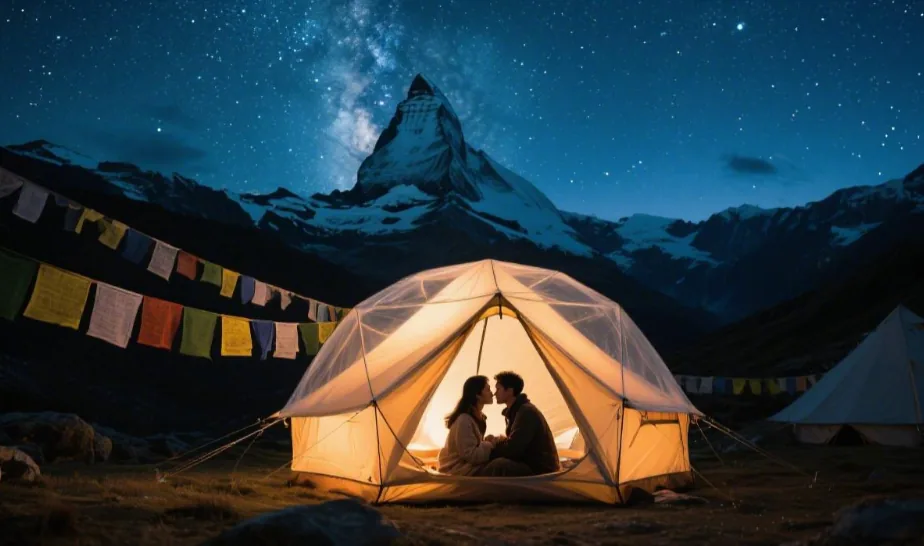
Day 6: Tingri to Everest Base Camp, Staying in Starry Tents
At 7 AM, the sky was still as black as a piece of velvet. I wrapped myself in a down jacket and squeezed into the 4WD off-road vehicle booked in advance (the driver Tsering said this car has a high chassis and can pass through crushed stone slopes). On the passenger seat sat his thermos, and he said “drink some hot water on the road, don’t get cold.” The car lights cut through the darkness, following G318 National Highway south. Initially, it was a flat river valley, then the road began to climb. Tsering adjusted the car lights to high beam and pointed ahead, saying “Gawu La Pass is almost here, five 8000-meter snow peaks are waiting there.”
When the car reached the Gawu La Pass parking point, it was just getting light. Tripods were already standing by the road, and several photography enthusiasts wrapped in military coats were adjusting parameters. I pushed open the car door, and the cold wind “swished” down my neck, so I quickly wrapped my scarf tightly. In the morning light, five 8000-meter-level snow peaks were lined up: the leftmost was Makalu, the top looking like it was wearing a white hat, its peak glowing pink; the snow line of Lhotse in the middle was like it was cut by a knife, with the grey rock and white snow boundaries distinct; Everest in the very center only showed half its top, looming in the clouds. Tsering said “this pass is the golden point for viewing the Everest group peaks; there are many clouds in summer, and the chance of capturing all of them is small.”
Around 9 AM, we arrived at Rongbuk Monastery. Outside the monastery, the tea house hung a faded blue cloth curtain. The owner was a Tibetan grandma who smiled at everyone: “Sweet tea is 5 yuan a pot, squat on the doorstep to drink, it’s warm.” The pot was aluminum and scalding hot. Squatting on a stone and holding it to drink, the sweet tea was so hot my tongue tingled, and the milky fragrance was mixed with tea bitterness. My whole body steamed with heat after drinking. The grandma said the tea house had been open for twenty years, and all the passing drivers rested here. When I left, she stuffed a piece of milk curd into my hand: “Eat it on the road if you are hungry, it’s filling.”
At 12:30 PM, we rushed to Everest Base Camp. The Frontier Pass must be processed before 2 PM (Tsering reminded us repeatedly). There was a queue by the police station next to the parking lot; filling out the form, scanning the ID card, and stamping took ten minutes to complete. Then we took the scenic area shuttle bus further in. Reaching No. 2 observation deck still requires a 10-minute walk (crushed stone road, gentle slope). Don’t believe the “yak riding direct” offered by touts on the roadside—Xiao Li, who traveled with me last time, rode for 200 yuan. The yak walked slowly, and by the time they arrived, the sun was leaning west, and the photos were all backlit.
At 3 PM, we arrived at the tent camp and chose a spot with an open view. The camp provides -10°C temperature-rated sleeping bags. I opened and touched one; it was filled with down cotton, not thin, but I still stuffed a light down jacket inside as an extra layer (Tsering said “it’s over ten degrees below zero at night, double insurance”). The tent was orange-red and could house two people, with a folding bed and a small night light inside. In the corner sat a tin heating stove (burning yak dung cakes, add them yourself at night).
At 9 PM, the clouds that were originally pressing on the mountaintop suddenly dispersed. The Milky Way was like a silver ribbon pouring down from the top of Everest. The stars were so dense they could be counted into constellations. I set up my phone for a 30-second long exposure, and the star trails captured rotated around the peak of Everest. The wind blew through the tent gaps, a bit cold, but wrapping up tightly and listening to the wind made me feel steady instead—this is the sound closest to heaven.
- Transportation: Tingri to Base Camp single trip by 4WD off-road vehicle ¥600 (carpool available). Tsering’s phone 139xxxxxxx (book one day in advance, includes shuttle bus ticket).
- Equipment test: Stick heat patches on the phone battery to prevent shutdown (it’s -12°C at night, battery drains extremely fast). Choose sponge earplugs (the wind sounds like distant thunder, wearing them helps sleep). 1.5L thermos for hot water (to warm hands at night).
- Avoid traps: Refuse riding yaks (high cost, slow speed). The shuttle bus ticket is included in the off-road vehicle fee, don’t buy it twice.
- Experience: A folding stool is steady for star photography (the ground is uneven, sitting makes for better angles). Dissolve glucose powder in hot water to drink (to supplement energy when hungry at night).
I remember not bringing a folding stool last time and squatting on the ground to take star trail photos, making my legs numb for half an hour. Someone else found earplugs troublesome, and as a result, the wind noise was so loud they didn’t sleep well and had a headache the next day. This time, following Tsering’s advice to “travel light but don’t skimp on equipment,” things went smoothly as expected.
|
Tingri to Everest Base Camp Items
|
Operation Details
|
Points of Attention
|
|---|---|---|
|
Departure time
|
Depart in the dark at 7 AM (allow 8 hours for the drive, including scenic stops)
|
Prepare enough hot water (thermos 1.5L or more), wear windproof down jacket
|
|
Gawu La Pass
|
Shoot five 8000-meter snow peaks in morning light (Makalu top like a white hat)
|
Parking point is windy, wear hat and gloves, no long stay
|
|
Rongbuk Tea House
|
Grandma’s tea house outside the monastery, sweet tea 5 yuan/pot, squat on doorstep to warm up
|
Milk curds can be bought as snacks (¥10/bag) to supplement salt
|
|
Base Camp Frontier Pass
|
Arrive at police station before 2 PM to process (form + ID stamp)
|
Prepare ID card photocopy in advance to save time
|
|
Shuttle bus and deck
|
Take shuttle to terminal, walk 10 mins to No. 2 observation deck (refuse yak ride)
|
Wear anti-slip shoes for crushed stone road, use walking stick for aid
|
|
Starry tent experience
|
Camp provides -10°C sleeping bag, add down jacket as layer; stove burns yak dung cakes
|
Add one dung cake at night to keep temperature around 5°C
|
|
Milky Way observation
|
Shoot star trails after 9 PM when clouds disperse (30s long exposure on phone)
|
Prepare folding stool for steady shooting, earplugs to block wind noise for sleep
|
The meaning of this day is “touching the limit“: the cold wind of Gawu La Pass, the sweet tea of Rongbuk Monastery, and the star trails in the tent are all saying “Look, such a high place, we can stay here too.” Before leaving, Tsering said “Everest doesn’t pick people, it picks whether preparation is enough.” I touched the milk curd in my pocket given by the grandma and felt these words were more substantial than Everest.
Day 7: Everest Sunrise, Return to Shigatse
At 6:30 AM, the sky was still pitch black. I pulled the down jacket zipper to my chin and pulled the hat tight over my ears, running towards the observation deck in the dark—I had made an appointment with driver Tsering the day before, and he came to shout for me outside the tent at 5:50, saying “Everest sunrise is only those 90 seconds, one step late and it’s all for nothing.” On the open ground of the observation deck already stood seven or eight people, all shrinking their necks and stomping their feet. A brother with a telephoto lens had set up his tripod, aiming the lens southeast.
After waiting for more than twenty minutes, the horizon first turned a fish-belly white, then the top of Everest seemed to be smeared with a layer of gold powder. First the peak lit up, then it blurred into orange-red, and finally the whole top looked like a glowing red coal. That color from light to deep took only one and a half minutes; I counted with my stopwatch, and sure enough exactly 90 seconds later it dimmed down. The wind was strong enough to blow someone away. I wrapped my clothes tightly to record a video; the light and shadow changes of Everest in the lens were ten times more vivid than a photo—my lover later set this video as his phone screensaver, saying “Every time I look at it I feel cold, but my heart is warm.”
When going down the mountain, we passed a crushed stone beach at the edge of the camp. I picked up a small stone with rounded edges (grey with white patterns, like it was worn down by water flow). The camp sign read “permitted to take away ordinary rocks as souvenirs, don’t touch Mani stone pile rocks.” I put the stone in my pocket; it was heavy, as if I had carried a piece of Everest snow.
At 12:00 PM, we had lunch at Gangga Town, Tingri County on the return journey from the Base Camp. We chose “Sichuan Stir-fry” at the intersection—built with a blue shed and having greasy plastic tablecloths. The owner was from Suining, Sichuan; seeing us speak Mandarin, he smiled: “Want a portion of shredded pork with garlic sauce? My wife stir-fried it, it’s free if it’s not authentic.” When it was served, the pork shreds, wood ear, and carrot shreds were neatly arranged. The sour-sweet taste was just right, not too much sugar added, and the pork was so tender it could melt in the mouth. The rice was simmered in a pressure cooker with distinct grains. I scooped two spoonfuls of gravy over it and ate two bowls in a row. A truck driver at the next table said they run the Sichuan-Tibet line and only recognize this place, filling and good with rice.
At 4 PM sharp, taking the same model 4WD off-road vehicle, we reached “Shandong Hotel” in Shigatse (the same one we stayed in on the fourth day). The young man at the front desk saw me enter and immediately said “Don’t shower first, soak your feet!” I did as he said, using bottled water mixed with hot water to about 40 degrees, and soaked for 20 minutes. My toes went from being frozen numb to regaining sensation before I dared to go into the bathroom for a hot shower. Last time I came to Everest, I didn’t soak my feet and showered as soon as I came down the mountain; as a result, my toes hurt so much I couldn’t sleep at night. This method Dorje taught me was really useful.
I remember coming with a tour group last time; the guide said “see the sunrise whenever,” as a result I overslept and only saw a blurry top at the observation deck, regretting it for a long time. This time I set two alarms and rushed out wrapped like a zongzi (rice dumpling), so I didn’t miss that 90-second golden-red transformation. Also, when returning, the driver said “Shigatse altitude is 3800 meters, much lower than Everest, but don’t be careless just coming down.” Sure enough, after soaking my feet, I felt much more relaxed and didn’t have a headache like last time.
- Transportation: Everest Base Camp to Shigatse single trip by 4WD off-road vehicle ¥500 (carpool, including tolls). Tsering’s phone 139xxxxxxx (book in advance, return trips are often full).
- Sunrise equipment: Down jacket + fleece hat + gloves (windy at observation deck). Turn on flight mode on the phone to save power. Telephoto lens to shoot details.
- Souvenirs: Pick up rounded ordinary rocks from the crushed stone beach (avoid Mani piles). The camp permits taking ordinary rocks (don’t put them in obvious places in the bag to prevent misunderstanding).
- Lunch: Gangga Town “Sichuan Stir-fry” shredded pork with garlic sauce ¥38/portion, rice ¥2/bowl, filling.
- Foot soaking points: Bottled water mixed with hot water (not too hot), soak for 20 minutes until toes warm up, then shower to prevent colds triggered by altitude.
|
Everest Sunrise and Return to Shigatse Items
|
Operation Details
|
Points of Attention
|
|---|---|---|
|
Sunrise observation time
|
6:30-7:00 AM (10 mins earlier in summer, 10 mins later in winter)
|
Arrive 20 mins early at observation deck to take a spot; prepare thick down jacket
|
|
Sunrise process
|
Peak turns gold → dyed orange-red → whole top glows red (90s total); phone video is more complete
|
Windy, wear hat and gloves, no long exposure
|
|
Downhill souvenirs
|
Pick up rounded ordinary rocks from crushed stone beach (avoid Mani piles); keep in pocket discreetly
|
Camp permits taking them; don’t pack in a large bag
|
|
Return lunch
|
Gangga Town “Sichuan Stir-fry” shredded pork (¥38) + rice (¥2/bowl)
|
Owner is from Sichuan, taste is more home-style, portion is large
|
|
Shigatse stay adjustment
|
Immediately soak feet for 20 minutes upon hotel arrival (bottled water with 40℃ hot water)
|
Soak until toes warm up before showering to prevent colds from high altitude
|
|
Transportation choice
|
4WD off-road vehicle carpool (¥500/person); Tsering is familiar with road and doesn’t detour
|
Book one day in advance; easily full during peak season
|
The highlight of this day is “using 90 seconds to remember eternity“: the golden-red of the sunrise, the temperature of the stone, and the sour-sweet of the shredded pork are all saying “the hardship of the plateau is worth this one look.” On the way back to Shigatse, looking at the familiar river valley meadows outside the window, touching that stone in my pocket, I knew this honeymoon was not in vain.
Day 8: Return from Shigatse, End of 8-day Trip
At 9 AM sharp, the Tibet AL license plate bus parked on time at the Shigatse Shandong Hotel entrance. The driver Tashi smiled and waved: “Girls, let’s take the road back, look at the Yarlung Tsangpo River once more on the way.” I chose a window seat. On the luggage rack were stacked milk curds and air-dried meat he helped tourists carry (all thank-you gifts from regulars on the road). The bus followed G318 National Highway east. Initially, it was a gentle river valley, where yak herds on the meadows were like scattered black pearls. After driving for two hours, we reached Xaitongmoin County Observation Deck—Tashi stopped for ten minutes and pointed into the distance saying “look at that river bend.” The Yarlung Tsangpo River curves into a large S here; the river water was turbid yellow with a bit of green, looking like a flowing jade ribbon under the sunlight. I held up my phone taking horizontal and vertical shots, wanting to collect the mountains, river, and clouds into the frame.
At 12:30 PM, we arrived in Lhasa city and went straight to “Tiancun Tibetan Fragrant Pig Hotpot” (recommended by Tashi, saying “the pork is free-range from Linzhi, no gamey smell”). The shop was in the back alley of Barkhor Street. The wooden sign was blackened by oil smoke, and inside were low tables and stools, filled with tourists who had just gotten off the plane. I ordered a small pot; it was served with a milky white base and a few ginger slices floating. Tibetan fragrant pig belly was cut into thin slices, cooked in 8 seconds. Scooped up and dipped in chili powder, the meat was firm with a bit of crunch, without the fat greasiness of ordinary pork. The white radish slices cooked in the soup base were the best; after soaking up the meat fragrance, they were sandy, soft, and sweet. I drank three bowls in a row. My lover clipped the last piece of meat to me and said “this trip was not in vain, the hotpot is more memorable than the Potala Palace.”
At 3 PM, the call from the airport transfer driver Tsering rang on time: “I’m at the hotel entrance, I packed some things for you in the trunk.” He drove an old Jetta, and the trunk was packed full—half a bag of milk curds (made by Tashi’s mother, salty-fragrant with a milky scent), two bags of air-dried yak meat (given by the Tibetan auntie at Gambala Pass, bought at 30 yuan/jin), and a small jar of wild honey (said to be collected by Everest villagers themselves). Tsering said “you are on your honeymoon, take some substantial things back.” I forced 200 yuan on him, but he refused no matter what, only saying “look for me for a car next time you come.”
At 5 PM, we arrived at Gonggar Airport. During security check, the portable oxygen tank (100-yuan aluminum can model) in the side pocket of my backpack was stopped. The security officer said “sealed tanks cannot be carried on, they must be checked in.” Only then did I remember hearing a traveler say “sealed oxygen tanks can be checked in, but loose ones cannot.” I quickly went to the counter to check it in, wasting twenty minutes and almost missing the flight.
|
Expense Record (Total for Two)
|
Amount
|
Remarks
|
|---|---|---|
|
Chartered Car
|
¥4800
|
Includes two days for Yamdrok (7-seater van 600/day) and Everest (4WD 600/day); driver meal allowance extra
|
|
Accommodation
|
¥6200
|
St. Regis 1 night ¥1800 (including tea), remaining 7 nights budget type (Shandong Hotel 280/night × 6 + oxygen hotel 320/night × 1)
|
|
Dining
|
¥3800
|
Daily average ¥475 (Tibetan noodles 25/bowl, stone pot chicken 120/pot, fragrant pig hotpot 150/small pot, etc.)
|
|
Entrance Tickets
|
¥2100
|
Potala Palace 200/person (grabbed 7 days early), Everest 180/person (including shuttle), Palcho Monastery no fee
|
|
Total
|
¥16900
|
Not including round-trip airfare (approx. ¥6000 for two)
|
This return journey finally taught me that “the end is also the beginning“: the river bend at Xaitongmoin observation deck, the meat fragrance of Tiancun hotpot, and the milk curds Tsering stuffed in are all saying “Tibet was not in vain.” I remember Tashi said “a honeymoon is not about staying in expensive hotels, it’s about the moments when two people pant together.” Indeed, from holding hands at the Yamdrok shallow beach to leaning on each other in the Everest tent, the hand of my lover unscrewing bottle caps and supporting me up steps on the plateau was brighter than the golden roof of the Potala Palace.
- Transportation: Tibet AL license plate bus ¥120/person (Shigatse to Lhasa, including insurance). Free parking for photos at Xaitongmoin observation deck.
- Hotpot: Tiancun Tibetan Fragrant Pig Hotpot small pot ¥150 (for 2-3 people). Pork cooked in 8 seconds, paired with radish slices to cut grease.
- Gifts: Milk curds (handmade by Tashi’s mother, salty-fragrant and durable), air-dried yak meat (Gambala Pass Tibetan style, 30 yuan/jin).
- Avoid traps: Sealed portable oxygen tanks can be checked in (don’t carry them); loose small tanks (100 yuan/tank) can be carried but limited to 2 tanks.
Experience Summary: Choose official camp-operated Everest tents (non-herdsman private tents; hygiene is guaranteed). Book St. Regis afternoon tea seats 3 days early by phone (window seats are in demand). Avoid Yamdrok travel photos at Luri La observation deck where tour groups gather (choose the shallow beach north of Tuiwa Village). There is no miracle medicine for altitude sickness; walking slowly + timely carbon supplementation (Tibetan noodles, potato stewed meat) is more important than inhaling oxygen. What this trip taught me: the hand of my lover blocking the wind for me when oxygen was scarce is more precious than any scenery.
Keep Reading
- 7-Day Tibet Winter Budget Guide | Sunbathing in Lhasa + Frozen Lake Pumo + Sera Monastery, Ticket-Free with Fewer Crowds & Better Scenery
- 6-Day Tibet Slow Travel Guide for Seniors | Jokhang Temple + Nyingchi Lulang + Basum Lake, Non-Tiring & Oxygen-Sufficient Itinerary
- Tibet Classic 8-Day Grand Loop | Potala Palace + Namtso Lake + Everest Base Camp, Snow Peaks & Sacred Lakes a First-Timer Must-See
- 7-Day Tibet Entry Route for Mild Altitude Sickness | Nyingchi + Lhasa + Yamdrok Lake, A Smooth Low-to-High Elevation Transition for First-Timers
- 7-Day Shigatse Exploration: Tashilhunpo, Sakya, and Palcho Monasteries – Thangka Art & Tibetan Architecture
Lhasa — — Key Facts
Tickets & Booking
- Jokhang Temple ticket: Peak season (Apr 21–Oct 19) CNY 85 per person; off-peak season (Oct 20–Apr 20 of the following year) CNY 35 per person; photography inside the temple about CNY 90 extra; advance booking required (Real-name registration one day ahead via the “Jokhang Temple Ticket Reservation mini-program”, then pay and exchange the ticket on site with ID; seniors over 60, military personnel, veterans, disabled persons and public-security and firefighting personnel may buy on site without a reservation; children under 10 free)[src]
- Sera Monastery ticket: CNY 50 per person (half price with student ID; free on the 15th day of each Tibetan month); open about 09:00–17:00 (last entry 16:00); no booking required[src]
- Norbulingka ticket: Standard ticket CNY 60 per person, concession CNY 30 per person (excluding the zoo ticket); off-peak season (Nov–Apr of the following year) CNY 30 per person. Concession groups: seniors 65 and above, minors aged 7–17, current full-time undergraduate students and below, non-stationed military personnel and the “three categories of dependents”, and disabled persons get half price; no booking required[src]
Transport & Schedules
- Lhasa station → Shigatse station | Train (direct express Z8801): Departs 08:10 and arrives 10:39, 248 km total, about 2 h 29 min; hard seat CNY 40.5, hard sleeper upper CNY 111.5/middle CNY 116.5/lower CNY 119.5. There is also a C-series intercity train a[src]
- Lhasa station → Nyingchi station (Bayi) | Train (EMU C881 / conventional K9801): C881 EMU 07:55–11:36, 435 km, about 3 h 41 min; K9801 conventional 08:40–14:00, about 5 h 20 min. Runs daily[src]
- Lhasa → Namtso (Damxung) | Chartered car/shared car/self-driving: About 240 km total, about 4–5 h one way, passing Damxung county and the Lakenla Pass (about 5190 m); a scheduled bus plus a local shared car is possible but takes longer[src]
Where to Stay · Room Type · Nearby
- Around Potala Palace Square/Yutuo Road/Beijing Middle Road | Reference price Budget about CNY 200–400, mid-range about CNY 400–800, high-end above CNY 800 (reference) | Room tip: Prefer “oxygen-supplied hotels” with diffused or nasal-cannula oxygen, which can relieve discomfort when first arriving | Nearby add-ons: Potala Palace, Chakpori viewing platform (the photo spot on the CNY 50 note), Zongjiao Lukang Park, Barkhor Street[src]
- Barkhor Street/old-town inns and guesthouses | Reference price About CNY 150–500 per night (reference) | Room tip: Walking distance to the Jokhang Temple and Barkhor Street, good for experiencing the old-town atmosphere; street-facing | Nearby add-ons: Jokhang Temple, Barkhor Street, Makye Ame, Ramoche Temple, Muru Temple[src]
Typical Climate & Packing (Past Years)
- January: -7.4 °C–8.4 °C °C, Lhasa is at an elevation of about 3650 m with a large year-round day
- February: -4.7 °C–10.1 °C °C
- March: -0.8 °C–13.3 °C °C
- April: 2.7 °C–16.3 °C °C, Spring is dry and windy
- May: 6.8 °C–20.5 °C °C, One of the comfortable periods
- June: 10.9 °C–24.0 °C °C, Rainy season begins; frequent afternoon showers






