



Day 1: Lijiang Ancient City → Shuhe Ancient Town (40-minute drive, easier than wandering around Dayan)
At 8:50 AM, I emerged from the flagstone cracks of the south gate of Dayan Ancient City and waved down a taxi with a “Naxi Style” sticker. The driver wore a pilled baseball cap, and a well-thumbed copy of “Shuhe Records” sat on the dashboard. Hearing we were going to Shuhe, he turned the wheel purposefully: “We’ll take the small road through Baisha to skip three traffic lights and catch a glimpse of the wild cherry blossoms.” Along the way, he pointed to clusters of pinkish-white flowers: “In ten days, this will be a pink cloud; you’ve caught the tail end of the season.” The fare was 15 RMB, and as I got out, he handed me a crumpled note: “The chickpea jelly from the auntie at the alley entrance is only authentic with two spoonfuls of chili flakes.”
We headed straight for Blossom Hill Shuhe · Tinghe—I had been refreshing Airbnb for three weeks just to snag that “Tatami room with a pond.” The guesthouse is tucked at the very end of Willow Lane, with a wooden sign carved in Slender Gold calligraphy. Pushing the door open, I was greeted by the scent of calamus filling the courtyard. A few withered lotuses floated in the pond, their stems standing tall, with the water reflecting the cotton-like clouds. The receptionist in an indigo linen dress smiled as she took my ID: “The terrace was just wiped; you can catch the sun there this afternoon. Let me show you up.” The room featured a back-row tatami with dark blue tie-dye bedding embroidered with camellias. A plump “Peach Egg” succulent sat on the windowsill, its leaves tinted pink. I flopped onto the bed and took a sniff; the sheets had that crisp scent of sun-dried fabric. My boyfriend dropped his backpack and leaned in: “Softer than our sofa at home.”
At 2:00 PM, we went out carrying the rose Pu’er tea gifted by the guesthouse—the tea tin was made of terracotta, and when the lid opened, the rose fragrance rushed out with the steam. A 10-minute walk northwest led us to Qinglong Bridge. The lotus patterns on the railings of this Ming-Qing dynasty stone arch bridge have been polished bright by tourists’ hands. The creek below was shallow enough to see tiny shrimp in the algae. I tapped the water with my fingertip, and the shrimp darted away like “flashes of lightning.” My boyfriend laughed, holding his Canon EOS R5: “You scared them; they’re like little bolts of electricity.” An auntie selling handmade silver jewelry by the bridge wore reading glasses; I leaned in to look, and she pulled a camellia copper pendant from a drawer: “20 RMB, hand-braided cord, matches your tie-dye dress perfectly.” I hung it on my bag, the metal clinking crisply against the strap.
By 4:00 PM, my stomach was growling. My boyfriend dragged me into an alley: “The owner said the cured pork ribs at ‘Old Kitchen’ are just ready.” Red lanterns swayed at the alley entrance of the small shop, where a waist-high iron pot simmered on a coal stove. The owner, a burly man in a blue apron, lifted the lid as steam billowed out: “If you were any later, you’d have to wait half an hour. I just ladled a bowl and saved it for you.” The cured ribs had been marinated for 3 days; the meat was firm yet tender, with a salty lemongrass aroma. The arrowhead bulbs were locally grown, starchy and soaked in broth; the potatoes were cut thick, mealy and sweet inside. The broth, simmered all morning from pork bones with ginger and scallions, was so fresh I drank three bowls, eventually licking the scallions from the bottom. The owner stood by smiling: “Can you handle spice, girl? Next time add some millet chili for a real kick.”
At 6:00 PM, we went to Feihua Chushui to wait for the sunset. Walking along the river, the wind from the reed beds blew my boyfriend’s hat away; he chased it down and returned with a reed fluff in his hair. Feihua Chushui is a small pier where weeping willows brush the water’s surface. The sunset dyed the river orange, slowly deepening into pink-purple. My boyfriend held up his phone: “Stay right there, the wind is blowing your hair; it looks beautiful.” In the video, I’m wearing a light blue dress against the backdrop of the sunset river and the gray tiled roofs of the ancient town. The wind messed up my hair and I laughed uncontrollably. He muttered: “Stop laughing, the camera is shaking.” That video is still my phone wallpaper—every time I turn it on, I see that day’s sunset falling into my eyes.
In the evening, we sat on the terrace drinking the remaining rose Pu’er. My boyfriend scrolled through photos and suddenly pointed to one: “Look, you’re resting your chin watching the mountains, and the wind is lifting your hair like a painting.” In the photo, I have a smile on my face, with the Jade Dragon Snow Mountain glowing gold behind me. The water lilies in the pond had closed, and the call of a candied hawthorn vendor drifted from the alley. My boyfriend stood up and pulled me along: “We’re going to Shaxi tomorrow. Want to bring a stick of candied hawthorns for the road?” I nodded with a smile, looking at his profile tinted gold by the sunset—I realized the best travel isn’t about how many photos you take, but about being with you, kneading the calamus scent, the rose sweetness of the tea, and our laughter into the cracks of time.
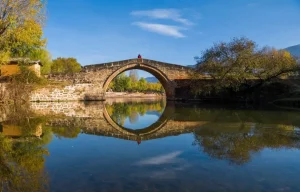
Day 2: Lijiang → Shaxi Ancient Town (2.5-hour drive, Jianhe Road is smoother than the Dali-Lijiang Line)
At 8:00 AM sharp, I tossed my backpack into the passenger seat—stuffed with a bottle of room-temperature water, two packs of lemon cookies, and a lip balm my boyfriend insisted on (he kept saying “the Shaxi wind is like a small knife”). We turned onto National Highway 214 from Lijiang. The morning breeze carried the scent of wild roses through the window; the morning light was still soft, and a wisp of cloud floated atop the distant Jade Dragon Snow Mountain. After 40 minutes, we turned onto Jianhe Road. The road widened slightly, flanked by groves of Huashan pines, occasionally passing small Bai ethnic villages with walls painted with pink peaches and green willows. My boyfriend switched the car music to Zhao Lei’s “Southern Girl,” and we hummed along, the dashboard light casting a warm glow on his face.
By 9:30 AM, we reached the Shuanglang Viewpoint—it’s actually just a small platform raised with a dirt slope, with a tin oven nearby. An auntie in a blue apron shouted: “Want roasted potatoes? They’re hot!” I leaned in, but my fingertips retracted at the scalding skin. After blowing on it, I finally took a bite; the starchy aroma and salt crystals burst out. My boyfriend squatted beside me with his Fujifilm XT4, aiming the lens at my chin dusted with potato crumbs: “Don’t move, the light is perfect—Erhai is behind you, like scattered silver.” In the resulting photo, my eyes are curved into crescents against a backdrop of pale blue sky, the blue-gray Cangshan Mountains, and the shimmering Erhai Lake, with the wind blowing my hair into gentle curves. He said, “I came here with friends before and it was full of people with selfie sticks. Today I can finally look at you and Erhai properly.”
At 12:00 PM, we wandered into Jianchuan County. Following the route hand-drawn by the guesthouse owner, we turned into a narrow alley—bamboo baskets of freshly picked radishes sat by the walls, and the air smelled of salty ham. The sign for Old Ma’s Goat Milk Cake was written in calligraphy, the ink still looking damp. The owner was an auntie in a Bai tie-dye headscarf. Seeing us, she lifted the lid of a large iron pot: “Just fried, take them while they’re hot!” The goat milk cake was golden and crispy on the outside, and biting into it revealed a milky white center as soft as melted cheese, with a faint, non-pungent gamey fragrance. The side dish was served on a red-hot slate—the vegetables were crisp and juicy, the ham was authentic Jianchuan aged ham, and the porcini mushrooms were picked that morning, bursting with a bitter freshness. I held my bowl sipping spicy and sour fish soup, sniffing from the heat but unable to stop eating my rice. My boyfriend picked a piece of fish for me: “Slow down, there are many bones; I’ve picked them out for you.” The auntie smiled nearby: “I’m relieved to see the girl enjoying her food.”
At 2:00 PM, we arrived at Shaxi Ancient Town. We first looked for the Ancient Stage—walking along the old street and turning past a stall draped with tie-dye fabric, we found it. The stage has a flagstone base, and the wooden pillars are carved with scenes from “Romance of the Three Kingdoms.” The paint has faded to mottled marks, but the craftsmanship remains. An auntie selling tie-dye tugged my sleeve: “Girl, look at this butterfly pattern. We Bai people say butterflies are ancestors transformed, bringing good luck.” I touched the blue cloth; the wax-dyed pattern felt slightly rough but held the warmth of the sun.
A 5-minute walk from the stage into the alley led to Xingjiao Temple. The “Xingjiao Temple” plaque above the vermillion lintel is an original from the Ming Dynasty, its peeling paint revealing the wood grain beneath. An uncle in a blue cloth shirt sat at the door. Seeing us, he stood up quickly: “Want to hear the temple’s story? I’ve guarded this place for ten years.” Inside, he pointed to the pillars: “These pillars are from the Ming Dynasty. Look at those cracks; they were made by horses rubbing against them when the caravans rested.” He told us Shaxi was once a “post station” on the Ancient Tea Horse Road. Caravans from Dali would bring tea and cloth to unload and feed horses; the stage was where they gathered to watch operas at night. I touched the stone steps, finding a faint hoof print. The uncle said: “This was passed down from the old generations; you can still see it today.”
For the night, we stayed at Shaxi Old Horse Inn—located right on the old street with a faded wooden sign. Entering revealed a small courtyard with an ancient scholar tree that required two people to encircle; red silk ribbons hung from its branches. The room was converted from an old house, with two old photos on the wall: one of a caravan at the door, another of guests drinking tea by a fire pit. A roaring fire pit was set in the center of the room. The owner brought two roasted sweet potatoes: “Dug from the field this morning, roasted for two hours.” The skins were charred black, revealing orange-red flesh as sweet as honey. The owner brewed roasted tea in a coarse ceramic pot; the tea poured out amber, tasting slightly bitter but becoming more fragrant with every sip. We sat by the fire, watching the lanterns light up one by one. The Shaxi night was so quiet you could hear distant insects. My boyfriend leaned back and warmed his hands: “I want to go to Shibaoshan to see the grottoes tomorrow, what do you think?” I nodded, smelling the sweet scent of roasted potatoes, feeling my breathing slow down.
Before sleep, I touched the tie-dye square by my pillow—bought near the stage this afternoon. The auntie said, “This camellia pattern symbolizes a flourishing life.” The moon was very round, casting swaying shadows of the scholar tree in the courtyard. I took a bite of a sweet potato, squinting at the sweetness, and heard my boyfriend flipping through his camera nearby—he must be looking at today’s photos: my silly face eating potatoes in Shuanglang, our shadows on the stage, and the moment he gave me fish by the fire. The wind blew in, carrying the bitter fragrance of roasted tea. I knew this trip was just beginning.
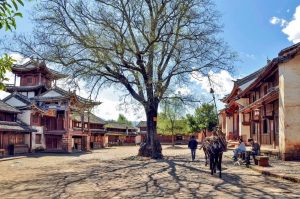
Day 3: Shaxi Deep Tour: Tie-Dyeing, Climbing Stone Mountains, Reading Old Books
At 9:30 AM, clutching the handmade lavender soap I bought at the alley entrance yesterday, I followed my boyfriend under the old scholar tree. The auntie’s tie-dye stall was set up there, with bamboo trays piled with freshly dyed blue cloth. The wind carried a bitter fragrance of Isatis root and madder. The auntie sat on a small stool, wearing a navy blue buttoned shirt with indigo dye on her cuffs. She squinted and smiled at us: “Want to do tie-dye? I have ready-made cotton linen cloth, very soft.” She handed over a light gray cloth, her fingers rough but warm, and taught me how to bunch the cloth into balls and wrap them tightly with cotton thread: “Tie it tight, or the pattern will be a blurry mess.”
Auntie’s Tie-Dye Stall
The auntie’s name is Li Xiuying, 72 years old, and she has had this stall for exactly 30 years. Her grandson runs an express shop in the county and helps her take orders and ship goods. “Young people like this craft. I teach them to tie and boil-dye; it’s a way to pass on the skill.” We chose the herbal dye (Isatis + madder) this time. It was 20 RMB per cloth, and a total of 35 RMB to have it dried and shipped home. As she wrote the address on a cigarette box with a pencil, she mentioned: “The other day a girl from Shanghai sent a dyed cloth home, saying she was going to frame it as a painting.”
At 12:00 PM, my boyfriend pulled me into an alley: “The cured ribs at Old Kitchen are just being stewed; if we’re late, we’ll wait half an hour!” Red lanterns swayed, and the wooden sign for Ancient Tree Coffee hung from a branch of the scholar tree. Pushing the door open, the branches reached inside, shredding the sunlight onto wooden tables and old rattan chairs. The owner, a young man with round glasses, smiled while wiping his hands: “The porcini mushroom claypot rice is fresh out of the pot, very fragrant.” The ceramic bowl arrived steaming. The porcini were picked that morning, plump and bursting with bitter freshness; the rice soaked up the mushroom broth, soft but not mushy, mixed with starchy arrowhead bulbs and mealy potatoes. I wolfed down three bowls. My boyfriend wiped a grain of rice from my lip: “Slow down, nobody’s taking it from you.”
(Food Table)
| Dish | Reason for Recommendation | Price | Owner’s Tip |
|---|---|---|---|
| Porcini Claypot Rice | Freshly picked mushrooms, intense aroma | 38 RMB/bowl | Pairs perfectly with iced coffee! |
| Cured Ribs Hot Pot | 3-day marinated ribs, arrowhead bulbs soak up the flavor | 68 RMB/pot | Add a side of greens; the soup is incredibly fresh |
At 2:00 PM, carrying our small canvas bags, we headed toward Shibaoshan. The path was paved with flagstones, and the cornstalks in the fields were taller than people. Occasionally, we saw farmers in straw hats weeding, their trousers rolled to their knees. After climbing for 1.5 hours, my legs were a bit sore. My boyfriend supported my waist: “We’re almost there, the grottoes are just ahead.”
(Shibaoshan Hiking Practical Info)
- Duration: Approx. 1.5 hours (slow walk)
- Gear: Wear non-slip sneakers (flagstones have moss), bring water (sold midway but costs 2 RMB more)
- Highlights: Grotto Buddha statues (weathered but clear), wild chrysanthemums (peak in October)
In a hollow of Shibaoshan, the grotto doors were built with flagstones. Pushing them open, a cool breeze smelling of damp stone rushed out. Some Buddha statues were weathered, but facial contours remained clear, with thousand-year-old dust hidden in the folds of their robes. I touched the foot of a seated Buddha; the stone was cool but held the warmth of the sun—as if I could feel the temperature of the tea bowls placed there by resting caravans long ago. My boyfriend pointed: “Look, this is Guanyin, you can still see the water vase; that is Kasyapa, the smile is still there.” The summit had a field of golden wild chrysanthemums. My boyfriend picked one and tucked it behind my ear: “You’re more beautiful than the flower.” He took a photo, and although I frowned and said “I look terrible, my hair is a mess,” I secretly set it as my wallpaper—in the photo, I’m squinting with the flower in my hair and his shadow at my feet.
At 5:00 PM, we returned to the town in the sunset glow, following the stone path to Librairie Avant-Garde. The wooden door was old, and pushing it open, the scent of old books and sunlight rushed at us, like entering an old scholar’s study. High shelves were packed with old books: Neruda’s poetry with curled spines, Shen Congwen’s “Border Town” with yellowed covers, and old Republic-era magazines with pages as brittle as cicada wings. The owner sat behind the counter in a gray sweater and smiled: “Come in, the cat is on the windowsill.”
(Bookstore Serendipity)
The owner’s calico cat is named “A-Fu” and loves napping on the windowsill. We found a window seat where sunlight filtered in, dusting the pages with gold. I opened Neruda’s “Twenty Love Poems,” reading “I like for you to be still, it is as though you were absent.” My boyfriend leaned on my shoulder, reciting softly: “You listen to me from a distance and my voice does not reach you.” A-Fu tilted his head at us, his tail tip brushing my hand—soft, like a segment of living time.
Leaving the bookstore, the sunset dyed the town’s tiles orange. My boyfriend held my hand as we walked to the guesthouse: “Want to wake up early for the morning market? I heard they sell fresh mushrooms.” I nodded with a smile, smelling the scent of pine on him and the lingering scent of old books—I realized the best travel isn’t about seeing grand scenery, but about kneading every second into the folds of life: tie-dyeing a blue cloth, eating a warm meal, climbing a small mountain, reading a love poem. These tiny, warm moments of everyday life are the most precious gifts of travel.
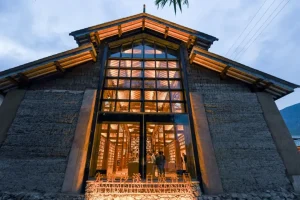
Day 4: Shaxi → Lijiang (2.5-hour drive, grab some souvenirs before leaving)
At 9:00 AM, the copper bell of the guesthouse tinkled in the wind. I rubbed my eyes while holding the rose Pu’er from last night. By the counter, the proprietress was packing Ersi (rice noodles) into kraft paper bags printed with blue “Shaxi Old Workshop” characters. Heat seeped through the paper. “Catching a bus?” she asked, handing me a bag. “Steamed this morning. They’re vacuum-packed and last two days. When you cook them, shake them loose after the water boils, then pour over some bone broth. It’s fresher and sweeter than anything from a supermarket.” A nearby auntie sweeping the courtyard added in dialect: “My daughter taught her how to make this. Kneaded three times and sun-dried for half a day; it’s the real deal.” The owner handed over a note: “Don’t cover the pot while boiling, or they’ll get mushy.” The note had tea stains on it, the handwriting messy but sincere.
As the car left the town entrance, I held the bag of Ersi on my lap. The Shaxi wind carried the scent of milk fans from the alleys. Within 20 minutes, the sign for Lake Jianhu appeared. We parked at the viewpoint and pulled out the metal binoculars borrowed from the guesthouse (fully charged, they didn’t fail us). The lens felt cool. Adjusting the focus, I suddenly saw several black-necked cranes: dark gray feathers with a cinnabar-red patch on their heads, their long necks stretched out as they foraged in the shallows. My boyfriend whispered: “Look at the one on the left!” In the lens, it flapped its wings across the water, its black wings spreading like a moving cloud, splashing water that shimmered like silver in the sun. I watched for ten minutes until they flew to the distant reeds, my fingers still gripping the strap, my heart fluttering like a trapped bird—it turns out the “National First-Class Protected Species” from textbooks really do stroll by the waters of Jianhu.
At 12:30 PM, the Lijiang sun was making everyone lazy. We first went to Mu Mansion. 40 RMB bought an electronic guide. The security guard pointed to the main hall: “There’s a ‘Loyalty’ plaque inside gifted by a Ming Emperor; don’t miss it.” Inside, the courtyard flagstones basked in the sun. the guide explained that Mu Mansion was the “Forbidden City” of the Naxi Tusi, built to mimic the Palace Museum, even using Han-style cloud patterns on the tiles. The wood carvings in the main hall stunned me—the doors and windows were carved with “A Hundred Birds Paying Homage to the Phoenix,” the feathers distinct, and the eyes inlaid with tiny pearls the size of millet. The sun made the pearls glow softly. Potted orchids in the courtyard smelled faint and filled the air with the wind. My boyfriend and I huddled before the carvings counting phoenix tail feathers: “Look, this bird’s claw is holding a pearl!” He held up the guide: “Listen, it says the Tusi hired Suzhou craftsmen to do this; it took three years.”
For dinner, we chose Old Naxi Cured Ribs Hot Pot on Huama Street. The red lanterns at the door were inviting. The owner shouted: “Two people? Spicy or clear broth?” My boyfriend slapped the table: “Extra spicy! The kind that makes you cry!” The owner shook his head laughing: “Extra spicy will take three bottles of plum juice to cool down.” When the pot arrived, the red broth bubbled with Sichuan peppercorns and dried chilies. The ribs had been simmered for three hours; they were firm but not dry, with a salty flavor and a hint of sugarcane sweetness—likely from an aged brine. The arrowhead bulbs soaked up the soup and were starchy, while the thick potatoes melted in the mouth. My boyfriend was sweating but still adding cabbage: “Cook more! This broth is so fresh I could swallow my tongue!” I bit into a rib, the broth splashing in the bowl, sniffing from the spice but laughing as I cleaned the bone: “Way spicier than the one in Shuhe, what a thrill!” The owner brought over some sunflower seeds: “I told you, the spicy pot on Huama Street is the soul of Lijiang—back in the day, the Tusi loved this for mutton hot pot.”
Leaving the restaurant, the streetlights were on. My boyfriend held my hand as we walked to the guesthouse, carrying flower cakes bought earlier (the owner said “freshly baked, best for tomorrow morning”). Distant Naxi music drifted in the wind. I felt the bag of Ersi in my arms—tomorrow when I return, I’ll cook bone broth Ersi for my mom, show her the photos of Jianhu cranes, and the Mu Mansion carvings. I realized the fourth day wasn’t about rushing, but about packing Shaxi’s wind, Jianhu’s cranes, Mu Mansion’s carvings, and the hot pot’s spice to take home. These warm details are more memorable than any sight—as my boyfriend said: “The meaning of travel is turning the little things we experience together into memories that make us smile later.”
(Later, my mom cooked that bag of Ersi three times, always with bone broth. She said “it’s a hundred times better than the supermarket kind.” I set the crane photo as my wallpaper; every time I unlock it, I see those dark gray feathers and spreading wings.)
Related Reading
- Yunnan 5-Day Independent Travel Budget Guide | Transportation + Accommodation + Tickets, How to Spend Over ¥2000 Per Person Most Wisely
- Kunming-Dali-Lijiang 7-Day Public Transport Guide | High-speed Rail + Coach + Bus, Budget-friendly and Flexible Route Planning
- For Students Yunnan 5-Day Budget Travel Guide | Hostels + Carpooling + Local Cuisine, Average 800 RMB per Person for an Awesome Trip
- Lijiang 5-Day Intangible Cultural Heritage Tour | Dongba Script + Naxi Ancient Music + Baisha Murals + Handmade Paper Making, Exclusive Route for Culture Enthusiasts
- Dali 6-Day Cultural Experience | Tie-Dye + Silverware + Bai Ethnic Three-Course Tea + Three Courtyards One Screen Wall, Deeply Feel Intangible Cultural Heritage
Shaxi Ancient Town, Nuodeng Ancient Village and Yubeng Village — Practical Information
Where to Stay · Room Type · Nearby
- Shaxi·around Sideng Street | Reference price Ordinary guesthouses about CNY 300–600 per night | Room tip: Step out onto the old street, good for strolling at night | Nearby add-ons: Sideng Street Sifang Street, ancient stage, Xingjiao Temple, Xianfeng Bai Bookstore[src]
- Shaxi·designer light-luxury guesthouses | Reference price About CNY 800–1200 per night | Room tip: A quiet setting with a strong atmosphere | Nearby add-ons: Yujin Bridge, Heihui River[src]






