



Day 1: Arrival in Kunming, Settle In
Arrived at Kunming South Railway Station at 9:30 AM via high-speed rail. Took Metro Line 4 towards Cuihu (Green Lake). Following the “Cuihu Park” signs for 10 minutes, I spotted the wooden sign of Old Kunming Years Guesthouse—dark brown with engraved gold lettering. Pushing the door open, I was greeted by the scent of sun-dried cotton. On the entrance rack sat several pairs of woolen slippers knitted by local aunties. The owner, an uncle in a faded blue cotton shirt, took my suitcase and said, “Your room is on the 3rd floor, south-facing, so you’ll catch the Cuihu sun.” At the stair landing, a flower cake stall featured an iron griddle. An auntie in a blue apron was flipping the cakes; the crust sizzled with oil, and the aroma of rose jam wafted over with the steam. I quickly bought two bags (3 for 10 yuan), tucking one into my suitcase and holding the other as “comfort for the road.”
At 2:00 PM, I wandered to Zhuanxin Farmers Market. Eustoma flowers were piled like small mountains at the entrance, 5 yuan a bunch, with water droplets still on the petals. I picked a bunch of pink and yellow ones to put in a glass jar by my bed. Further in, I heard the “click-clack” of bamboo weaving. An elderly woman squatting at her stall was weaving a small basket, the bamboo strips twisting through her fingers. She soon finished a palm-sized basket. When I complimented her craft, she looked up and smiled: “It’s for my grandson, but if you like it, take it to hold your snacks.” The nearby roasted Erkuai (rice cake) stall was even busier. Thin rice cakes puffed up on the iron plate. The vendor flipped them and spread a dark brown sweet sauce (later I learned it’s fermented from soybeans) and sprinkled golden fried crushed peanuts. I took the Erkuai; it was crispy, with the sweet sauce and peanut aroma perfectly balanced between salty and sweet. For 5 yuan, it was a full meal. As I ate on a small stool by the stall, a lady nearby handed me a cup of warm water: “Eat slowly, girl, no one is rushing you.”
Deep in the market at a mushroom stall, the owner approached with Ganba mushrooms: “Little sister, it’s peak season for Ganba mushrooms, 150 yuan per jin. A tourist from Chongqing bought two jin yesterday to stir-fry with green peppers.” I touched them; they were dry with a scent of pine needles. Thinking about the long journey back via rail and plane, I worried they would get crushed or moldy, so I declined with a smile: “I’ll buy them next time.” The owner didn’t push and chatted instead: “If you had come half a month earlier, there were plenty of Jicong (termite) mushrooms, which make a very fresh chicken soup.”
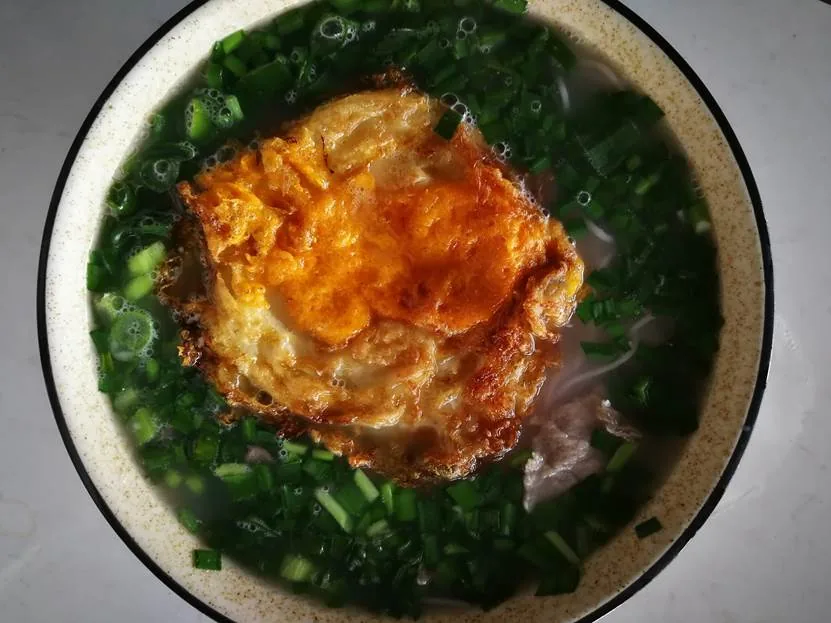
At 7:00 PM, I arrived at Fuhuayuan Small Pot Rice Noodles. The tiny storefront was packed with seven or eight tables. I found a window seat. The owner brought a copper pot to the coal stove; the broth bubbled—a milky white pork bone soup with pickled greens, minced meat, and a shiny braised egg. I added a spoonful of the house-made chili oil and took a sip—it was so fresh it made my eyebrows quiver. The pickled greens had that old-jar fermented sourness that cut through the richness. The rice noodles were thin and round, sliding into my mouth coated in broth. I finished every drop, even the braised egg. The owner, wiping tables, smiled and said, “Can you handle the spice? Our chili is from Qiubei, fragrant but not harsh.” The bill was 12 yuan. Walking out with a full stomach, the scent of milk from the bakery next door drifting by, I felt my first day in Kunming was as steady and warm as being in my grandmother’s old courtyard.
“The flower cakes from the auntie below the guesthouse must be eaten hot so the rose jam drips from the corner of your mouth; the roasted Erkuai at Zhuanxin Market uses peanuts fried fresh daily for an audible crunch; the Fuhuayuan rice noodle broth is simmered for 4 hours with pork bones, ginger, and scallions—no ‘tech and additives,’ just pure warmth.”
| Detail Type | Specific Content |
|---|---|
| Guesthouse Experience | Old wooden windows + gray brick floors, the auntie’s rose filling is the sweetest, notes left by previous guests in the room |
| Farmers Market | Elderly woman gifting a bamboo basket, Erkuai sweet sauce made of fermented soybeans, Ganba mushrooms 150 yuan per jin (not purchased) |
| Food Record | Fuhuayuan Small Pot Rice Noodles, 4-hour bone broth, pickled greens + minced meat + braised egg, 12 yuan, finished the soup |
| Sensory Memory | Rose scent of flower cakes, crispy sweetness of Erkuai, freshness of noodle soup—all “tastes of grandma’s house” |
Day 2: From Kunming to Yuanyang, First Sight of Terraces
Morning Rush Interlude: The next day, I set my alarm for 6:30 AM. Grabbing a hot steamed bun (cabbage and pork filling, juicy upon the first bite) from the guesthouse auntie, I hopped on a shared bike toward the South Bus Station. Passing the morning market at Zhuanxin, the steam from bun shops and the bubbling copper pots of rice noodle stalls hit me. I rushed into the waiting hall just in time for the 7:00 AM bus to Xinjie Town.
Small Delights at the Service Area: Two hours in, we stopped at the Gejiu Service Area. I got out to stretch. Bottled water was 3 yuan, 1 yuan more than in Kunming, but the nearby roasted sunflower seed stall was irresistible. The vendor used an iron shovel to flip the seeds as oil droplets jumped in the pan. 10 yuan per jin for seeds with a toasted, salty-sweet aroma. I bought half a jin and watched the scene: truck drivers smoking in corners, tourists photographing the “Gejiu Service Area” sign, and an auntie buying roasted sausages for a child. The meaty steam made even the wind feel warm.
Hani Owner’s Scooter Pickup: At 12:30 PM, we hit the winding roads of Xinjie Town. I messaged the owner of Terrace Cloud House, and within two minutes, a red electric scooter zipped over. The owner wore a navy Hani-style top and a low-brimmed straw hat. “Long wait, girl!” he said. He strapped my suitcase to the back. As the scooter climbed the mountain road, the wind carried the bitter freshness of pine needles. The roadside terraces were “awake”—scattered puddles in the soil reflected the blue sky like broken mirrors. Occasionally, Hani elders in conical hats carrying hoes would pass by and smile: “Going to Cloud House? It’s not far.”
Guesthouse Warmth and Coziness: Terrace Cloud House is tucked halfway up the mountain, with strings of red chilies and golden corn hanging at the gate. Pushing the door open, the scent of burning pine branches brought a wave of warmth. The old wooden floors creaked, feeling like treading on sun-warmed quilts. My room was on the second floor, window facing the terraces, with a navy fleece blanket soft as an old sweater. On the desk were several sweet potatoes still dusted with soil. The owner pointed to a switch: “Underfloor heating is on; your feet will stay warm all night.” I touched the blanket; it was warm to the fingertips.
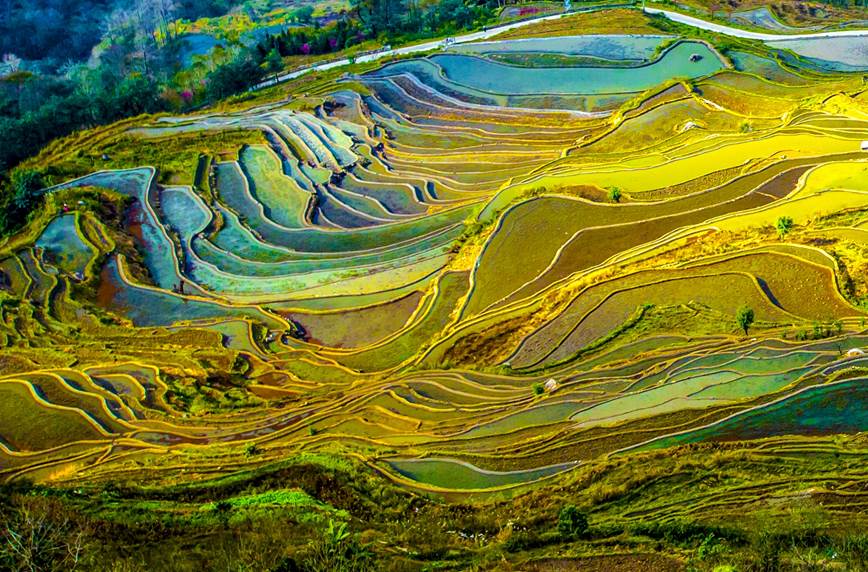
First Light and Shadow at Bada Terraces: At 2:30 PM, I changed into non-slip shoes and walked along the path behind the guesthouse. Wild mint brushed my knees, cool and dew-covered. After 10 minutes, I reached the Bada observation deck. I leaned against the polished wooden railing and looked down: the winter irrigation water had just topped the ridges, the surface glowing with a pale blue light like the sky had been shattered into the fields. The curved lines of the ridges divided the land into moon crescents and harp strings. Cotton-like clouds drifted by, their shadows resting on the water like soft veils. I took a panoramic photo with no filters—the reflection, the shadows, and even the sheep grazing on the ridges were crystal clear. I posted it with the caption “Straight from the camera, no lies,” and soon received a flurry of “wow” comments.
Roasted Sweet Potatoes and Honey Tea by the Hearth: Returning at dusk, the owner had started a fire in the hearth—pine branches crackled, and flames lit up his straw hat. He brought roasted sweet potatoes from the kitchen: “Fresh from the field, roasted for half an hour.” I peeled one; it was honey-sweet and fragrant with a charred aroma. He then brewed wild honey tea: “The water is from the terraces, and the honey is wild sweet osmanthus honey from my own bees.” The tea was slightly sweet with a hint of pine bitterness, like drinking the terrace wind itself.
Night Stars and Anticipation: Sitting by the hearth, I looked at the stars—Yuanyang’s stars are so bright, like scattered diamonds, with the Milky Way visible in wisps. The owner puffed on his pipe, the ember glowing in the dark: “At 4:30 AM tomorrow, I’ll take you to Duoyishu for the sunrise. The water in the terraces will reflect the light like gold leaf.” Clutching the rest of my sweet potato and smelling the pine wood, I felt the wind, sun, and sweetness of the day soaking into my heart like the terrace water.
“Grab the sunflower seeds at the South Bus Station while they are fresh and salty; the underfloor heating at Terrace Cloud House is wood-fired and so warm you won’t want to move; the Bada terraces in winter irrigation look like shattered mirrors—no filter needed; the owner’s roasted sweet potatoes and honey tea can melt the winter wind.”
Day 3: Full Day at the Terraces: Catching Both Sunrise and Sunset
Pre-dawn Departure at 5:30 AM: When the alarm went off, I was barely awake. I dressed in the dark while the owner called from downstairs: “The car is warmed up!” Wearing an old military coat and holding a flashlight that made the frost on the steps sparkle, he led me to his red SUV. With the heater blasting, I munched on last night’s leftover sweet potato as we drove toward Duoyishu. Outside, the terraces were still bathed in night, with occasional farmhouse lights looking like fallen stars. 10 minutes later, we reached the observation deck. An auntie’s roasted potato stall under a plastic tarp puffed out steam: “Freshly roasted, 5 yuan a portion!” I took the paper bag; it was so hot I had to toss it between my hands. The potatoes were wrinkly on the outside and soft inside, seasoned with salt and chili powder—salty, spicy, and perfect against the mountain wind.
6:30 AM Sunrise and Time-lapse: Just after 6:30, the eastern sky turned pale then orange-red. The water surface of the terraces looked like scattered mirrors reflecting golden light. I set up my tripod and started a time-lapse: the light brightened, and the water turned from pale gold to fiery red, eventually looking like liquid gold. A cloud drifted over, casting a purple-gray shadow on the water. I pressed the shutter and later edited a 15-second video with light music. My mom even commented on WeChat: “This is more beautiful than a TV show!”
Morning at Aichun Blue Terraces: Surprises on the Ridges: The owner picked me up in a sightseeing car, and 15 minutes later, we were at Aichun. I walked slowly along the ridges; the mud was soft, leaving shallow footprints. The water in the shallow areas was only ankle-deep, revealing dark green moss that felt like a velvet carpet. Tiny fish darted through the water. The wind blew water droplets from rice leaves onto my face—cool and smelling of grass. Seeing a bright yellow wild chrysanthemum by the path, the owner smiled: “That’s a terrace wildflower; dry it for tea to clear internal heat.”
4:00 PM at Laohuzui (Tiger’s Mouth): A “Swiss-style” Panorama: Heading to Laohuzui in the afternoon, we saw Hani women carrying bamboo baskets of fresh corn. The observation deck was sturdy. I set up my wide-angle lens: the terraces stacked from the base to the summit, with long shadows from the setting sun looking like black silk ribbons. I chose a low angle to frame both the sky and the terraces, slightly adjusting the contrast later. On Little Red Book, I captioned it: “Yuanyang Terraces, a hint of Switzerland?” Within two hours, people were asking for the location.
Nighttime Native Chicken Hotpot: So Fresh I Drank All the Soup: It was dark when we returned. The owner started a fire and the aroma of chicken hotpot filled the air. In the clay pot was a milky white broth with ginger and scallions, hiding radishes grown in their own field. “The chicken was killed this morning, and the radishes are fresh from the ground,” he said. The chicken was tender enough to fall off the bone, and the broth was incredibly flavorful. The radishes had soaked up the soup and were sweet and juicy. The owner poured me a cup of home-brewed rice wine: “Tired today? Have a drink to warm your heart.” It was sweet and fermented, perfectly complementing the hotpot.
| Detail Type | Specific Content |
|---|---|
| Transport & Interaction | Owner driving the red SUV to Duoyishu, military coat + flashlight for security; 15-minute shuttle to Aichun |
| Spot Details | Duoyishu water looks like broken mirrors at sunrise, time-lapse shows gold turning to red; Aichun shallow water has moss and fish |
| Food Experience | Roasted potatoes for 5 yuan/portion, soft and salty; night chicken hotpot in a clay pot with sweet, soup-soaked radishes |
| Photography & Feedback | Adjusted contrast for Laohuzui panorama, asked if it was “Switzerland” on social media; sunrise video got over 100 likes |
| Sensory Memory | Heat of the potato, coolness of the water, freshness of the soup, sweetness of the wine—the “living taste” of the terraces |
Day 4: Yuanyang to Jianshui, Visiting Ancient Villages
Morning Life on the Bus: At 7:30 AM, I bought a cup of freshly ground soy milk at the Yuanyang station—made with an old stone mill, it still had bits of bean dregs and tasted sweet. I held the warm cup waiting for the 9:00 AM bus. It was an old green model; the driver in a faded blue shirt was wiping the windshield. I took a window seat. The auntie next to me had a bamboo basket of fresh red tomatoes that smelled tart even through the plastic. As we started, she said, “Going to Jianshui? The tofu from West Gate Big Board Well is the most tender; you must try it.”
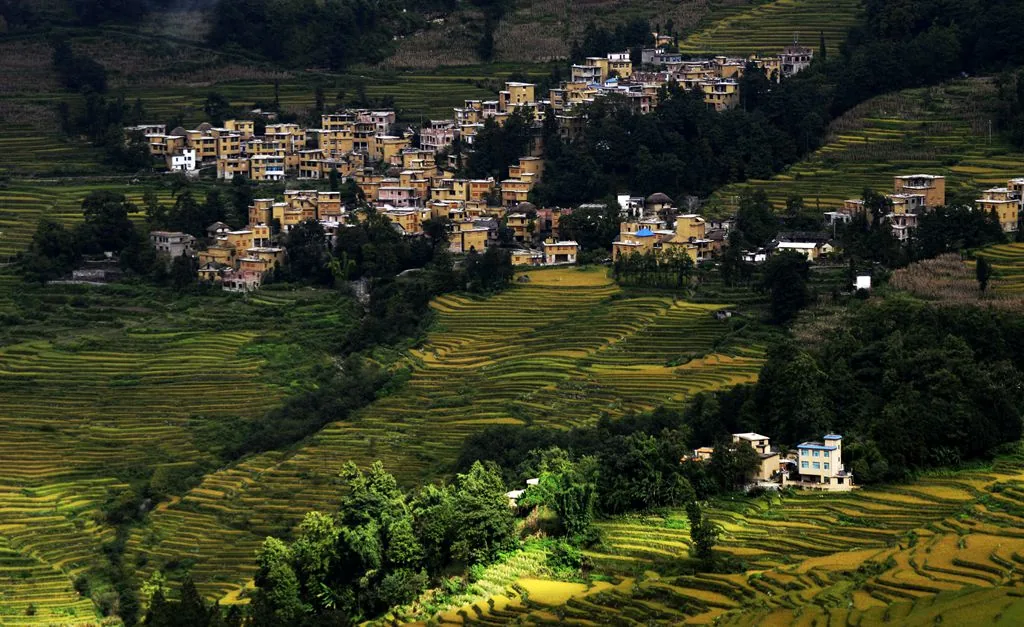
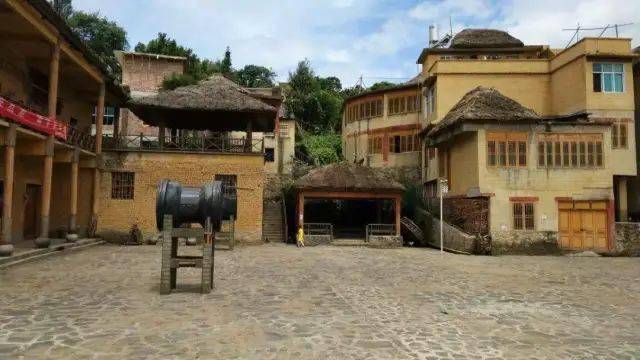
Azheke’s Mushroom Houses and Grandma’s Candy: Arrived at Azheke at 10:00 AM. A ticket lady in a straw hat smiled: “30 yuan, take your time.” The ticket was a stiff card with a picture of a mushroom house. Inside, I met a guide in a Hani top embroidered with butterflies and silver hairpins. “The thatch on these roofs must be dried for three days and pressed flat,” she said, touching the roof. “It keeps the rain out, blocks winter winds, and stays cooler than AC in summer.” I walked along the earth-walled paths, touching the walls—they felt warm from the sun, unlike cold city walls. The old banyan tree at the village entrance was so thick three people couldn’t encircle it, its canopy shading half the alley. Elders played chess under it, the “thwack” of the pieces mixing with cicada songs. As I took photos of the mushroom houses, a grandmother grabbed my wrist and handed me a fruit candy in cellophane: “Home-made, girl, sweet.” It tasted of brown sugar and osmanthus, like the honeyed dates my own grandma used to dry.
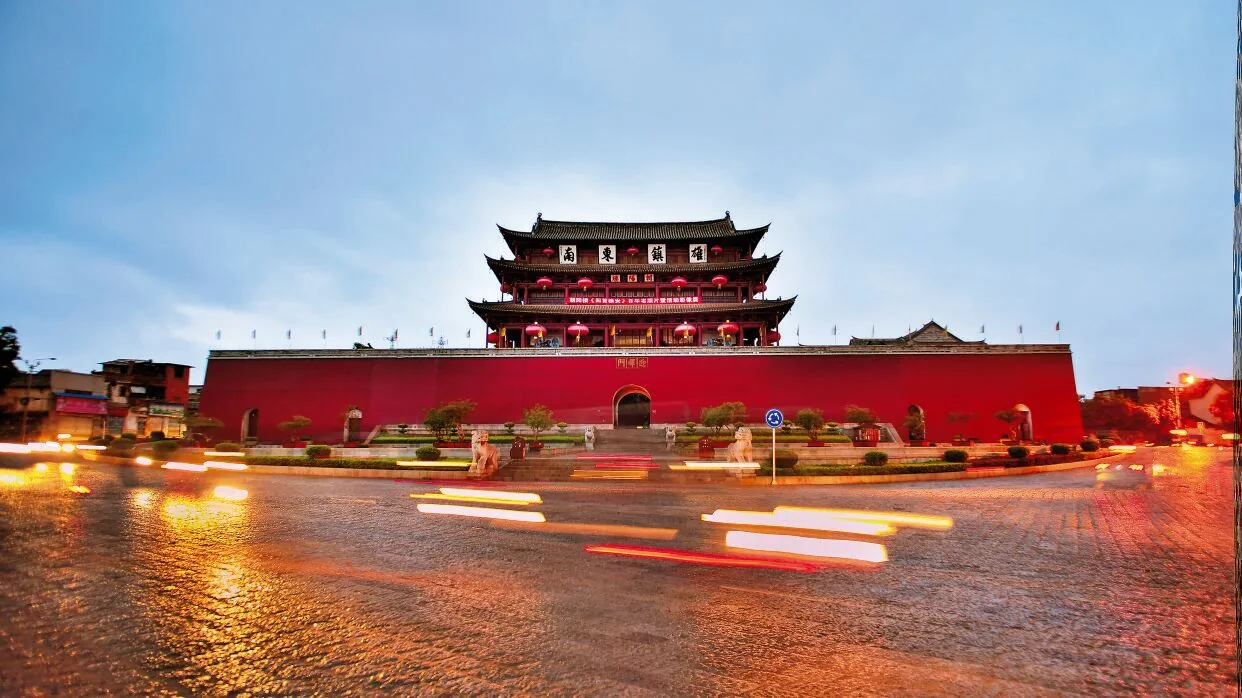
Jianshui’s Bluestone Paths and Handwritten Map: At 2:30 PM, the bus reached Jianshui. The eaves of Chaoyang Tower came into view—red walls, dark tiles, and copper bells tinkling in the wind. I took a taxi to my guesthouse. The owner in a navy shirt took my luggage with a strong grip: “Room’s on the second floor, south-facing.” The room was small, with a slightly wilted pothos plant by the window and an old photo of a woman in a qipao smiling in front of the city gate. Opening the window, the bluestone road was right below, and I could hear vendors: “Roasted tofu! Freshly made, hot!” The owner came in with a piece of paper: “I drew you a map.” It was a crumpled A4 sheet with pencil markings: “Fuxing Tofu Shop around the corner for the best tofu; Lin’an Tea House at West Gate for evening storytelling.” The paper had a tea stain, clearly hand-drawn during his leisure time.
Evening Alleys and Anticipation: I stood at the guesthouse door watching the world go by—an auntie pushing a cart of Erkuai, the rice cakes puffing up and being smeared with sweet sauce and peanuts; a school kid with a tanghulu (candied fruit) running past, leaving sticky drips on the stones. The air smelled of tomato and eggs from a neighbor’s kitchen. The owner yelled from the courtyard: “You can go to Fuxing for tofu tonight, I’ll show you the way!” I touched the candy wrapper in my pocket, watching the sunset turn the ancient city orange-red. Jianshui’s slowness is like a freshly brewed Pu’er tea—warm and better with every sip.
“Touch the thatch on Azheke’s mushroom houses—it’s designed for drainage; the grandma’s candy in cellophane smells of osmanthus; the tea-stained handwritten map from the guesthouse owner marks the best local spots; the shouts of tofu vendors in the alleys are the true signal of local life.”
- Transport & Interaction: The Yuanyang-Jianshui bus at 9:00 AM; the driver’s care for his bus; the neighbor sharing tomatoes and food tips.
- Ancient Village Highlights: Practical design of mushroom house roofs (leak-proof, seasonal insulation); the warm touch of earth walls; the banyan tree and the grandmother’s osmanthus candy.
- Guesthouse Vibes: South-facing room in an old alley, pothos by the window, vintage photos, and signs of lived-in life.
- Practical Markings: Handwritten map highlighting “Fuxing Tofu Shop” and “Lin’an Tea House,” authentic tea-stained paper.
- Sensory Details: Sweetness of soy milk dregs; osmanthus scent of candy; street food shouts; cool bluestone touch; cicadas under the banyan.
Day 5: Slow Walk in Jianshui: Eating Tofu + Historic Architecture
Morning Dew and Tofu Scent at West Gate Big Board Well: At 7:00 AM, I took a thermos from the guesthouse to the West Gate. Morning dew on the bluestone paths chilled my shoes. The well’s rim was solid bluestone carved with lotus patterns, its moss glowing green like velvet. Aunties with plastic buckets made a “thud-thud” sound against the rim. A master in a worn straw hat used a long wooden ladle to draw water—a flick of the wrist, a splash, and the water came up with a “ding-dong” sound. The steam from nearby Fuxing Tofu Shop smelled of beans. Through the window, I saw the master mixing gypsum: “Stir 30 times clockwise, then the tofu will be smooth enough to slurp.” He opened the wooden mold; the tender tofu quivered like a rice ball. I bought a skewer of fried tofu—crispy outside, soft inside—and dipped it in the chili powder (Qiubei chili, fragrant and mild) provided by the auntie, licking every drop of oil off my fingers.
Purple Pottery Street and Secrets of Seasoning: In the morning, I visited Purple Pottery Street, packed with stalls of teapots, vases, and palm-sized cups. I chose a celadon-colored cup engraved with plum blossoms. The owner, an old man with a gray beard and a faded blue shirt, said: “Season this with Pu’er tea every day; in three months it will have a patina ten times smoother than a new one.” I touched the cup; it was rough like tree bark but smelled of raw earth—the “breath” of Jianshui purple pottery.
The Wind at Chaoyang Tower and Woodcarvings at Zhu Family Garden: Afternoon at Chaoyang Tower; the red walls were hot from the sun, and the copper bells rang in the wind, audible throughout the street. The Zhu Family Garden’s entrance was inscribed with “Follow the Rules.” Inside, the osmanthus trees had deep green leaves that rustled like turning pages. The woodcarvings in the main hall were exquisite—plum, orchid, bamboo, and chrysanthemums. Up close, I could see traces of old red lacquer; a light scratch revealed fine powder. The light in the courtyard was soft, and voices from upstairs drifted down like whispers from the past.
Evening Tofu Feast: Freshness from Well to Tongue: For dinner at the West Gate tofu feast, a lady pulled me to a seat: “Good timing, the tofu is ready.” The table had four items: stuffed tofu, cold tofu, tofu pudding, and bone soup. The stuffed tofu burst with milky pulp; the cold tofu with soy sauce and chili melted on the tongue; the tofu pudding was topped with pickles and scallions in a bone broth so fresh I could drink three bowls. The lady sat opposite peeling oranges: “Our tofu uses Big Board Well water and home-ground gypsum, no mess.” As I ate, I thought of the morning dew and the steam—Jianshui’s tofu is truly the sweetness of the well water.
- Morning Ritual: 7:00 AM dew, the sound of the wooden ladle, and the steam of the tofu shop as the “prologue.”
- Pottery Temperature: The texture of the celadon cup and the Pu’er seasoning secret as local care for “objects.”
- Vitality of History: Chaoyang bells, osmanthus scent, and woodcarvings making Ming and Qing buildings feel “alive.”
- Honesty of the Feast: Tofu made with well water and home-ground gypsum, showing no shortcuts.
- Sensory Chain: Cool dew → tender tofu → rough pottery → ringing bells → fine woodcarving → fresh feast, defining Jianshui’s pace.
Day 6: Jianshui Surroundings: Ancient Villages and Bridges
At 8:00 AM, I caught a horse carriage at the East Gate. The “creak” of wooden wheels on bluestone was like the sound of crushed time. The driver in a navy shirt and a pilled cap had a pipe in his mouth, speaking through blue smoke: “Slow down, these orchids by the road are Tuanshan’s treasures.” For 30 yuan, the carriage passed fields and bamboo trays of drying peppers to reach the Tuanshan stone archway. A string of red chilies hung from an old locust tree, swaying in the wind. The houses were Qing-era earth walls with fine cracks and climbing moss.
I followed the driver into an open house. The ancestral tablet in the center was sandalwood with small inscriptions. Next to it was a faded family photo: a man in a robe holding a child in a vest, with a woman behind them in a sleek bun and a faint smile.
In the corner was an old wooden bed with dragon and phoenix carvings polished to a honey-like patina. The driver touched a post: “This was my great-grandfather’s, 100 years old. My grandpa slept here as a boy.” A pottery jar in the corner held dried chrysanthemums from last autumn, still faintly fragrant.
At 2:00 PM, I headed to Shuanglong (Double Dragon) Bridge. Farmers carried hoes, and while the rapeseed flowers were mostly gone, one stubborn yellow bloom shone like gold. The bridge crossed the Lujiang River with seventeen arches like a string of mirrors. The gray stone was covered in moss, and the dry winter grass added a “vintage painting” feel. On the bridge, the wind smelled of river water. My photo looked like the sky had shattered into the water.
A white duck swam by, its wings turning the reflection into silver ripples. I squatted to capture the bridge, water, duck, and the slow wind. An old fisherman nearby said, “This bridge is 200 years old. I fished here as a kid when the water was clearer.”
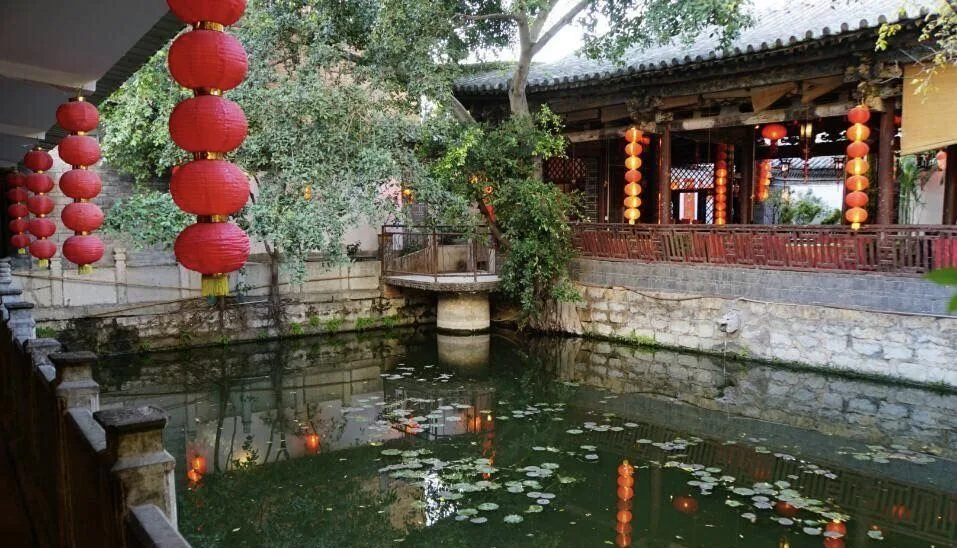
Returning at dusk, I followed the sound of a sanxian (three-stringed lute) to Lin’an Tea House. Red lanterns hung outside. Local men sat at tables smoking pipes and cracking roasted sunflower seeds. I ordered a ripe Pu’er—the tea was red like amber, steaming with a rich aroma.
On stage, an auntie in a blue shirt held a sanxian, her voice bright as a lark singing “The Moon Comes Out Bright.” As she sang about her “Cousin gathering wood in the mountains,” the ladies below hummed along, their voices soft like honey. Watching the moon rise over the city wall with my tea, I felt Jianshui’s slowness was the sweetest treat.
| Experience Dimension | Specific Content | Detail Supplement |
|---|---|---|
| Transport & Interaction | 30 yuan horse carriage to Tuanshan; 15-minute walk to Shuanglong Bridge | Driver with pipe chatting about houses older than records; fisherman who fished there for 50 years |
| Village Details | Tuanshan’s earth walls, orchids, great-grandfather’s bed; Republican-era family photo | Bed carvings with honey-like patina; photo of man in robe and woman with sleek bun |
| Bridge Texture | Gray stone, seventeen arches, ducks on the water | Mossy stone, arches like shattered mirrors; white duck making silver ripples |
| Tea House Experience | Red lanterns, ripe Pu’er, “The Moon Comes Out Bright” ballad | Amber tea, lark-like voice; local ladies humming along with honey-soft voices |
| Sensory Memory | Creaking carriage → orchid scent → bed patina → bridge wind → tea aroma → bright ballad | The “Jianshui flavor”: wheels on stone, bitter orchids, warm old bed, river smell, rich tea, bright song |
Day 7: Making Tofu and Final Captures
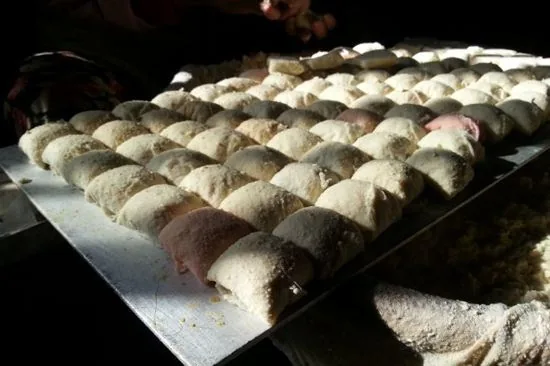
Learning Tofu from Old Man Zhang: Warmth in the Palm: At 9:00 AM, I took soaked soybeans to Mr. Zhang’s workshop. Around the corner, the sweet smell of soy milk greeted me. He wore a faded blue apron stained with bean juice and had hands like tree bark. “Late, girl! Grind them now!” The stone mill was carved with lotus patterns and creaked as it turned, releasing milky, bitter-sweet soy milk. He taught me: “Grind slowly, or the tofu will be grainy.”
He poured the milk into a vat and added hand-ground gypsum powder, not industrial stuff, mixed with water. “Stir 30 times clockwise.” The milk thickened into a jiggly pudding that bounced back at a touch. We pressed it in coarse cloth for half an hour until two square blocks emerged. He vacuum-sealed them with an ice pack: “It’ll stay fresh for tomorrow.” Friends later said it was ten times more tender than store-bought. Leaving, he smiled: “Next time, I’ll teach you the ‘sour pulp’ method for more flavor.”
Academic Exam Hall: Sitting in the Booths: At 2:00 PM, I paid 40 yuan for the Exam Hall. The bluestone floor was polished by countless feet. The hall had three courtyards; the first was for officials, with a “Fair and Just” plaque and a shiny copper inkstone.
The second courtyard held the exam booths—rows of tiny wooden rooms that creaked when pushed. I stepped into one; it barely fit one person and had a worn desk with a hole for a pen. The surface was carved with “Success in Exams,” the characters faded but stubborn. Sitting there, I imagined a student in a robe, sweating over his brush, hoping for a better future. The ticket lady said the hall was built in the Daoguang era of the Qing Dynasty, “older than your great-great-grandfather.” I touched the cracks in the wood, feeling the pulse of history.
Dusk at Shuanglong Bridge: Chasing Ancient Shadows: At 5:30 PM, I returned to the bridge as the sky turned orange. The gray stone looked gilded. The ripples turned the bridge’s reflection into scattered gold. I stood at the edge, my shadow falling onto the water like an ancient figure in golden robes.
A white duck swam by, and I took a silhouette photo—the sunset in the arch and my shadow overlapping the curve perfectly, like meeting a scholar from a century ago. I posted it with the caption “A time traveler at the exam hall and an ancient shadow at the bridge.” Friends commented that I looked like someone from a TV drama. Smelling the river and holding my tofu, I felt my trip was full of stories.
“The scent of soy from Mr. Zhang’s mill; the persistence carved in the exam booths; the ancient shadow at sunset; two pieces of handmade tofu carrying the heart of a craftsman and my love for Jianshui.”
- Tofu Making Details: Lotus carvings on the mill, hand-ground gypsum, springy tofu pudding, vacuum seal with ice—all signs of hand-crafted warmth.
- Exam Hall Time Travel: Worn desks, carved characters, and the ticket lady’s words making “history” tangible.
- Shuanglong Sunset: Orange sky, golden water, and overlapping shadows as “proof of dialogue with the past.”
- Sensory Memory: Creaking mill → soy scent → musty wood → orange sunset → tender tofu.
- Friend Feedback: Sharing the video and comments made the experience a “sharable warmth.”
Day 8: Jianshui back to Kunming, Trip Ends
Morning Light and Orange Candy on the Rail: At 7:30 AM, carrying my tofu in a canvas bag and my ticket, I headed to the station. A local auntie offered me an orange: “From my own tree, girl, it’s sweet.” The juice splashed on my ticket. The 8:00 AM train started, and I watched sugarcane fields and farmers with hoes pass by. 40 minutes later, I was back in Kunming. The banyan trees were dropping golden blossoms in the wind—a farewell gift from Jianshui.
Airport Road Flower Cakes: A Bite of Kunming’s Autumn: Taking a taxi to the airport, the driver suggested: “Fresh flower cakes ahead, want a few boxes? I’ll get you a discount.” At the stall, the cakes were hot, with layers of pastry and a sweet rose-jasmine scent. The auntie in gloves said: “10 yuan each, eat them while they’re hot.” The crust crumbled in my hand, revealing fresh rose filling—like eating Kunming’s sunshine. These were for my mom.
8-Day Budget: Spent Wisely, Worth Every Cent: While packing, I listed my expenses (see table below). No expensive hotels or pricey souvenirs, just local food like West Gate tofu, Chaoyang noodles, and Tuanshan home cooking—averaging 40 yuan a day. Total was about 2500 yuan, slightly under budget. Money spent on “experience,” not “status.”
| Expense Item | Amount | Detail Explanation |
|---|---|---|
| Round-trip Transport | 400 yuan | Kunming-Jianshui rail at 8:00 AM, 40 minutes, faster than driving |
| Accommodation | 7 nights × 220 yuan = 1540 | Guesthouses near terraces/old town: underfloor heating, views, and tofu lessons |
| Food | 300 yuan | Tofu feasts, roasted tofu, noodles—eating like a local |
| Entrance Fees | 150 yuan | Azheke 30, Zhu Garden 50, Exam Hall 40, Shuanglong Bridge free |
| Others | 110 yuan | Snacks, flower cakes, taxis—no waste |
| Total | ~2500 yuan | High value: money spent on “slow experiences,” not “vanity consumption” |
Tips for future travelers:
- Terraces start irrigation in late November; water is fullest in Jan-Feb, looking like mirrors;
- Jianshui is quieter than Dali or Lijiang—great for those who want to “hide away”;
- Avoid “cheap tours” at gates; take local buses for freedom and savings;
- Go to West Gate for the most authentic, non-tourist-trap tofu feasts.
This trip was worth it—carrying flower cakes for mom, tofu for colleagues, and a phone full of photos: sunrise, exam booths, and sunset. More importantly, I learned to be “slow”: watching a flower fade, hearing the mill, eating hot tofu. It’s more fulfilling than hitting 10 famous spots.
Sensory Aftertaste: Packing my bags, I touched the tofu bag, smelling the beans. Kunming airport was bright, reminding me of the hot bun from the first day. Travel isn’t “leaving,” it’s “packing the slowness of another place into your pocket to take home.” These 8 days, I didn’t just “visit”; I lived in the dew of the terraces, the tea scent of the old town, and the sound of the craftsman’s stone mill.
Keep Reading
- 6-Day Torch Festival Yi Ethnic Experience: Chuxiong + Weishan (Dali) + Nanjian — Bonfire Party, Tuotuo Meat & Stay in Yi Family Courtyard
- 7-Day March Street Festival Guide: Dali Bai Ethnic Celebration + Nearby Ancient Villages, One-Stop Folk Culture & Food Experience
- 9-Day Off-Peak Yunnan National Day Route: Skip the Crowds in Dali & Lijiang, Visit Shaxi, Lugu Lake & Yubeng for a More Relaxing Trip
- 7-Day Yunnan Lunar New Year Escape Guide: Xishuangbanna + Yuanyang Rice Terraces + Jianshui Ancient Town—Celebrate Without Crowds, Spend Less
- 8-Day Border Exploration of Yunnan: Ruili + Tengchong + Yingjiang + Mangshi, Exotic Scenery and Cuisine on the China–Myanmar Border
Yuanyang Rice Terraces and Jianshui — Practical Information
Tickets & Booking
- Jianshui Ancient Town mini-train: Round-trip hard seat adult CNY 120; concession ticket CNY 60 (departures 09:00, 14:30); advance booking required (OTA/on site)[src]
- Lin’an Prefecture Office / Imperial Examination Hall / Chaoyang Tower: Lin’an Prefecture Office CNY 32; Imperial Examination Hall CNY 20; Chaoyang Tower CNY 15; combined ticket for Zhu Family Garden + Confucian Temple + Lin’an Prefecture Office + Chaoyang Tower + Imperial Examination Hall CNY 115[src]
Transport & Schedules
- Kunming South Bus Station → Yuanyang Xinjie town | Long-distance coach: Fare about CNY 120–140, journey about 5.5 h, direct to the Xinjie town terrace area[src]
- Jianshui station → Yuanyang Nansha town | Passenger coach: Fare about CNY 38, rolling departures[src]
- Yuanyang Nansha bus station → Xinjie town (terrace area) | Rural minibus: About CNY 10 per person, rolling departures 7:00–20:00, about 40 min[src]
Where to Stay · Room Type · Nearby
- Near the Duoyishu scenic area | Room tip: The top choice for watching the sunrise; you can walk to the viewpoint in the early morning | Nearby add-ons: Duoyishu viewpoint, Azheke Ancient Village[src]
- Xinjie town / Shengcun market town | Reference price Cheaper on weekdays | Room tip: Restaurants and guesthouses are concentrated, convenient for Hani-style dining | Nearby add-ons: Bada viewpoint, Qingkou Hani Folk Village[src]






