Yunnan 8-Day Food Route | Kunming Guoqiao Rice Noodles + Dali
Day 1: Arrive in Kunming, First Have a Bowl of Crossing-the-Bridge Rice Noodles
Landed at Kunming Changshui Airport at 10:30 AM. While rubbing my eyes and looking for the taxi area at the gate, a uniformed driver holding a “Direct to Downtown” sign called out to me. After getting in the car, he glanced at my carry-on suitcase and said with a smile: “First time here? It’s 25 minutes from the airport to the city center. Your bag is light; if you had big luggage, I’d help you put it in the trunk.” On the way, he talked about the red-headed gulls at Green Lake recently, “When winter comes, Siberian gulls gather there. You can go feed them some bread this afternoon.” The fare was 40 yuan, paid instantly by scanning the driver’s QR code with no extra service fees.
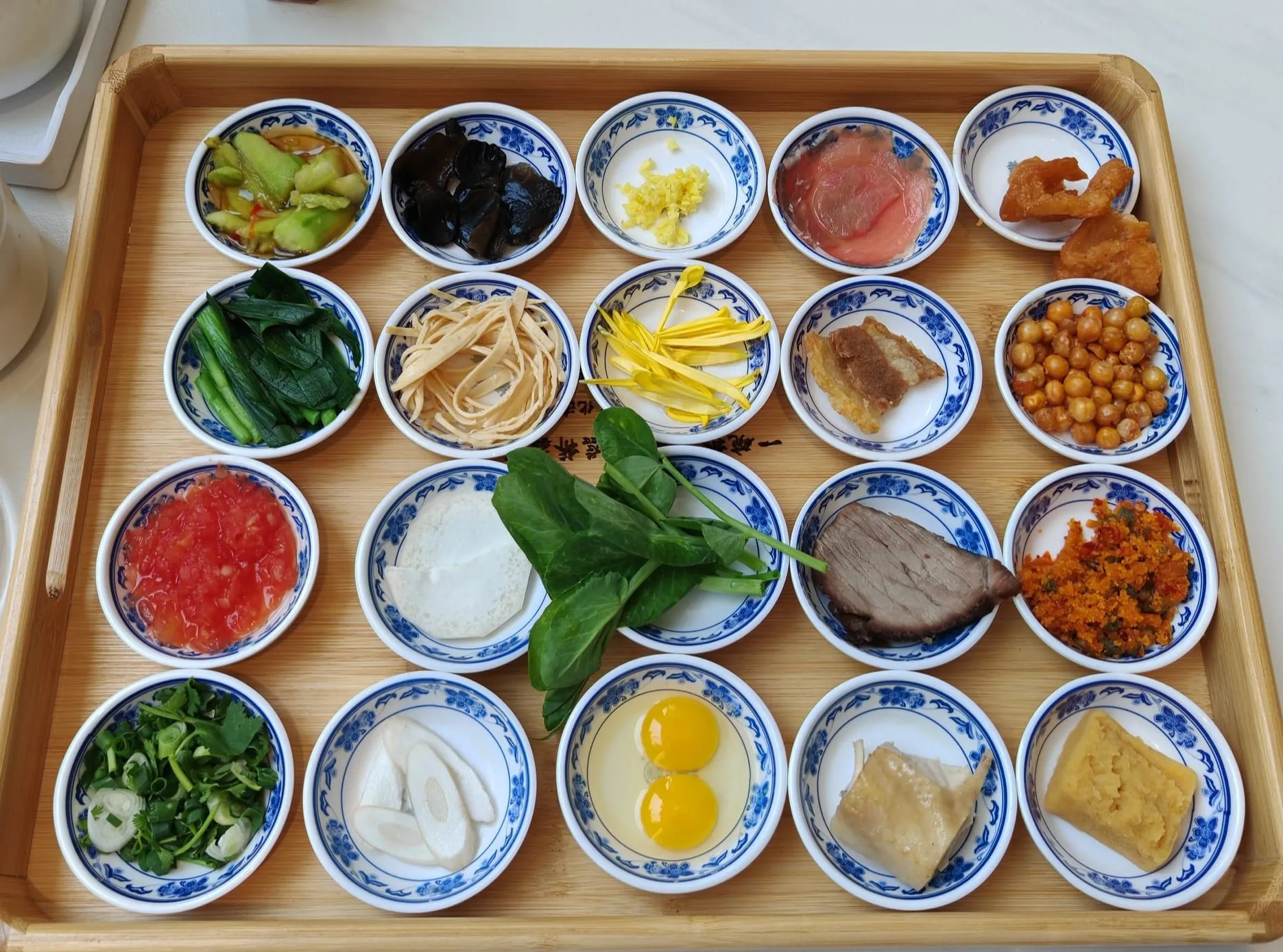
Dropped my luggage at 11:20 AM and headed towards Fuhuayuan Crossing-the-Bridge Rice Noodles with my phone in hand. The shadows of plane trees on Zhengyi Road filtered the sunlight, and within a few steps, I was captivated by the aroma of chicken soup. The storefront of Fuhuayuan still looks like it did in the 1990s; the red paint on the wooden sign has faded slightly at the edges, but the copper plaque saying “Opened in 1990” is polished bright. Pushing the door open, the owner was stirring a large soup vat at the stove, looking up to shout: “Young man, do you want the Small Pot or the Scholar Set?” I pointed to the “18 yuan Traditional Small Pot” on the menu and said: “I’ll have this one; I want to taste the most original flavor.”
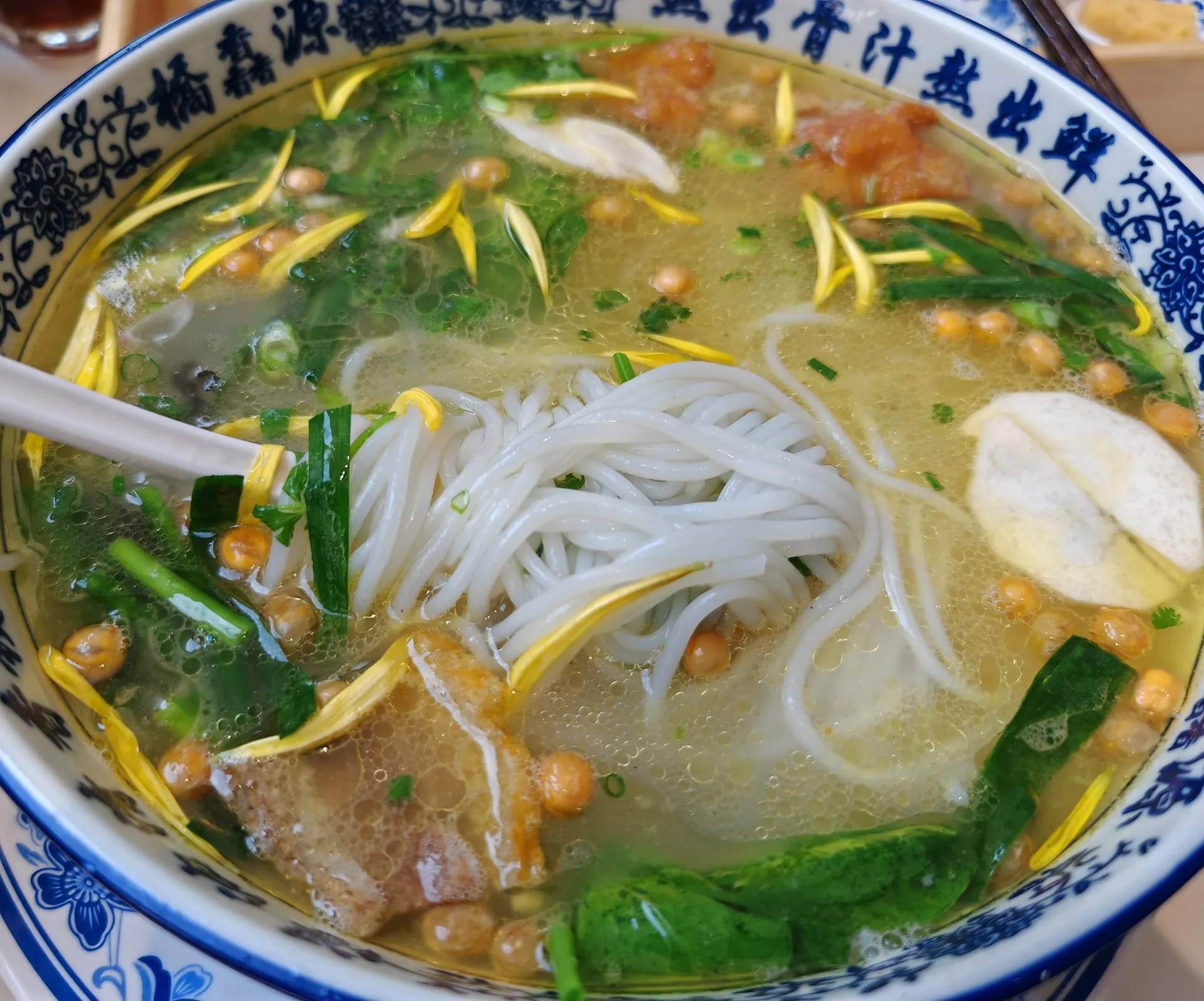
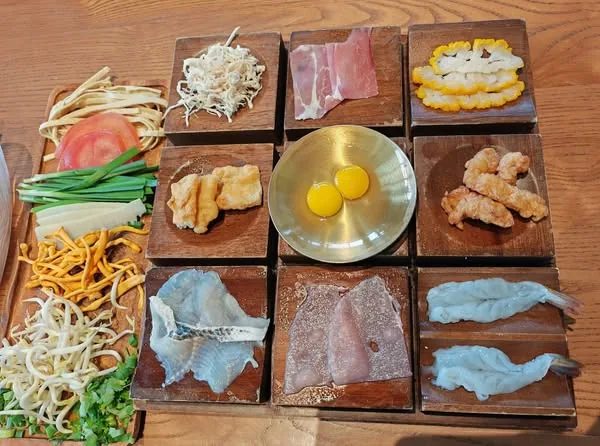
Within two minutes, the clay pot was served “hissing” with steam—the boiling soup surface was covered with a layer of golden chicken oil, like a thermal blanket over the ingredients. A waitress in a blue cloth apron leaned over to remind me: “Put the raw items in first; if the order is wrong, the soup cools down quickly.” I followed suit: first cracking two quail eggs into it, then adding three slices of pork tenderloin so thin they were translucent, followed by pea sprouts, chives, and what the auntie called a “Kunming specialty,” grass sprouts (crispy and tender like young asparagus, with a slight bitterness). Finally, I lifted the rice noodles—they are hand-pressed, having a slight coarseness and a chewy texture with a rice fragrance.
Taking the first sip of soup, the freshness made my tongue tremble—it wasn’t the stinging freshness of MSG, but the mellow richness of chicken frames simmered for 4 hours, with a hint of ginger spiciness warming from the throat to the stomach. I mixed all the ingredients; the noodles were coated in soup, each strand soaking up the flavor. An uncle with glasses at the next table saw me eating ravenously and patted my shoulder: “Young man, drink this soup while it’s hot; once it’s cold, it loses its soul. Next time try the Scholar Set with Xuanwei ham and bamboo fungus—the ham is from local pigs in Xuanwei, perfectly salty, and the bamboo fungus soaks up the soup, bursting with juice in one bite, three times fresher than this small pot.” I patted my rounded belly and nodded, quickly noting “Scholar Set” in my phone memos.
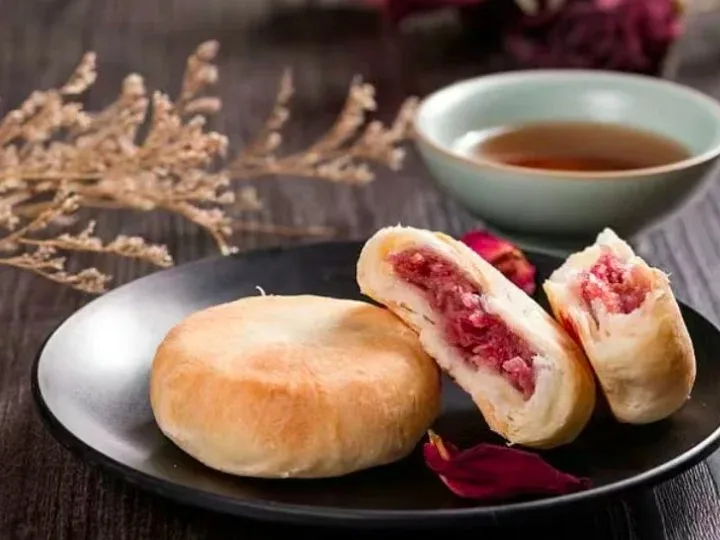
Finished lunch at 12:40 PM and walked along Zhengyi Road toward Green Lake. I passed a flower cake shop with no sign—rose pies in the glass cabinet were steaming. The lady boss picked one up with bamboo tongs and handed it over: “Freshly baked, want a taste?” When I bit into it, the rose jam “popped” out, sweet but not cloying, with the fragrance of fresh roses and a crust so flaky it crumbled. At the entrance of Green Lake Park, several elderly people moved slowly with Tai Chi fans to the tune of “Jasmine Flower.” Willow trees by the lake brushed the water surface; as the wind blew, catkins drifted up and stuck to my arm. I walked halfway around the lake, seeing children feeding bread to the red-headed gulls as they flapped their wings for food, splashing water onto my pant legs.
At 1:50 PM, I took Bus No. 2 to the hotel for only 2 yuan, half the price of a taxi. The hotel is the “Kunming Hotel” on East Green Lake Road; it’s a chain but not dated, the room is small but clean: the light blue checkered sheets have the scent of fresh sunlight, and the bathroom has hot shower water. Seeing me register, the front desk auntie handed me a cup of warm honey water: “For the high-speed train to Dali tomorrow, there’s a 9:30 AM shift. If you leave early, I’ll save a buffet breakfast for you—the buns are freshly steamed with mushroom and meat filling, very delicious.” The room is a 5-minute walk to Metro Line 2; I tried it out and it takes only 10 minutes to Kunming Station, faster than a taxi and without traffic jams.
Returned to the hotel at 6:00 PM, took a hot bath, and lay on the bed smiling while rubbing my belly: the first day wasn’t in vain. I ate the most authentic crossing-the-bridge rice noodles, visited Green Lake, and even picked the right hotel. Going to Dali tomorrow, need to pack and sleep early.
Fuhuayuan Crossing-the-Bridge Rice Noodles · Personal Tips (Key points!):
- Small Pot Rice Noodles are 18 yuan/portion, with solid toppings (quail eggs + pork tenderloin + 3 types of vegetables), enough to fill one person;
- Must follow the order of “Egg → Meat → Vegetables → Rice Noodles” when adding ingredients—the soup must stay boiling hot to let everything soak up the freshness;
- The “Scholar Set” strongly recommended by the uncle next door (adds Xuanwei ham + bamboo fungus, 38 yuan): the ham is savory but not overly salty, and the bamboo fungus is full of soup; must try next time;
- Don’t miss the braised platter in the shop (25 yuan/portion): the braised chicken feet are soft and bone-falling, and the braised beef is chewy; it smells great with rice noodles (the table next to me ordered two).
Day 2: Eating through Kunming Morning Market, Afternoon to Dali
At 7:40 AM, I exited the East Gate of Zhuanxin Farmers Market via Metro Line 5—as soon as I emerged, I was enveloped by heat mixed with coal smoke and bean aroma. Aluminum spatulas clattered at the stalls. An uncle selling Xi Dou Fen (pea porridge) shouted “Spicy or not?”, while an auntie selling flower cakes lifted a steamer, and rose fragrance rushed out “booming.” This morning market isn’t a staged tourist spot; it’s where real Kunming people bring their vegetable baskets for breakfast. It’s crowded but orderly. I followed an old lady carrying a bamboo basket to various stalls.
Zhuanxin Farmers Market · Must-Eat Stall List
| Stall Name |
Recommended Dish |
Price |
Features/Reasons for Recommendation |
| Wang’s Xi Dou Fen |
Xi Dou Fen with You Tiao |
6 yuan |
The pea porridge is thick and smooth enough to coat the spoon; the fried dough stick is freshly fried and crispy when dipped. The owner reminds you: “Dip first before eating for better flavor.” |
| Auntie Zhang’s Broken Crust Bun |
Broken Crust Bun (Sweet/Salty) |
3 yuan/piece |
The flaky crust has distinct layers; the sweet filling is made from roses picked this morning, while the salty one is fresh meat and green onion. It doesn’t get hard even when cold; one is filling. |
| Lunan Goat Cheese Stall |
Freshly Sliced Rubing (Goat Cheese) |
15 yuan/jin |
Milky white cake shape with a fresh goat milk aroma and no gamy smell; the auntie teaches: “Slice and dip in sugar or stir-fry with green peppers.” Super fragrant when tried. |
At 10:00 AM sharp, I walked toward the metro station with my suitcase, buying a cup of fresh soy milk (3 yuan, in a glass jar) along the way; it was sweet but not greasy. Took the D8721 High-Speed Train (Kunming South → Dali)—I chose this one because I checked beforehand; it offers views of continuous rapeseed flower fields, which is better scenery than ordinary trains.
Kunming → Dali High-Speed Train Info
| Train No. |
Departure Time |
Arrival Time |
Duration |
Price (Second Class) |
Reason for Recommendation |
| D8721 |
9:50 |
12:50 |
3 hours |
145 yuan |
Spacious seats, healing scenery of rapeseed fields and villages along the way, perfect for photos out the window. |
Arrived in Dali at 12:50 PM. Took Bus 4 (2 yuan) to the Ancient City. Instead of going straight to the main street, I ducked into the alleys for food. In the evening, I ate stone-plate barbecue at “Bai Ethnic Bistro” (near the South Gate, look for the tie-dye tablecloths)—the owner is a 20-year-old Bai lad, grilling potatoes, porcini mushrooms, and greens on a cast iron plate.
Dali Ancient City · Dinner Record
| Shop Info |
Recommended Dish |
Price |
Features/Experience |
| Bai Ethnic Bistro (South Gate Tie-dye Tablecloth) |
Stone-plate Barbecue |
25 yuan |
Potato skin is crispy while the inside is soft; porcini mushrooms were picked this morning, so fresh they burst with juice; eating at the door watching lanterns light up feels very atmospheric. |
Zhuanxin Morning Market Interlude: When buying goat cheese, an old lady nearby saw me carrying a suitcase and said, “Girl, your bag is light, let me help you carry it for a few steps”—the warmth of Kunming people is hidden in these small details, which is warmer than the “Must-Eat Lists” in guides.
While wandering the Ancient City in the afternoon, I met an old lady selling tie-dye cloth. She held up a blue cloth and said: “My grandson dyed this, take it for 10 yuan.” I bought one and later tied it to my suitcase; it became a small souvenir of this trip. (The old lady’s stall is on Renmin Road, hanging a “Bai Tie-dye” banner, she speaks with a bit of a dialect accent, look for her!)
Day 3: Eating Rushan in Dali Ancient City, Unlocking Street Flavors
Coming out of the guesthouse at the North Gate of the Ancient City in the morning and walking south along Renmin Road, I was immediately hooked by a milky scent mixed with sweet air at the street corner—I looked up and saw the red banner of “Yang’s Rushan” (Milk Fan). There was a queue of seven or eight people, including Bai aunties in tie-dye dresses and tourists with cameras. The owner, wearing a blue apron, was flipping Rushan on the grill with iron tongs. The oil in the cast iron pot was “sizzling,” and the Rushan strips slowly rolled into small fan shapes with golden edges.
I leaned in to watch, and the owner looked up with a smile: “Freshly grilled or to go?” “Freshly grilled!” I quickly stood at the end of the line. After waiting 15 minutes, it was finally my turn—the owner picked up a skewer of grilled Rushan (8 yuan for 4 small skewers). Handing it over while it was still steaming: “Eat it while it’s hot, don’t let it cool down, or it will get soft.” I took the first bite, and it was so crispy it almost cracked my teeth. Immediately after, the milk flavor wrapped in the sweet fragrance of rose sugar surged up—it wasn’t the cloying sweetness of condensed milk, but the light scent of fresh rose jam, as if Dali’s spring flowers were kneaded into the milk. The owner chatted nearby: “Rushan is made from milk, fermented into cheese first, then pulled into threads and sun-dried. You have to keep flipping it while grilling, or it will burn.” I watched his iron tongs move fast as the Rushan threads “crackled” in the pot; it’s truly a craft.
Then I bought a portion of fried Rushan chips (10 yuan), packed in a kraft paper bag, making a “crunch” sound in my hand. Biting down, it was even crispier than the grilled ones; even the crumbs in my hand were fragrant. The owner handed me a small dish of sweet soy sauce: “Dip it in this; it’s like a snack for local kids.” I dipped a bit, and the savory-sweetness of the soy sauce wrapped around the milky Rushan. It was surprisingly addictive, and I finished the whole portion in no time.
In the afternoon, I wandered to “Rushan Shop” in the center of the Ancient City and tried Rushan Sachima (12 yuan/piece)—unlike ordinary Sachima, this one is wrapped with Rushan threads. Biting into the golden fried Sachima block, the milk fragrance rushed out first, followed by the sweetness of maltose. It wasn’t that sticky and was much more refreshing than those I’ve had elsewhere. An auntie watching me eat said: “This Sachima is made the Bai way; it’s only authentic with Rushan. Take two back as souvenirs, but don’t leave them too long or they’ll soften.”
Wandering until evening, I felt a bit hungry and found a small stall for a bowl of Liangxia (Cold Shrimp) (5 yuan). The milky white rice drops were slippery, floating in the bowl like tiny shrimp, drizzled with deep brown brown sugar syrup—the brown sugar was freshly simmered and thick enough to coat the spoon. Poured over the Liangxia, it was sweet but not cloying, icy and cool, perfectly cutting through the richness of the Rushan. The vendor was a young Bai girl who said: “Liangxia is made from rice; it’s most comfortable in summer. If you like it, I can pack an iced bowl for you to take away.” I thanked her and sat on a small stool at the stall to eat, watching the distant Cangshan Mountains dyed orange by the sunset. With the scent of Rushan drifting in the wind, I suddenly felt that “slow travel” is the true meaning of a journey.
Yang’s Rushan · Personal Practical Tips
| Food Type |
Recommended Way to Eat |
Precautions |
Price |
| Freshly Grilled Rushan Skewers |
Eat directly while hot; no need for condensed milk |
It gets soft when cold; texture is compromised |
8 yuan/4 skewers |
| Fried Rushan Chips |
Pair with sweet soy sauce |
Can be greasy alone; sweet soy sauce is the soul |
10 yuan/portion |
| Rushan Sachima |
Eat on the same day; don’t refrigerate |
Becomes soft if kept too long; loses milk aroma |
12 yuan/piece |
| Liangxia (Cold Shrimp) |
Add freshly simmered brown sugar syrup |
Brown sugar must be thick, or it won’t cut the greasiness |
5 yuan/bowl |
At 8:30 PM, I walked back along the Ancient City wall. The lanterns were all lit—red lanterns reflected on the grey city walls with swaying shadows. The sound of a guitar drifted from a bar in the distance, while nearby, pedestrians were releasing river lanterns. The lanterns floated along the water, carrying candlelight toward Erhai Lake. Back at the hotel, the front desk auntie smiled and handed me a cup of hot milk: “Tired today? This milk was sent from a dairy farm in the Ancient City; it’s fresh.” Drinking the milk and lying on the bed, I thought: going to Shuanglang tomorrow, need to get up early; I heard the Rushan there is made differently.
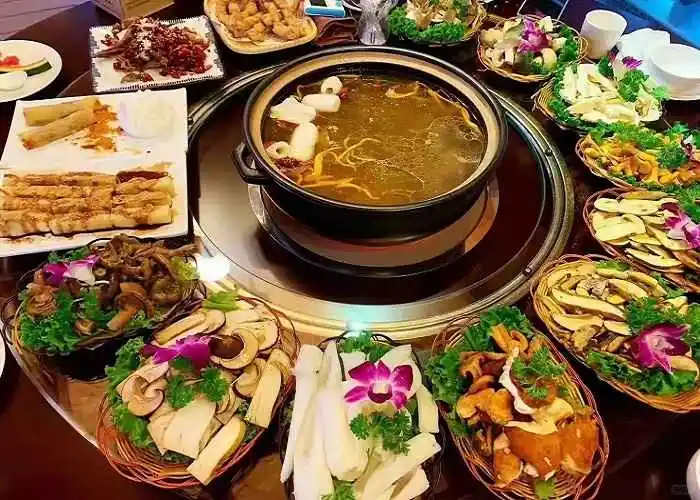
Day 4: Looking for Snacks Around Erhai, Don’t Miss Xizhou Baba
Rented an electric scooter at the North Gate of the Ancient City at 8:00 AM. The owner was a tanned Bai big brother who repeatedly patted my seat to remind me: “Go slow on the East Erhai Ring Road. The rice fields are in full bloom along the way, and there are old courtyards in Xizhou to visit—80 yuan a day, battery is full, enough for a round trip.” I hopped on, and the wind wrapped in morning mist hit my face as I first dove into the paddy field scenery of East Erhai Ring Road—the green rice seedlings were just starting to head, the scent of wild chrysanthemums drifted from the ridges, and occasionally, I could see Bai aunties in bamboo hats walking with hoes, with the distant Cangshan Mountains still veiled in a thin mist.
After riding for 40 minutes, the old locust tree of Xizhou Sifang Street came into view—Yang Shunbao’s Broken Crust Baba sign hung under the tree. The red cloth was a bit faded at the edges, but the queue never broke, including tourists in tie-dye skirts and local old ladies with bamboo baskets. I stood at the end of the line and watched the owner knead the dough: the dough on the board was soft and fluffy, sprinkled with dry yeast, kneaded smooth, and then rolled into thin cakes, wrapped with rose sugar or ham and green onion, and put into a cast iron griddle. The griddle was red-hot, and the owner flipped the cakes with bamboo pieces. Soon, there was a “sizzling” sound—when the Sweet Baba (5 yuan/piece) was done, the crust was so crispy it crumbled, and biting it revealed flowing rose sugar filling, a very clear sweetness, like biting into a fresh rose with honey. The Salty Baba (6 yuan/piece) was even better; the ham bits were from local pigs in Xuanwei, the green onions were tender enough to pinch water out of, the crust was “crunchy,” and the filling was wrapped in the wheat aroma of the dough and the saltiness of the ham; I couldn’t even bear to throw away the crumbs on my hand. The owner chatted with a smile: “I’ve been making this Baba for 30 years. The secret is to knead the dough for 20 minutes and keep the fire even—if you like it, next time take two vacuum-packed boxes; they last for three days.”
At 2:00 PM, I continued riding along Erhai. The rice scent in the wind turned into the saltiness of Erhai—passed a wetland with small blue flowers where egrets flapped their wings and flew up, and fishing boats with white sails were in the distance. Arriving at Shuanglang, the sun was a bit hot on my shoulders, so I ducked into “Seaside Life” bistro at the alley entrance—the owner was a young Bai lad in a floral apron who shouted when he saw me: “The sour and spicy fish is just ready, want a portion?”
When the Sour and Spicy Fish (50 yuan/portion) was served, the broth was milky white with a few slices of sour papaya and millet chili floating in it. The fish was Erhai Gongyu (a local freshwater fish with firm meat), arranged neatly. I took a spoonful of soup; the sourness was the gentleness of sour papaya, and the spiciness was the freshness of millet chili, sliding down my throat and warming my stomach. Taking a bite of the fish, it was tender with few bones, carrying the sour fragrance of the soup; it was so fresh I wanted to suck the bones clean. The lad said: “The sour papaya was picked from the mountain this morning, and the fish was caught at dawn; it’s all about freshness.” I also ordered Cold Tossed Tree Flower (15 yuan/portion)—the light brown tree flower was crisp, like jellyfish but with more plant bitterness. Dipping it in the owner’s vinegar-garlic sauce perfectly cut the richness of the fish. The lad smiled: “Tree flower is a wild vegetable by Erhai; only locals know how to make it. If you like it, I’ll pack some raw for you to toss yourself at home.”
Erhai Snacks · Personal Practical Tips
- Rent Electric Scooter: There are reliable shops at the North Gate of the Ancient City or in Xizhou. Choose one with a range of over 100 km, 80-100 yuan/day, and remember to ask for a helmet (owners usually provide one).
- Yang Shunbao Broken Crust Baba: Must go early! I arrived at 9:30 AM and 15 people were already in line. Try both sweet and salty—the sweet isn’t cloying, and the salty is fragrant. Freshly baked is the most authentic.
- Xizhou to Shuanglang: Ride along the East Erhai Ring Road, about 50 km total. Along the way are rice fields, wetlands, and fishing villages. Remember to bring a bottle of water and find a shady tree to rest at noon.
- Seaside Life Sour and Spicy Fish: Gongyu is an Erhai specialty, and the sour papaya broth is the soul. Don’t miss the cold tossed tree flower—a hidden local way to eat, bitter and refreshing.
Riding back to Shuanglang beach in the evening, I sat on a rattan chair at the bistro entrance, blowing the Erhai breeze and munching on the remaining Salty Baba. The distant sunset dyed Erhai orange, and the whistle of returning fishing boats drifted over. I suddenly felt—the meaning of circling Erhai is not to rush, but to stop, have a bite of hot Baba, drink a sip of fresh fish soup, and smell the rice fragrance in the wind.
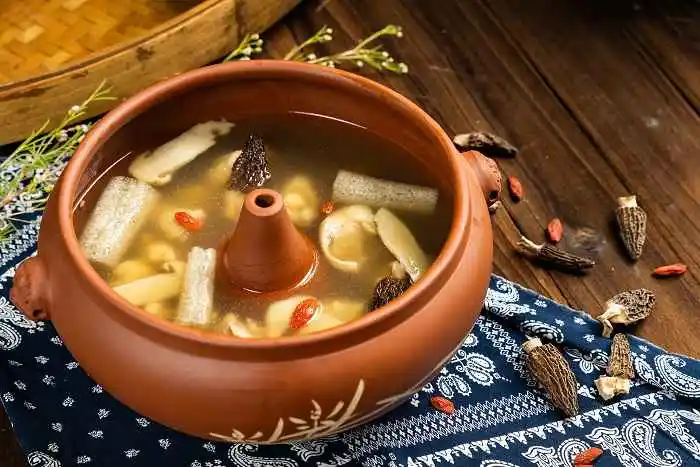
Day 5: Arrive in Lijiang, Have Cured Pork Rib Hotpot for Lunch
At 10:00 AM, I entered the station with my D8782 high-speed train ticket. Dali’s wind still carried the humidity of Erhai. After getting on the train, I realized the scenery outside had changed—the grey outline of Cangshan slowly merged into continuous green mountains, and occasionally I could see farmers in bamboo hats bending over to plant seedlings in terraced fields. A Bai auntie in a tie-dye skirt next to me chatted while peeling sugar oranges: “Little girl going to Lijiang? The cured pork ribs at Grandma’s in Xiangshan Market are the most authentic. The broth is simmered thick, and the cured fragrance drifts down half the street.” I smiled and responded. When the train entered a tunnel, my ears felt a bit muffled. I pulled out my phone to confirm: Grandma’s place is at the third entrance of Xiangshan Market, with a red-on-white sign and faded plastic lanterns.
At 12:00 PM sharp, I stepped onto the bluestones of Lijiang Station. The wind suddenly carried a scent of osmanthus—it turns out autumn in Lijiang already hides some sweetness. Took a taxi to Xiangshan Market. The driver swung the steering wheel and said: “That market is old Lijiang’s vegetable basket. Every morning, locals go to Grandma’s to pack cured pork ribs. You’re in luck; today’s broth has been simmering for a long time.” The car stopped at the market entrance, and from afar, I saw the “Grandma Cured Pork Ribs” sign. Bamboo baskets were piled with neatly chopped ribs, the oily lean meat glowing jujube red, looking delicious.
Entering the shop, the owner in a dark blue cotton shirt wiped the wooden table and looked up: “Small pot or large pot? Small is enough for two, perfect with potatoes and water chestnuts.” I nodded for a small pot (68 yuan) and found a window seat—the window faced the market alley, where I could see an old lady carrying bamboo baskets of porcini mushrooms with morning dew. Soon, the pot was served: the broth was deep brown with a layer of oil from the cured ribs. The owner handed me a ladle: “Have a hot sip first; this broth has been stewed with cured ribs for 4 hours, no MSG added.” I took a sip—it was savory with a faint smokiness, as if Lijiang’s sunlight was dried into the soup, sliding down my throat and immediately warming my stomach.
Then I added potatoes and water chestnuts (the owner said it’s the “soul pairing”): the potatoes were local small ones, boiled until floury and soft, falling apart when picked up, full of soaked broth; the water chestnuts were crisp with a characteristic plant bitterness, perfectly neutralizing the saltiness of the ribs. I added a portion of cabbage and tofu (10 yuan/portion): after the cabbage softened, the leaves soaked up the soup, every bite full of cured fragrance; the tofu was so tender it melted in the mouth, with even the tofu skin soaked in flavor. Finally, I drank the bowl of soup dry; it was so fresh I wanted to swallow my tongue. The owner laughed and slapped his thigh: “Glad you enjoyed it, girl; once the soup is cold, it loses its soul.”
Wandered the Ancient City in the afternoon. The stone path was a bit slippery. I walked along the Middle River where a ginkgo leaf floated in the stream. There were stalls selling handmade silver jewelry; the owner held a small hammer to tap bells, the sound as crisp as snow from Jade Dragon Snow Mountain. Passing Sifang Street, several Naxi elders sat around dancing Dongba dances, their colorful scarves swinging fast, while tourists took photos with laughter drifting far away.
In the evening, I wandered to Dayan Flower Alley. A roasted Erkuai stall at the entrance was steaming—the iron plate on the small stove was red-hot. The owner picked up a piece of Erkuai and put it on; soon it puffed up like a small balloon, the crust “cracking” with crispness. I ordered one with fried dough sticks and peanut sauce (6 yuan/piece): the Erkuai was crispy outside and soft inside, like biting into freshly steamed rice cake; the fried dough stick was freshly fried and crumbly; the peanut sauce was freshly ground, rich but not greasy. Wrapped in the Erkuai, one bite was a mix of crispy, soft, and fragrant, just enough to fill me up. The owner wiped his hands and said: “This Erkuai was made this morning; the rice is from Lijiang, very soft.”
On the way back to the hotel, moonlight spilled onto the bluestones of the Ancient City like a layer of frost. The Naxi courtyard (220 yuan/night) where I stayed was in an alley; opening the window, I could see the eaves of the neighboring old house with a red lantern swaying in the wind. The room had a woody scent, with soft blue-and-white tie-dye sheets. The front desk auntie handed me a cup of hot Pu-erh tea: “Going to Jade Dragon Snow Mountain tomorrow? Remember to bring a thick jacket; the wind on the mountain is strong.” Drinking tea and sitting by the window looking at the moon, the Ancient City night was very quiet, with only faint guitar sounds from a distant bar. I suddenly felt—the taste of Lijiang is the saltiness of cured pork ribs, the crispness of roasted Erkuai, and the wind at the eaves of old houses.
Grandma Cured Pork Ribs · Personal Practical Tips:
- Must order the small pot of cured pork ribs (68 yuan): the broth is simmered for 4 hours, savory with a smoky flavor, fresh enough to drink three bowls.
- Add potatoes + water chestnuts: potatoes are soft and soak up soup, water chestnuts are crisp and cut the greasiness; the local “golden combination.”
- Cabbage + tofu (10 yuan/portion): cabbage soaks up the soup, tofu is melt-in-the-mouth tender, very cost-effective.
Day 6: Eating Snacks in Lijiang Ancient City, Busy Day and Night
In the morning, I hopped on a small green minibus with 2 yuan. The bus body had “Lijiang Bus” in red. It bumped through the vegetable fields outside the Ancient City. The foxtails by the road were dazzling, and occasionally I could see old ladies in dark blue tie-dye skirts carrying bamboo baskets with radishes still covered in mud. Shuhe is much quieter than Dayan; the bluestone paths are so narrow they almost touch the shop signs. I went straight to “A’an Yogurt” at the alley entrance—wooden tables and chairs were crowded together. The owner was an auntie in a blue cloth shirt; seeing me, she scooped a bowl of yogurt into a coarse ceramic bowl and handed it over: “Just out of the pot, very thick.”
The yogurt was really like solidified double-skin milk; a spoonful could coat the spoon, and the surface was sprinkled with a layer of toasted fried rice. I licked the milk from the corner of my mouth; it was sweet but not cloying, the crunch of the fried rice mixing with the milk aroma. The auntie wiped her hands and said: “This milk is fresh from the back mountain pasture, no gel added; it won’t separate even if left for two hours—if you like it, take a box back, but don’t put it in the fridge or it will release water.” I sat on a stone pier at the door to eat; a child nearby stared at my yogurt, and his mom poked his forehead with a smile: “When you grow taller, auntie will give you more fried rice.”
Then I wandered to Zhongyi Market. As soon as I entered, I was enveloped by noise—stalls selling porcini and termite mushrooms with morning dew on their caps; an auntie selling fruit shouted: “Just picked, sweet as honey!” I squeezed to the Chickpea Jelly stall. A plump lady in an oily apron waved: “Cold tossed or fried?” “Both!” I pulled out 10 yuan. The cold tossed version came with a thick layer of red chili flakes; after mixing, the sour and spicy scent “boomed” out—the jelly was slippery like crystal gel, appetizingly sour and satisfyingly spicy. The fried version was sliced thin and so crispy you could hear the “crunch,” soft inside, and eating it with her coarse chili flakes made it more fragrant with every chew. The lady wiped her sweat and laughed: “Chickpeas grow on Lijiang’s mountains; the jelly must be simmered just right to be Q. Next time I’ll give you two more spoons of vinegar.”
Returned to Dayan Ancient City at noon and headed straight for “Naxi Barbecue” on Guangyi Street—the old wooden sign had four crooked characters. The owner was a sturdy Naxi man who patted the grill and shouted: “The pork belly is ready!” A portion of barbecue (48 yuan) was served; the fat-and-lean meat was grilled crispy with small bubbles on the skin, oil dripping onto the charcoal with a “sizzling” white smoke. The man handed over a plate of fresh mint: “Pair it with this; it cuts the greasiness.” I picked up a piece; the skin was so crispy it made a sound, the fat melted like cream, and the lean meat was tender with a bit of chew. The coolness of the mint immediately cleared the grease; I ate three pieces without feeling stuffed. The man wiped the grill and said: “The meat was marinated with salt and mint this morning; you have to watch it while grilling, or it gets bitter if burnt—see this charred edge? It locks in the juices.”
In the evening, I sat by the river on a stone bench at the foot of Lion Mountain. The wind carried the scent of osmanthus. Ordered a bottle of Wind-Flower-Snow-Moon Beer (10 yuan/bottle), chilled just right. One sip, and the refreshing malt aroma with a hint of bitterness slid down my throat. Watching the lanterns by the river light up—red, yellow, reflecting like broken silver in the water. The laughter of tourists and the guitar from the bar drifted over. Feeling the leftover chickpea jelly paper bag in my pocket and thinking of the morning’s yogurt and noon’s pork belly, I suddenly felt—the comfort of Lijiang is not having to rush, just sitting down for something hot, something cold, and watching the lanterns slowly light up.
Lijiang Snacks · Personal Practical Info Table
| Type |
Shop/Stall |
Recommended Dish |
Price |
Core Features/Experience |
| Fresh Yogurt |
A’an Yogurt (Shuhe Branch) |
Freshly Brewed Yogurt |
8 yuan/bowl |
Thick enough to coat spoon, sprinkled with fried rice; milk is fresh from pastures, no additives; don’t refrigerate if taking to go. |
| Chickpea Jelly |
Zhongyi Market Stall |
Cold Tossed/Fried Chickpea Jelly |
5 yuan/portion |
Cold version is sour-spicy and appetizing; fried version is crispy and fragrant. Chickpeas are local; jelly is Q-textured. |
| Naxi Barbecue |
Naxi Barbecue (Guangyi Street) |
Roasted Pork Belly |
48 yuan/portion |
Marinated with salt and mint, grilled crispy; paired with fresh mint to cut grease; lean and fat mix isn’t dry. |
| Beer |
Riverside (Lion Mountain Foot) |
Wind-Flower-Snow-Moon Beer |
10 yuan/bottle |
Icy malt aroma with slight bitterness; perfect with evening lanterns and river breeze for relaxation. |
On the way back to the hotel, moonlight spilled on the bluestones. Rubbing my rounded belly, I remembered the auntie saying “the slowness of Lijiang is meant to be eaten.” Indeed, no need for many photos or many attractions; just sit down, have some yogurt, munch on jelly, grill some meat, and drink a beer—this is the most authentic taste of Lijiang.
In the morning at Kunming Changshui Airport, I tucked my sun hat into my bag. A nearby auntie in a Dai embroidered skirt leaned over: “Going to Banna? My son just brought back some Bao-shao pineapple rice last week; he said it was so fragrant he could lick the rice grains clean.” At 11:00 AM sharp, I passed security with my boarding pass. As the plane climbed, the clouds outside looked like crushed marshmallows. Looking down, the mountain peaks of Yunnan still had some residual snow, but the temperature in the cabin was already rising—I knew in an hour, I’d crash into the tropical wind.
Landed at Gasa Airport at 12:30 PM. The wind wrapped in the smell of plantain leaves and the light scent of mango hit me. Squinting to find my driver, a lad in a blue T-shirt holding a handwritten “Gaozhuang Xishuangjing” sign smiled: “Hot, isn’t it, girl? I have the AC at 26 degrees in the car.” On the way, he swung the steering wheel: “The night market in Gaozhuang is crowded tonight. Your guesthouse is close, 10 minutes walk, don’t take a taxi—I had a tourist yesterday who was stuck for half an hour.”
The guesthouse is in a Gaozhuang alley; the Southeast Asian style wooden door has copper bells. Pushing it open, bougainvillea covers the walls, petals falling on the rattan chair in the foyer. The front desk auntie in a floral apron handed me an ice towel: “Wipe your face first. The fan in the room blows at the bed; the bedding is old linen, absorbs sweat.” I put down my bags and touched the pillow—it had the warmth of the sun. Bought a bottle of water at the convenience store downstairs; the bottle had an elephant on it and tasted a bit like sugar cane.
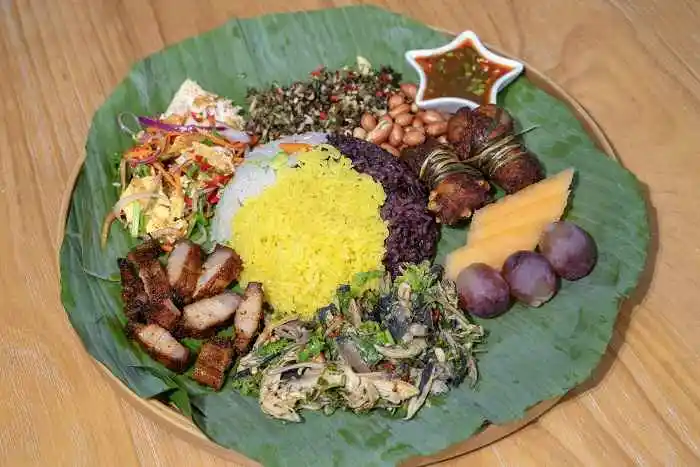
Wandered to the barbecue stalls in the evening. Under the red lanterns of Wantai Lao Iced Coffee, a Dai man in an apron with silver embroidery was flipping pork belly on the grill. Seeing me, he handed over a bundle wrapped in plantain leaves: “First time here, little girl? Try our Bao-shao pineapple rice!” As the leaf was opened, the sweet aroma of pineapple mixed with curry “boomed” out—rice grains wrapped with fresh pineapple cubes, every bite carrying the freshness of tropical fruit and a hint of curry fragrance. It wasn’t heavy; it was like the wind of the orchard was kneaded into the rice.
Roasted pork belly was on iron skewers, the crispy outer skin splitting to reveal tender, juicy meat. The man handed me a dish of Nanmi sauce: “Pair it with this; my mom made it.” I dipped a bit—the sour and spicy juice wrapped the meat, the kick of millet chili was just right, and the lime’s acidity cut the grease; I ate three skewers without feeling full. Finally, I had a bowl of Paoluda: the coconut milk base was thick enough to coat the spoon, with soaked bread crusts inside (soft and milky), Q-textured sago, and a few goji berries floating on top, as if the sweetness of a whole coconut was simmered into the bowl. The coconut fragrance stayed on my tongue until the end.
The owner leaned over while wiping the grill: “This pineapple is a local small pineapple, three times sweeter than big ones; the Nanmi sauce uses wild mountain peppers aged for three months. My family has sold this for ten years with many returning customers.” An auntie at the next table talked to me: “Eat more, girl. Later I’ll point out a place for mashed chicken feet at the alley entrance, mashed with lime and millet chili, very sour and spicy.”
I stood at the stall holding my Paoluda. The wind carried the scent of mango, the Lancang River waves “splashed” in the distance, and the “sizzling” of the skewers mixed with the laughter of tourists. I suddenly felt that Banna’s night isn’t black—it’s the yellow of pineapple, the brown of roasted meat, the white of coconut milk, mixed with the tropical wind and the fragrance of food, seeping into one’s heart.
Walked around Gaozhuang after eating. The lanterns were lit, and the buildings across the river had pointed roofs and colored glass. I patted my rounded belly, remembered the man’s words, and took a photo of the roasted pork belly: the crispy skin, the dripping oil, paired with the pineapple rice—it’s the most authentic taste of Banna.